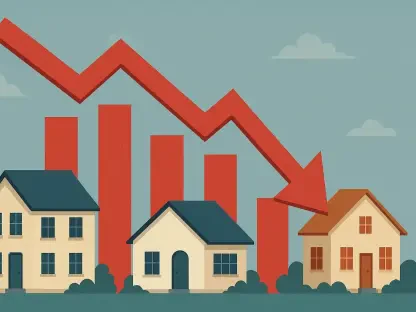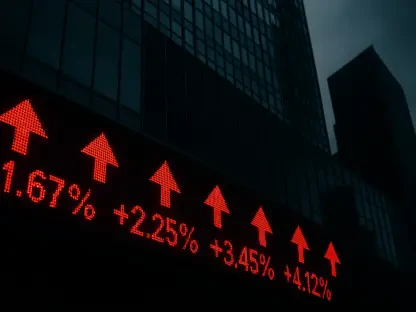

The current landscape of the American housing market reflects a period of measured transition where the erratic behavior of the past has finally given way to a more predictable environment for both buyers and lenders. While the benchmark 30-year fixed-rate mortgage has recently experienced a slight uptick to approximately 6.36%, the general atmosphere remains remarkably stable when compared to the dramatic fluctuations witnessed during the previous few years. Borrowers are now encountering incremental shifts rather than the seismic shocks that once defined the industry, allowing for more deliberate financial planning and less urgency fueled by fear. This period of cooling has permitted lending institutions to refine their risk assessments, leading to a marketplace where rates are dictated more by organic housing demand and less by extreme inflationary pressures. For prospective homeowners, this environment presents a unique opportunity to evaluate their options without the constant threat of a massive rate spike overnight.
Analyzing the Purchase Market and Refinance Opportunities
Purchase Rate Trends: Understanding National Averages
Homebuyers entering the market today are finding that national averages for 30-year fixed-rate loans are comfortably situated between 5.8% and 6.4%, depending on credit profiles and down payment sizes. Within this range, government-backed programs such as VA loans and FHA options continue to serve as vital entry points, often providing rates that sit at the lower end of the spectrum to encourage homeownership among specific demographics. These programs remain particularly attractive because they offer lower barriers to entry while maintaining competitive interest terms that often outperform conventional lending products. Furthermore, the stabilization of these rates has encouraged a more diverse group of participants to re-enter the market, as the cost of borrowing has become more transparent and easier to model over a long-term horizon. Lenders are also being more aggressive with their incentives for first-time buyers, recognizing that the current stability is a prime time to capture a larger share of the market.
Fixed-Rate Security: Comparing ARMs and Locks
One of the most striking developments in the current lending landscape is the significant narrowing of the spread between traditional fixed-rate mortgages and adjustable-rate mortgages, or ARMs. In many cases, 5/1 and 7/1 ARMs are being priced almost identically to 30-year fixed-rate loans, a phenomenon that has largely stripped away the primary incentive for choosing an adjustable product. This lack of a meaningful rate discount for ARMs has led the majority of buyers to prefer the long-term security of a locked-in rate, effectively neutralizing the risk of future payment increases as the initial fixed period expires. With the economic forecast suggesting a long-term plateau rather than a sharp decline in interest costs, the appeal of gambling on future rate drops through an ARM has diminished. Consequently, the 30-year fixed loan has solidified its dominance as the preferred vehicle for residential financing, providing a predictable monthly obligation that remains immune to the inevitable ebbs and flows of the broader financial markets over time.
Refinance Market Dynamics: Understanding Rate Inversion
The refinance sector is currently exhibiting an unusual behavioral pattern where some rates have actually dipped slightly below the costs associated with new purchase loans. For instance, the average 30-year fixed refinance rate is currently hovering around 6.33%, which represents a subtle but significant window for existing homeowners who may have missed out on previous lower-rate cycles. This inversion, though minor, suggests that lenders are prioritizing the retention of high-quality borrowers by offering slightly more attractive terms for those seeking to restructure their existing debt. For homeowners holding loans with rates significantly above the current average, this environment provides a strategic moment to reduce their monthly liabilities and improve their overall debt-to-income ratio. This trend is particularly evident among homeowners with substantial equity, as lenders compete to refinance these low-risk assets in a market that has become increasingly saturated with traditional purchase applications.
Specialized Solutions: VA Refinance Opportunities
Veterans and active-duty military members are currently finding some of the most aggressive opportunities in the entire marketplace, particularly when looking at VA-sponsored refinance options. The 15-year VA refinance category remains a standout, offering rates that are consistently lower than almost any other product available, allowing eligible borrowers to rapidly build equity while minimizing interest. This specific niche of the market has become a focal point for those looking to shorten their loan duration without incurring the massive monthly payment increases typically associated with such a move. Because VA loans do not require private mortgage insurance, the effective savings for these borrowers are even more pronounced when compared to conventional 15-year options. This specialized segment of the industry highlights how targeted government programs continue to provide a buffer against broader market volatility, ensuring that those who served have access to some of the most favorable financial tools for long-term wealth building and household stability.
Strategic Decisions: Financial Planning for Homeowners
Term Lengths: Comparing 15-Year and 30-Year Models
The decision-making process between selecting a 15-year or a 30-year mortgage continues to be a central point of analysis for budget-conscious homeowners aiming for maximum efficiency. While the 30-year term remains the undisputed standard for those who need to prioritize lower monthly payments and immediate cash flow flexibility, the 15-year term is being utilized more frequently by those with stable incomes. The primary draw of the shorter term is the dramatic reduction in total interest paid over the life of the loan, which can often save a borrower hundreds of thousands of dollars compared to the longer alternative. Even though the monthly obligation is higher, the lower interest rate typically attached to the 15-year product makes it a powerful instrument for financial independence. Many households are now viewing the 15-year mortgage not just as a loan, but as a forced savings mechanism that accelerates the transition from being a debtor to a full owner, providing a clearer path toward retirement and total wealth preservation.
Amortization Strategies: Accelerating Equity Growth
Deepening the understanding of amortization schedules is essential for borrowers who wish to see the tangible value in shorter loan terms or aggressive early payment strategies. In the early years of any mortgage, the monthly payments are heavily weighted toward interest rather than the principal balance, meaning that equity growth happens very slowly at first. By opting for a 15-year term or making additional principal-only payments on a 30-year loan, homeowners can bypass a significant portion of this interest-heavy phase. This strategy is particularly effective in the current market, where the total cost of borrowing remains high enough that every dollar of principal reduction yields substantial future savings. Recognizing that the first decade of a loan is where the most interest is accrued helps modern borrowers move away from the “set it and forget it” mentality. Instead, they are taking an active role in managing their debt, using the current stability of the market to lock in terms that favor rapid equity accumulation and eventual ownership.
Historical Comparisons: Market Stabilization Trends
When examining the broader timeline of the housing market, it becomes clear that current rates are significantly more favorable than the elevated highs experienced during the latter half of 2025. This downward trend and subsequent plateau indicate a successful stabilization of the market, moving away from the extreme measures that were previously necessary to curb inflation. Current data from leading industry experts at the Mortgage Bankers Association suggests that the volatility of the past has been replaced by a “new normal,” where rates fluctuate within a narrow, predictable corridor. This change has restored confidence among institutional investors and individual homebuyers alike, as the fear of a sudden, catastrophic rate hike has largely dissipated. By looking at the trajectory from the start of 2026 through to the present, it is evident that the market has found a sustainable equilibrium that supports both the banking sector’s need for yield and the consumer’s need for affordability in an increasingly balanced economy.
Institutional Projections: Outlook for Late 2026
Looking ahead through the remainder of the year and into 2027, major financial entities like Fannie Mae project that mortgage rates will likely settle and remain within the low-to-mid 6% range. There is no evidence in current economic indicators to suggest the existence of a rate cliff or a sudden, dramatic drop in borrowing costs, which should inform the timing of any real estate transaction. Waiting indefinitely for a return to the historic lows of previous decades is increasingly viewed as a flawed strategy that could lead to missed opportunities in housing appreciation. Because the market has already priced in the expected policy shifts of the central bank, the current environment represents a stable floor rather than a temporary peak. For those ready to move or refinance, the focus has shifted toward securing a property at today’s prices rather than trying to time a market that has shown little interest in further aggressive downward movement. The prevailing wisdom suggests that stability is the most valuable asset.
Future Considerations: Actionable Steps for Borrowers
Successful participants in the 2026 mortgage market prioritized agility and deep research over passive waiting, as they recognized that the era of extreme rate volatility had concluded. Homeowners who moved forward with refinancing during the slight dips in mid-year effectively lowered their overhead and prepared their finances for the coming years of economic steady-state. It was essential for individuals to consult with multiple lenders to compare the subtle differences in closing costs and service fees, which became the new battleground for competition once rates leveled off. Those who chose to focus on the 15-year amortization path found themselves in a much stronger equity position by the end of the year, underscoring the importance of long-term planning. By securing fixed-rate terms while the market was predictable, savvy borrowers protected themselves against any unforeseen shifts. The most effective strategy involved balancing monthly affordability with the goal of total interest reduction.