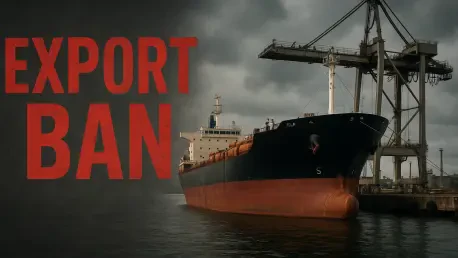

The consensus among energy strategists is that any move to restrict fuel exports could backfire by creating global price hikes that eventually recirculate back to the American economy. As the United States navigates the high-stakes environment of the 2026 midterm elections, the Trump administration is currently evaluating a potential ban or significant restriction on diesel exports to address skyrocketing domestic fuel costs. With diesel prices hovering around $6.50 per gallon, the economic burden has become a central campaign issue, affecting everything from grocery bills to construction budgets. While the administration views protectionist measures as a way to prioritize the American worker and farmer, energy experts remain wary of the systemic risks. The debate centers on whether a short-term domestic supply surge can outweigh the potential for global market instability. By focusing on internal needs, the government risks disconnecting from a complex international energy web that relies heavily on American output to maintain equilibrium in an era of unprecedented volatility.
The Intersection of Domestic Policy and Global Conflict
Geopolitical Pressures: Impacts of Foreign Hostilities
The global diesel shortage is largely fueled by intense hostilities in Eastern Europe, where Ukrainian drone strikes on Russian oil refineries have significantly hampered Moscow’s ability to export finished fuel. While these strikes are intended to degrade Russian logistical capabilities, the resulting loss of supply has sent shockwaves through the global market, prompting the U.S. government to urge a ceasefire on energy infrastructure. This situation creates a diplomatic paradox where the administration must support an ally while simultaneously managing the inflationary pressures caused by that ally’s tactical successes.
Furthermore, Middle Eastern instability continues to act as a bottleneck for the global refining system, with ongoing tensions involving Iran leading to the semi-closure of the Strait of Hormuz. This vital maritime artery carries a massive portion of the world’s crude oil, and its restriction forces refineries to source alternative feedstocks at much higher costs. As global refining capacity struggles to keep pace with modern demand, the loss of any major export hub—including potential restrictions from the United States—threatens to tip the entire petroleum system into a state of permanent deficit and price volatility.
Economic Risks: Industry Opposition and Market Feedback
Energy industry leaders, spearheaded by the American Petroleum Institute, have voiced staunch opposition to any proposed export limits, arguing that government mandates will only compound existing supply chain inefficiencies. Refiners operate on thin margins and highly calibrated logistics; forcing them to retain supply that they are not equipped to store or distribute domestically could lead to operational shutdowns. Industry advocates suggest that the solution lies in incentivizing domestic production and streamlining regulatory hurdles rather than imposing trade barriers that disrupt the flow of commerce.
Financial analysts from Morgan Stanley have further cautioned that a diesel export ban could create a “feedback loop” that negatively impacts the price of gasoline. Because the refining process is an integrated system, a forced reduction in diesel exports often compels refineries to adjust their “runs,” or the ratio of products they produce. If refineries slow down to avoid a diesel glut they cannot sell, the secondary output of gasoline also drops, inadvertently driving up prices for passenger vehicles. This systemic interdependence means that a policy designed to help one sector could easily penalize another, leaving consumers worse off.
Global Market Dependencies and Future Outlook
International Alliances: The Role of American Supply
The international community remains on edge because the United States currently provides approximately half of the diesel imports for Europe. A sudden withdrawal from the export market would leave European allies scrambling for alternative sources in a market already depleted by the absence of Russian fuel. Such a move would likely drive European fuel prices to unprecedented heights, potentially fracturing diplomatic unity during a period of heightened global conflict. The geopolitical cost of isolating allies for the sake of domestic price controls could have long-term consequences for American influence.
Despite these risks, many foreign energy traders remain skeptical that Washington will follow through with a total embargo, viewing the current rhetoric as a political maneuver ahead of the 2026 midterms. However, the mere possibility of such a shift has introduced significant volatility into energy markets that rely on American supply as a primary stabilizing force. This uncertainty encourages speculative trading, which keeps prices high even when physical supply remains available. The administration’s balancing act involves projecting strength to domestic voters while maintaining the confidence of international trade partners.
Domestic Consequences: The Logistics and Agriculture Crisis
High diesel costs act as a hidden tax on the entire American supply chain, as the fuel powers the heavy machinery and transport fleets necessary for modern life. Farmers are currently facing record input costs to run tractors and harvesters, while the logistics industry must pass on increased shipping fees to retailers. These cumulative costs are eventually reflected in the price of food, clothing, and medicine, making diesel the primary engine of inflationary pressure. For many in the Midwest and the Sun Belt, the current price point of $6.50 per gallon is simply unsustainable for long-term operations.
The administration’s internal discussions regarding a 90-day moratorium on exports represent a calculated attempt to flood the domestic market with supply right before the election cycle. While this could provide a temporary reprieve at the pump, it does not address the underlying lack of domestic refining capacity. Without expanding the actual infrastructure to process crude oil into diesel, any export ban serves only as a temporary bandage rather than a permanent solution. The logistics of redirecting millions of barrels of fuel to domestic hubs also presents a massive hurdle for a distribution network designed for global trade.
Strategic Measures: Balancing Priorities and Future Solutions
Market strategists suggested that the most effective path forward involved a combination of tactical releases and long-term infrastructure investment. While the administration considered the 90-day export restriction as a viable short-term lever, the consensus remained that expanding refining capacity was the only way to meet modern demand. Throughout the current year, policymakers focused on streamlining the permitting process for new refinery upgrades, aiming to increase the domestic yield of middle distillates. This approach sought to provide the necessary supply without severing the trade ties that sustain the global energy economy.
Ultimately, the administration worked to balance urgent domestic political needs against the risk of triggering a worldwide energy catastrophe. The resolution of the diesel crisis depended largely on factors beyond Washington’s immediate control, such as the de-escalation of hostilities in Eastern Europe and the restoration of safe passage through the Strait of Hormuz. By the end of the term, the government prioritized public-private partnerships to enhance fuel storage and distribution efficiency. This strategic shift moved the nation toward a more resilient energy posture, ensuring that domestic price stability did not come at the expense of global economic security.