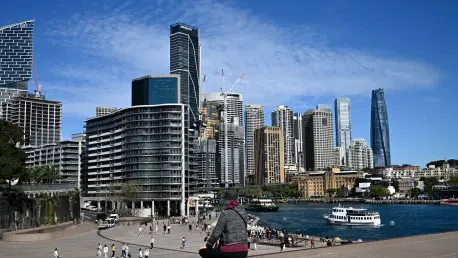

Melbourne and Hobart have seen median house prices climb to $829,000 and $727,000 respectively, further alienating the youngest generation of potential homebuyers. This financial barrier has forced a significant number of Gen Z and Millennial Australians to reconsider the feasibility of local ownership, leading to a profound shift in national demographics and investment priorities. While previous generations viewed the suburban quarter-acre block as an attainable rite of passage, contemporary buyers are staring at a reality where entry-level properties require decades of disciplined saving or substantial parental assistance. This disparity has catalyzed a quiet but steady migration of capital toward more accessible markets abroad, where the cost of living and property acquisition aligns more closely with modern earnings. The traditional Australian dream is no longer anchored to local soil; instead, it has become a portable concept that younger citizens are willing to export to any corner of the globe that offers stability.
The Economic Barrier: Why Local Entry Is Stalling
The primary driver behind this outward movement is the staggering cost of entry into the domestic real estate market, which has reached a tipping point of unsustainability for many young professionals. In major hubs like Sydney, where median prices frequently exceed $1.2 million, the required debt-to-income ratio is often double or triple what was considered standard just two decades ago. This financial strain is exacerbated by the Reserve Bank’s aggressive interest rate maneuvers, which have significantly increased the monthly burden of servicing a mortgage. For a generation entering their peak earning years, the prospect of being “house poor” in a cramped city apartment offers little incentive compared to the freedom of international alternatives. The economic calculation has shifted from long-term equity building to immediate survival, as high rental costs and inflationary pressures make it nearly impossible for those without assets to bridge the gap for a down payment on a local home.
Beyond the raw numbers, the psychological impact of being priced out has fostered a sense of disillusionment with the local economic structure, prompting a search for markets that reward innovation and effort. Many Australians find themselves trapped in a cycle of high-cost living that leaves little room for discretionary spending or investment diversification, effectively stalling their financial development. This “survival mode” is increasingly rejected by younger cohorts who prioritize a higher quality of life and the ability to build wealth without being tethered to a lifelong debt obligation. By looking toward emerging markets or historically undervalued regions in Europe and Asia, these investors are discovering that their Australian dollars can secure luxury or debt-free living that remains a distant fantasy at home. This shift is not merely a reaction to high prices but a strategic pivot toward environments that offer more favorable tax structures and better infrastructure for sustained growth.
The Global Strategy: Diversifying Beyond Borders
Current investment data reveals that younger Australians are the most globally focused generation in the nation’s history, adopting an “offshore-first” strategy that extends far beyond physical real estate. This demographic is twice as likely to hold international shares compared to Baby Boomers, with a significant portion of their portfolios dedicated to global technology stocks and exchange-traded funds. This familiarity with international markets has lowered the psychological barrier to purchasing property abroad, as the same logic of diversification and value-seeking is applied to the housing sector. Gen Z and Millennials are leveraging digital platforms and global networks to research opportunities in regions that were previously considered inaccessible or too risky for individual investors. Their willingness to manage assets across different time zones reflects a sophisticated understanding of modern finance, where national borders are viewed as secondary to the potential for a consistent return.
Market research indicates that approximately 30% of Australians are now actively investigating or planning property acquisitions overseas, with a particular focus on the high-growth corridors of Asia and the stable, historic markets of Europe. This trend is most pronounced in New South Wales and Victoria, where the contrast between domestic costs and international opportunities is most striking. Potential buyers are no longer just looking for holiday retreats; they are seeking primary residences or strategic rental properties that offer better yield and lower entry points than local options. The Middle East has also emerged as a significant destination for Australian capital, driven by tax-incentivized environments and rapid urban development in cities that prioritize modern amenities. This broader investment lens allows younger Australians to bypass the saturated domestic market, instead positioning themselves in regions that are poised for long-term appreciation and economic stability.
Lifestyle Arbitrage: Trading Survival for Growth
The concept of lifestyle arbitrage has moved from theoretical discussion to practical reality for many, exemplified by the increasing number of Australians participating in international revitalization projects. From the widely publicized “one-euro” home schemes in Sicily to the purchase of neglected estates in rural France, these investors are using “sweat equity” to bypass the high entry costs of the local market. For the price of a standard car down payment in Melbourne, individuals are acquiring entire buildings that, while requiring renovation, offer a debt-free path to homeownership and a unique cultural experience. These projects allow young Australians to channel their resources into tangible assets without the looming shadow of a thirty-year mortgage, providing a level of financial freedom that is increasingly rare within the borders of their home country. The ability to own a property outright has a transformative effect, enabling a shift away from high-stress jobs toward creative paths.
Further evidence of this shift is found in the relocation of professionals to cities like Fukuoka and Dubai, where the disparity in value-for-money is almost impossible to ignore. In Sydney, a professional might spend a significant portion of their income on a modest studio apartment with limited amenities, whereas the same expenditure in Japan can secure a spacious three-bedroom residence in a central urban district. Similarly, the tax-free environment and state-of-the-art infrastructure of the Middle East have attracted high-net-worth individuals and ambitious entrepreneurs who feel that the Australian economic landscape has become too restrictive for high-level growth. These expatriates are not just seeking lower costs; they are pursuing a lifestyle that integrates modern technology, safety, and community in ways that are becoming increasingly elusive in capital cities. By choosing to live abroad, they are signaling that the traditional dream must change to stay relevant.
Future Considerations: Navigating the Global Frontier
The mass migration of Australian capital and talent toward international real estate markets signaled a permanent change in how wealth was perceived and pursued by the younger generation. As domestic barriers remained high, the most successful individuals were those who recognized the necessity of geographic flexibility and cross-border investment strategies early in their financial journeys. For those still navigating these choices, the primary takeaway was the importance of thorough due diligence and the cultivation of a global network to mitigate the risks associated with foreign ownership. Moving forward, potential investors focused on markets with strong legal protections and high transparency, ensuring that their offshore assets were as secure as any local holding. The trend also highlighted the need for more adaptable financial planning that accounted for currency fluctuations. Ultimately, the successful transition required a proactive mindset that valued diverse assets over local sentimentality.
To effectively capitalize on these international shifts, it was essential for individuals to consult with tax professionals and legal experts who specialized in cross-border transactions to avoid common pitfalls. The rise of digital fractional ownership and international REITs provided alternative pathways for those who were not yet ready for full relocation but sought exposure to higher-growth foreign markets. By integrating these tools, investors managed to build diversified portfolios that were insulated from the localized volatility of the Australian housing sector. Looking ahead, the focus shifted toward sustainable urban developments in emerging hubs that offered both economic resilience and environmental longevity. The integration of global property into a standard financial plan became the new benchmark for fiscal health, encouraging a continuous education on international policy. This shift eventually forced domestic policymakers to reconsider local housing strategies as they observed the drain of young wealth.