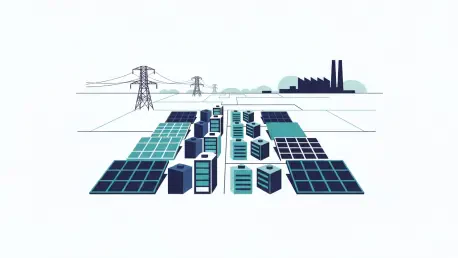

The transition toward a resilient and decarbonized energy grid has reached a significant milestone as financial institutions commit record-breaking capital to large-scale renewable infrastructure. Ark Energy, a subsidiary of the global materials giant Korea Zinc, has finalized a massive $1.3 billion financing package to accelerate the development of its flagship solar-battery project. This capital infusion represents one of the largest private investments in the sector this year, signaling a robust appetite among lenders for hybrid energy assets that combine generation with long-duration storage. As traditional coal-fired plants continue to retire across the region, the urgency for reliable, dispatchable green energy has never been higher. This funding does not just support a single construction site; it establishes a new benchmark for how multi-gigawatt portfolios are structured and de-risked in a volatile market. By securing such a substantial commitment, the company demonstrates viability.
Financial Strategy: Syndication and De-Risking
The successful closure of this $1.3 billion facility involves a syndicate of major domestic and international banks, reflecting a deep confidence in the long-term cash flows generated by hybrid energy hubs. Unlike standalone solar farms, which often face curtailment issues during periods of oversupply, the integration of a significant battery storage component allows for energy time-shifting and frequency control services. This multifaceted revenue stream was a critical factor in satisfying the rigorous due diligence requirements of the participating financial institutions. The debt package is structured to cover both the initial procurement of high-efficiency photovoltaic modules and the deployment of advanced lithium-ion storage units. Furthermore, the involvement of Korea Zinc provides a unique industrial backbone, as the parent company intends to utilize a portion of the power to decarbonize its own smelting operations. This internal off-take agreement reduces market exposure.
Building on this financial foundation, the project highlights the shift toward larger, more complex engineering feats that require precision in both logistics and capital management. The $1.3 billion sum is earmarked not only for hardware but also for significant grid connection upgrades, ensuring that the massive influx of electrons can reach urban centers without overwhelming existing transmission lines. This proactive approach to infrastructure helps mitigate the common bottleneck risks that have plagued previous renewable developments in the region. Lenders have increasingly favored projects that include comprehensive grid studies and advanced inverter technology, both of which are central to the current roadmap. The financing also includes a revolving credit component, allowing for flexibility as market conditions and technological costs fluctuate during the multi-year construction phase. This level of financial sophistication is becoming the standard for modern solar energy projects.
Future Outcomes: Infrastructure Evolution and Resilience
The successful implementation of this billion-dollar initiative provided a clear blueprint for future developments that prioritize long-term stability over short-term gains. Stakeholders across the energy sector observed how the integration of heavy industry off-take and large-scale storage could effectively insulate projects from the volatility of spot-market pricing. As the construction reached its final phases, the focus shifted toward optimizing the lifecycle of the components, particularly the recycling of solar panels and battery cells. This emphasis on circularity ensured that the project’s environmental footprint remained minimal from inception to decommissioning. Furthermore, the regional economic impact was substantial, creating a localized workforce skilled in the maintenance of complex hybrid systems. The project ultimately proved that capital is readily available for developers who can demonstrate technical excellence and a comprehensive understanding of grid dynamics through many cycles.
Future considerations for the industry involved the expansion of these hybrid hubs into green hydrogen production, further leveraging the excess solar energy generated during peak daylight hours. The industry moved toward a more decentralized yet interconnected model where projects like this one functioned as anchors for smaller, community-based energy resources. Actionable next steps for the sector included the standardization of grid-connection protocols to reduce the time from financial close to commissioning. Policy makers and regulators began to adopt more flexible frameworks that rewarded storage assets for the reliability they provided. This evolution in market design encouraged further investment in diverse storage technologies to complement the lithium-ion systems. By documenting and sharing the lessons learned from the $1.3 billion financing, the project catalyzed a broader wave of innovation. The transition was no longer seen as a series of isolated infrastructure projects.