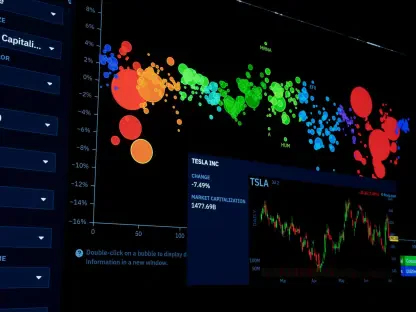

The velocity at which capital moves between Sydney and New York has reached an unprecedented pace as Australian investors increasingly prioritize the high-octane growth of the American technology sector over domestic alternatives. This shift is largely fueled by the persistent dominance of semiconductor manufacturers and artificial intelligence pioneers, which have redefined the global economic landscape by 2026. For a local investor, navigating Wall Street requires more than just capital; it demands a strategic choice between two distinct investment philosophies: direct ownership or speculative participation. Direct equity ownership offers the traditional benefits of voting rights and dividend yields, catering to those building multi-generational wealth. Conversely, the rise of sophisticated derivative products like Contracts for Difference has allowed active traders to capitalize on market volatility with significant leverage. Selecting a brokerage partner now hinges on aligning these specific financial objectives with the technical capabilities of a platform that bridges the geographical gap.
The Digital Shift: Universal Trends in the Brokerage Market
The current brokerage landscape is defined by the total democratization of financial markets, where the barriers that once excluded retail participants have effectively dissolved. In the current environment, the standard of service across the industry has risen to a point where features like real-time data feeds and fractional share trading are no longer premium luxuries but basic expectations. Mobile applications have evolved into high-speed command centers that allow investors to execute complex trades while commuting or between meetings, ensuring that geographical distance from New York is no longer a disadvantage. This technological parity means that the competitive edge for a broker now lies in the stability of its infrastructure and the breadth of its educational resources. Australian investors are benefiting from this race to the top, as firms integrate advanced analytical tools directly into their interfaces, making sophisticated market research accessible to anyone with a smartphone and a modest amount of startup capital.
Pricing models have undergone a significant bifurcation, forcing investors to weigh the merits of zero-commission structures against traditional per-share fees. The “zero-commission” revolution has captured the attention of active retail traders who prioritize high transaction frequency without the drag of upfront costs. However, these models often involve wider spreads or other indirect monetization methods that require careful scrutiny. On the other hand, established platforms targeting professional users continue to employ a transparent per-share commission system, which often results in lower total costs for large-scale institutional orders. This diversity in fee structures empowers individuals to optimize their financial overhead based on their specific trading volume and portfolio size. By 2026, the transparency of these costs has become a critical metric for evaluating the long-term viability of a brokerage relationship. Investors now have the agency to select a partner that minimizes friction based on their unique pattern of market engagement.
Institutional Quality: Leading Platforms for Long-Term Investors
Interactive Brokers continues to hold its position as the premier choice for seasoned Australian investors who demand direct ownership of U.S. equities alongside institutional-grade analytical tools. The platform is widely recognized for its robust execution capabilities, offering access to actual shares on major exchanges like the NYSE and Nasdaq rather than synthetic substitutes. With a fee structure that starts as low as half a cent per share, it remains one of the most cost-effective gateways for managing substantial portfolios over the long term. While the interface possesses a steep learning curve that may intimidate novices, the depth of technical indicators and global research available is virtually unparalleled in the retail space. For individuals focused on dividend growth and actual asset accumulation, the ability to hold stocks in a dedicated account provides a level of security and transparency that simpler platforms often struggle to match. Its reputation for stability makes it a cornerstone for those building a serious international investment foundation.
For those entering the American markets for the first time, eToro provides a communal and highly accessible alternative through its pioneering social trading ecosystem. This platform has redefined the entry-level experience by allowing users to observe and automatically mirror the trades of high-performing investors across the globe. This collaborative approach is particularly appealing to a demographic that values collective intelligence over solitary research, making it a powerful tool for those with limited time for deep technical analysis. By offering a zero-commission model on real stocks, the firm has removed the financial friction that often discourages beginners from diversifying their portfolios internationally. The user interface is designed for intuitive navigation, stripping away the complexity of traditional terminals in favor of a streamlined experience. While it may lack some of the granular data found on professional platforms, its focus on community insights and ease of use ensures that it remains a dominant force for social-minded retail investors in the current year.
Specialized Execution: High-Performance Solutions for Active Traders
Active traders who prioritize high-speed execution and leveraged exposure frequently turn to specialized firms like Mitrade and Pepperstone to navigate the volatility of the U.S. stock market. Mitrade has gained significant traction by offering a simplified, spread-based model that eliminates traditional commissions, which is particularly advantageous for traders who move in and out of positions within a single day. This approach allows for a clear understanding of costs before a trade is even placed, facilitating better risk management during periods of rapid price movement. Conversely, Pepperstone caters to the highly technical segment of the market by providing seamless integration with professional-grade software such as MetaTrader 5. This allows algorithmic traders to execute automated strategies with minimal latency, ensuring that price slippage is kept to an absolute minimum. These platforms are designed for those who view the market as a venue for price speculation rather than long-term asset holding, providing the leverage necessary to amplify short-term gains.
A middle ground exists for investors who seek a premium, multi-asset experience through established industry heavyweights like IG, CMC Markets, and Saxo. These firms distinguish themselves by offering a hybrid model that supports both direct share ownership and sophisticated derivative products within a single integrated environment. Backed by some of the most comprehensive research departments and advanced charting tools available, these platforms cater to sophisticated individuals who require more than just basic execution. Saxo, for instance, focuses heavily on high-net-worth clients by providing access to tens of thousands of global financial instruments, allowing for a level of diversification that extends far beyond the borders of the United States. Meanwhile, IG and CMC Markets are renowned for their stability and depth of liquidity, which are essential for traders managing large-scale positions. This tier of brokerage is defined by its commitment to providing a holistic wealth management experience that combines technical precision with a wide-ranging global perspective.
Economic Precision: Strategic Financial Considerations for Local Users
Beyond the features of any specific platform, Australian participants must navigate the economic realities of currency conversion and the associated costs of maintaining a cross-border portfolio. Because U.S. stocks are denominated in dollars, the conversion from Australian Dollars to United States Dollars can introduce a layer of hidden expense that significantly impacts net returns if not handled with foresight. Many brokers charge a percentage-based fee on these conversions, which can accumulate into a substantial drain on capital over multiple transactions. Furthermore, traders utilizing leverage or holding positions overnight must account for financing fees that vary significantly between different providers. In 2026, a successful investment strategy requires a granular understanding of these operational costs to ensure that nominal gains in the stock market are not eroded by administrative friction. Comparing the foreign exchange spreads and financing rates of various brokers is now just as critical as analyzing the performance of the underlying equities themselves.
The evolution of the brokerage industry has successfully removed many of the historical obstacles that prevented Australian investors from fully participating in the prosperity of the American markets. Investors who took the time to assess their own risk tolerance and trading frequency discovered that the “best” broker was rarely a universal choice, but rather a specialized fit for their personal goals. By evaluating the balance between technological sophistication and total cost of ownership, many achieved a level of portfolio diversification that was once considered impossible for retail participants. Moving forward, the focus shifted toward the optimization of tax structures and the utilization of automated tools to manage currency risk in real-time. Those who adopted a proactive approach to platform selection established a more resilient financial foundation, capable of weathering the inherent volatility of international trading. The landscape of 2026 proved that the integration of global markets is an ongoing process that rewards the informed and the strategically disciplined.