
The energy transition landscape is witnessing a significant recalibration as major industry players balance the need for capital liquidity with the long-term demands of infrastructure development across global markets. Equinor recently executed a strategic divestment by selling approximately half of its stake in Scatec, a Norwegian renewable energy developer, for roughly $168 million. This transaction involved the offloading of an 8.07% share at a price of 125 Norwegian kroner per share, reducing Equinor’s total ownership to just over 8%. While the move represents a substantial reduction in equity, it serves as a lucrative exit for the energy giant, which initially entered its position several years ago at an average cost of 80 kroner per share. By capturing this value now, Equinor demonstrates a disciplined approach to asset management, prioritizing financial flexibility without completely severing ties with its partners. The company has also agreed to a 90-day lock-up period for its remaining 8.05% interest, signaling a measured transition rather than an urgent departure. Such maneuvers are becoming increasingly common as established firms seek to optimize their portfolios, ensuring that capital is deployed toward the most efficient and scalable green energy projects. This divestment reflects a mature market stage where early-stage investments are being harvested to fund the next generation of technological advancements.
Strategic Partnerships: Maintaining Operational Synergy
Despite the reduction in equity ownership, the operational synergy between these two Norwegian powerhouses remains firmly intact through ongoing joint ventures in South America. Specifically, the collaborative efforts regarding the Apodi and Mendubim solar projects in Brazil continue to progress without interruption, highlighting a shift toward project-specific partnerships over broad corporate equity holdings. Scatec remains a formidable force in the clean energy sector, maintaining a robust global footprint that includes approximately 6.2 gigawatts of operational or under-construction capacity. The company’s focus on emerging markets was recently reinforced by the financial closure of the 130-megawatt Barzalosa solar project in Colombia. This development is supported by a long-term power purchase agreement spanning fifteen years with a subsidiary of Banco BTG Pactual, ensuring a stable revenue stream and demonstrating the bankability of large-scale solar in the region. By securing these contracts, Scatec proves its ability to navigate complex regulatory environments while maintaining its trajectory as a key provider of sustainable energy. This operational resilience suggests that the company’s value proposition is increasingly independent of the specific percentage held by any single industrial investor, allowing it to attract diverse capital sources for future expansion.
Portfolio Optimization: Investing in Hybrid Infrastructure
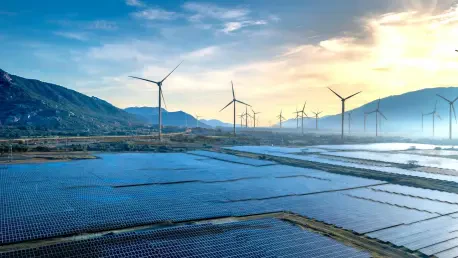
Equinor’s broader strategy involved a transition toward more diverse and technologically integrated energy assets, as evidenced by the launch of the Serra da Babilônia complex in Brazil. This facility represented the company’s first hybrid solar-wind project, successfully merging 140 megawatts of solar power with 223 megawatts of wind capacity to maximize grid efficiency. Furthermore, the organization reaffirmed its commitment as a long-term industrial investor by maintaining a 10% stake in Ørsted and participating in a capital raise to ensure the developer’s financial stability. These actions indicated that while the firm optimized its capital through selective divestments, it simultaneously deepened its involvement in the expansion of renewable infrastructure. Moving forward, stakeholders should monitor how these reallocated funds accelerate the deployment of floating wind or green hydrogen technologies. Investors could benefit from analyzing these patterns of capital recycling as a blueprint for maintaining growth during market fluctuations. By balancing profit-taking with strategic reinvestment, the firm positioned itself to lead the next phase of the energy transition while mitigating the risks associated with asset concentration. This balanced approach provided a clear roadmap for other traditional energy companies seeking to modernize their operations and secure long-term relevance in a decarbonizing world.