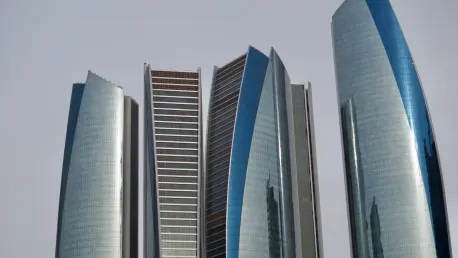

The transformation of Abu Dhabi into a sophisticated global financial center is accelerating as the capital of the United Arab Emirates refines its multi-asset trading framework to attract international liquidity. By moving beyond traditional equity models, the regional market has successfully integrated a diverse array of financial instruments, including exchange-traded funds, corporate bonds, sukuk, and sophisticated derivatives. This evolution is not merely a technical upgrade but a strategic shift designed to provide institutional and retail investors with the tools necessary to manage risk and enhance returns in an increasingly volatile environment. A significant milestone in this progression occurs on August 3, 2026, when the market officially eliminates daily price restrictions for futures and ETFs, signaling a new era of price discovery. Such moves are intended to solidify the city’s reputation as a primary destination for global capital, offering a robust ecosystem for diverse traders who seek stability and growth in a modern market.
1. Strategic Expansion and Global Infrastructure Integration
Building a comprehensive multi-asset environment requires a deliberate expansion into the derivatives space, which has seen the introduction of seventeen distinct futures contract options. These instruments provide the necessary depth for sophisticated trading strategies, allowing market participants to express views on both individual equities and broader market indices with precision. The listing of new single-stock futures for major national entities, such as ADNOC Gas and Sharjah Islamic Bank, marks a pivotal expansion in the depth of the local securities market. To support this expanded offering, the exchange has ensured real-time data integration via the Bloomberg Terminal, making market data accessible to over 350,000 financial professionals worldwide. This level of transparency is critical for building trust among international traders who rely on immediate information to make decisions. By providing institutional-grade data feeds, the exchange ensures its listed assets are visible and tradable to an audience.
Financial derivatives offer six primary advantages that are central to the current market expansion, beginning with enhanced economic efficiency and the ability to diversify portfolios across multiple sectors. These instruments also improve operational effectiveness by allowing for easier capital allocation compared to physical asset ownership. Hedging capabilities remain a primary draw, enabling corporations and investors to protect themselves against adverse price movements in the underlying stocks or indices. Furthermore, the use of financial leverage allows traders to control larger positions with a smaller initial outlay, maximizing potential returns while requiring disciplined risk management. Market flexibility rounds out these benefits, providing the agility to react to changing macroeconomic conditions without the need for extensive physical liquidations. Together, these factors contribute to a more resilient marketplace, encouraging various participants to engage with the exchange as they navigate complex global financial landscapes.
2. Operational Integrity and Professional Trading Standards
Maintaining transaction integrity is a top priority, which is why the exchange has introduced forward contracts for both specific equities and benchmarks like the Fadex 15 index. These contracts are settled in cash through Abu Dhabi Clearing, a central counterparty that mitigates the risk of default and ensures that every trade is honored. This centralized clearing house acts as a vital buffer, ensuring that the failure of one participant does not ripple through the entire financial system. For investors looking to enter the derivatives market, the onboarding process has been structured to ensure compliance. The first step involves setting up a profile with a certified derivatives brokerage, followed by finishing identity verification and signing a hazard disclosure. After these disclosures are completed, the investor must revise their brokerage contract to permit derivative trading, as traditional agreements may not cover these specialized instruments, and then utilize advanced mobile platforms to manage portfolios.
Derivatives are fundamentally structured as contracts between parties where the value is derived from an underlying asset, such as a stock, bond, or commodity, allowing for profit in both rising and falling markets. A futures contract is defined as a binding agreement to buy or sell an asset at a predetermined price on a specific future date, providing essential clarity for wealth preservation. The advancement of the multi-asset trading system established a new benchmark for financial centers in the region by prioritizing transparency and diverse product offerings. Local authorities implemented these changes to bridge the gap between regional potential and global standards, creating a more inclusive environment for all traders. Future developments involve deeper collaborations with international exchanges to facilitate cross-border trading and provide liquidity. Market participants were encouraged to stay updated on regulatory shifts, as the exchange continued to refine its risk management tools to adapt to evolving trends.