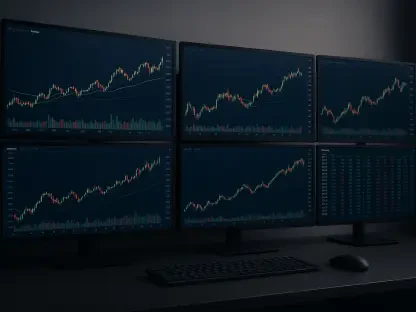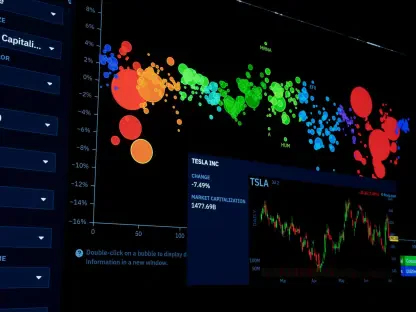

Data from the MEXC exchange reveals that 67% of Gen Z traders utilized AI-powered bots in 2025 as a primary psychological buffer against market volatility. This shift represents a fundamental departure from the era of manual order entry and discretionary decision-making, signaling the arrival of a new paradigm where intelligence is baked directly into the exchange infrastructure. As the digital asset landscape evolves, the primary value proposition for modern platforms has moved beyond simple liquidity provision toward the creation of a sophisticated, integrated architecture. These AI-native environments aim to solve chronic issues such as market opacity and the operational inefficiencies that have long plagued manual trading processes. By treating artificial intelligence as a foundational layer rather than an optional add-on, platforms are now able to offer a level of precision and risk management that was previously reserved for institutional heavyweights. This architectural change ensures that data analysis and execution are no longer separate functions but part of a unified, high-performance lifecycle.
The Convergence of Research and Execution
Part 1: Building a Unified Trading Ecosystem
The integration of research and execution marks a significant milestone in the technological development of crypto derivatives. Historically, quantitative research and the actual deployment of trading strategies were siloed activities, often requiring users to toggle between different platforms to backtest theories and execute live orders. This fragmented approach introduced significant latency and increased the risk of errors during the transition from a controlled testing environment to the live market. AI-native infrastructure effectively collapses this distance by establishing a three-layer ecosystem designed for seamless continuity. At the base lies the exchange layer for settlement, followed by a systematic execution layer where rule-based programs run continuously. The final layer is a research pipeline that allows for rigorous walk-forward testing, ensuring that any strategy is battle-tested against real-world conditions before capital is at risk. This structured approach provides a more stable foundation for systematic trading across all market conditions.
Part 2: Democratizing Quantitative Finance via AI
Within this new unified environment, the role of natural language processing has become increasingly pivotal in democratizing high-level quantitative finance. Innovations such as OneALPHA allow traders to articulate complex strategy hypotheses in plain English, which the underlying AI engine then translates into structured, backtested code. This technological leap removes the high barrier to entry traditionally associated with programming and data science, enabling a much broader range of investors to utilize sophisticated algorithmic techniques. Furthermore, this shift promotes a glass-box transparency model, where the underlying logic of every AI-generated strategy is visible and auditable for the user. By making the decision-making process transparent, platforms are moving away from the opaque black-box systems that dominated previous cycles. This transparency not only builds trust between the platform and its users but also aligns with the growing demand for accountability in an industry that is increasingly coming under the scrutiny of global regulators.
The Algorithmic Edge in Modern Markets
Part 1: Comparing Manual and Systematic Performance
The structural gap between manual and algorithmic execution has reached a tipping point, with systematic performance now clearly outpacing human capabilities in the derivatives space. Estimates indicate that roughly 70% of global trading volume is currently driven by automated algorithms, a trend fueled by the superior speed and discipline these systems offer. While a human trader might take several seconds or even minutes to process information and execute a trade through a user interface, algorithmic systems operate in the realm of microseconds. This disparity is especially critical in the crypto market, where extreme volatility can trigger massive price swings in the blink of an eye. The ability to react instantly to market signals or liquidation events provides an essential edge that manual participants simply cannot match. By automating the execution process, traders can ensure that their entries and exits are performed at the most favorable prices possible, effectively minimizing the slippage that often erodes profits in high-frequency environments.
Part 2: Psychological Buffers and Emotional Mitigation
Beyond the obvious technical advantages of speed and latency, the psychological benefits of rule-based execution have become a primary driver of adoption among the modern trading demographic. Human traders are naturally prone to emotional biases, often falling victim to fear and greed which can lead to disastrous impulsive decisions during periods of heightened market stress. Data has shown that moving to automated execution can reduce the frequency of panic-driven exits by nearly 50%, providing a critical psychological buffer that protects capital. For the younger generation of traders who have grown up in a digital-first world, AI-powered bots are not just tools for profit maximization but essential components for managing the mental strain of a 24/7 market that never sleeps. This reliance on automation reflects a broader behavioral shift where technology is used to enforce discipline and maintain a rational perspective when market conditions become irrational. Consequently, the adoption of AI at the exchange level is increasingly viewed as a standard requirement.
Navigating Risks and Regulatory Landscapes
Part 1: Balancing Innovation with Market Integrity
Despite the significant efficiencies introduced by automated systems, the transition to an AI-driven market environment is not without its own unique set of systemic risks. Financial history, particularly events like the 2010 Flash Crash, serves as a sobering reminder of how interconnected algorithmic feedback loops can destabilize global financial structures within minutes. In the current landscape, concerns have shifted toward the possibility of algorithmic collusion, where independent AI agents might inadvertently cooperate to create artificial price floors or punish specific competitors without any human intervention. These scenarios highlight the potential for automated systems to create market conditions that are detached from fundamental reality, leading to reduced liquidity or increased volatility. As these systems become more autonomous, the need for robust monitoring and circuit breakers at the infrastructure level becomes paramount. Ensuring that AI agents operate within defined ethical and operational boundaries is a complex challenge that requires ongoing technical oversight.
Part 2: Future Considerations and Regulatory Standards
Regulatory bodies responded to these technological advancements by increasing their focus on transparency and market integrity within the crypto derivatives sector. Agencies like the Commodity Futures Trading Commission prioritized the investigation of how automated systems impact fraud enforcement and price discovery. This led to a wider adoption of transparency frameworks aligned with international standards, such as those established by the National Institute of Standards and Technology. Platforms that provided fair, performance-based accounting and visible strategy histories were better positioned to navigate this evolving regulatory landscape. The transition toward AI-native infrastructure ultimately proved that the long-term viability of the crypto market depended on the balance between innovation and compliance. Stakeholders who prioritized auditable systems and verifiable performance metrics were able to secure a more sustainable competitive advantage. Moving forward, the focus remained on refining these integrated pipelines to ensure that automation continued to serve as a tool for market stability.