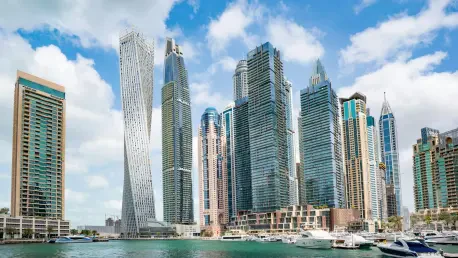

While the Dubai and Abu Dhabi stock exchanges have experienced a significant resurgence over the last decade, their equity derivatives markets have remained conspicuously quiet, with trading volumes failing to mirror the dynamism of their underlying cash markets. This disparity, however, is on the cusp of a profound transformation. A series of fundamental structural reforms, particularly the long-awaited introduction of a robust securities lending and borrowing framework, are now in place to awaken this sleeping giant, potentially reshaping the United Arab Emirates into a far more sophisticated and mature global financial hub. These changes are not merely incremental; they represent a foundational shift designed to attract a new class of institutional investors and unlock a new dimension of trading and risk management strategies previously unavailable in the region.
A Market in Waiting
The Current Landscape and Its Limitations
The state of the UAE’s equity derivatives market stands in stark contrast to its global peers. In established financial centers, instruments such as futures and options are integral components of the investment landscape, providing essential tools for hedging against portfolio losses and capitalizing on market volatility. In the UAE, these mechanisms have been largely theoretical. The trading volumes starkly illustrate this underdevelopment; for the year leading up to December 16, 2025, the Dubai Financial Market (DFM) recorded a total derivatives trading value of just $9.8 million. Activity on the Abu Dhabi Securities Exchange (ADX) and Nasdaq Dubai was considered negligible. Although these exchanges offer a range of products, including single-stock futures on blue-chip companies and broader index futures, the uptake has been minimal, leaving investors without the sophisticated tools necessary for modern risk management and speculative strategies.
A primary factor suppressing the market’s development has been the unique structural composition of the regional investor base. The Gulf’s investment landscape is heavily dominated by sovereign wealth funds, associated government-related entities, and powerful family offices. While these are formidable players, the ecosystem critically lacks a significant presence of pension funds and insurance companies. In other mature markets, these institutions form a core pillar of the buy-side, consistently demanding a wider spectrum of sophisticated investment products, including derivatives, to hedge their long-term liabilities and manage vast pools of capital. The absence of this institutional demand in the UAE has resulted in a muted local appetite for complex financial instruments, creating a market environment where the supply of derivative products far outstripped any tangible interest from the dominant investor classes. This has been a persistent structural impediment to growth.
The Foundational Barrier
Beyond the investor composition, a more foundational barrier has been the historical lack of a robust and accessible market framework for securities lending and borrowing (SLB). SLB is the practice of temporarily loaning shares from one investor to another for a fee, a process that serves as the core mechanical underpinning for a variety of essential trading strategies. It is the bedrock that enables short-selling, where an investor sells borrowed shares in the hope of buying them back later at a lower price. This mechanism is inextricably linked to the health of a derivatives market, as many hedging and arbitrage strategies require the ability to take both long and short positions simultaneously. Without a functional SLB system, the very plumbing required for a modern derivatives ecosystem was missing, preventing the market from ever achieving critical mass or operational efficiency.
The consequences of this missing infrastructure have been far-reaching, effectively stifling the natural evolution of the UAE’s capital markets. Without a viable mechanism to borrow stock, sophisticated strategies widely employed by institutional investors globally were simply impossible to execute. This reality has been a significant deterrent for global hedge funds, many of which rely on long-short equity strategies as a core part of their investment mandate. Unable to execute the “short leg” of their trades, these influential market participants have largely remained on the sidelines. This not only suppressed potential derivatives trading but also limited the overall liquidity, depth, and sophistication of the broader UAE market, creating a self-perpetuating cycle of low activity and limited international participation that has taken years of focused effort to begin to unwind.
Laying the Foundation for Growth
Catalytic Reforms and Their Mechanism
Recognizing these deep-seated deficiencies, the UAE’s exchanges have initiated a series of sweeping and targeted reforms aimed directly at building the necessary infrastructure to support a thriving derivatives market. These moves signal a pivotal shift in strategy and are widely seen as the key to unlocking future activity. In May 2025, the DFM took a significant step by launching a centralized securities lending and borrowing program. This initiative was designed in phases, initially allowing institutional investors to lend their sizable shareholdings to other qualified participants, such as hedge funds and market makers, with a future phase planned to permit retail investors to also lend their holdings. In a parallel move, the ADX established a dedicated subsidiary, Abu Dhabi Depository, to manage its own SLB scheme, appointing eight leading lending agents to act as intermediaries and facilitate the process, thus creating a competitive and robust operational framework.
Building directly on this newfound capability, the ADX launched covered short-selling in October 2025, a landmark development that finally allowed investors to borrow and sell stocks they believe will decline in value. The establishment of these SLB frameworks is viewed by market participants as a true game-changer because it facilitates the essential trading strategies required by institutional investors. These reforms provide the core plumbing that allows for complex risk management and the execution of diverse investment theses. For instance, the ability to short-sell is not merely about speculation; it is fundamental to arbitrage strategies, pairs trading, and hedging long-only portfolios. By finally putting this critical infrastructure in place, the UAE exchanges have sent a clear signal to the global investment community that the region is serious about graduating to a new level of market sophistication.
The Path Forward
The consensus among financial experts is that these foundational reforms have laid the groundwork for a period of significant and sustained growth. As general investor interest in regional equities continues to develop, the derivatives market is expected to naturally gain traction. Derivatives offer investors a highly efficient and capital-light way to gain or expand their exposure to the region, with the significant advantage of leverage allowing for larger positions with less initial capital. There are already early, albeit tentative, signs that regional equity derivatives are becoming more liquid as a direct result of these changes. The market’s evolution may follow a path similar to that of other successfully emerging markets, such as Turkey, which began by introducing a liquid stock index future before gradually adding single-stock futures. This phased and methodical approach could serve as a successful model for the Gulf region to build liquidity and investor confidence incrementally.
A final challenge that had long constrained the market was a classic “chicken and egg scenario” concerning market data and visibility. Previously, major financial data platforms like Bloomberg terminals did not provide comprehensive, real-time data on UAE equity derivatives, citing low investor demand. However, without this data being readily visible on traders’ screens, it was incredibly difficult to stimulate interest and activity. The recent structural reforms effectively solved this impasse. The establishment of the SLB infrastructure fueled a tangible increase in trading volumes, which in turn created the commercial incentive for data providers to integrate and prominently display the market data. This integration sparked a positive feedback loop where increased visibility drove further trading, which then justified even better data analytics. The methodical construction of this ecosystem ultimately positioned the UAE to finally develop an equity derivatives market that complemented the impressive scale and dynamism of its cash equity markets.