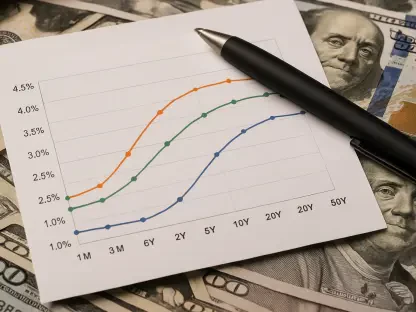

The global financial ecosystem experienced a seismic shift in liquidity patterns as investors scrambled to manage exposure after military hostilities involving Iran, the United States, and Israel erupted on February 28, 2026. This sudden escalation of geopolitical tension effectively dismantled the prevailing market narrative that had anticipated a cycle of steady interest rate reductions across major Western economies. According to data provided by the Depository Trust & Clearing Corporation and the International Swaps and Derivatives Association, a staggering $20.1 trillion in interest rate derivatives notional changed hands in a single week. This volume represents approximately double the weekly average observed during the earlier months of the year, signaling the most intense period of trading activity on record. Financial institutions and hedge funds have pivoted aggressively toward protective strategies, reflecting a profound anxiety over the stability of global supply chains and the immediate future of monetary policy.
Reversal of Global Central Bank Policy Expectations
The primary catalyst for this historic surge in trading volume was the rapid erosion of confidence in the disinflationary trend that had dominated market sentiment throughout the early weeks of the year. Before the onset of the conflict, the consensus among global economists favored imminent rate cuts by the Federal Reserve and the Bank of England to support growth. However, the military developments triggered a sharp spike in energy costs, with Brent crude oil prices surging past the critical $100 per barrel threshold. This inflationary shock forced a reassessment of the economic landscape, as the prospect of sustained price increases rendered previous dovish forecasts obsolete. Investors utilized interest rate swaps and options to hedge against the possibility that central banks might be forced to maintain higher rates for a longer duration, or even resume tightening cycles to combat the imported inflation resulting from skyrocketing fuel and transportation costs.
Market volatility became particularly pronounced in the short-dated sovereign bond sector, where yields serve as a primary barometer for shifting interest rate expectations. In the United Kingdom, the two-year Gilt yield climbed by more than 50 basis points shortly after the commencement of the bombing campaigns, reflecting the market’s skepticism regarding a planned easing by the Bank of England. Analysts from institutions like Barclays noted that the central bank’s upcoming policy decisions are now on a knife edge, as the once-clear case for a rate cut has been significantly undermined by energy-driven inflation risks. This environment has created a frantic demand for derivatives that provide protection against rising yields. The shift is not merely speculative; it represents a fundamental restructuring of institutional portfolios that were previously positioned for a low-rate environment but are now facing the reality of a volatile geopolitical climate.
Strategic Realignment in European and Global Bond Markets
The ripple effects of the Middle Eastern conflict extended deep into the Eurozone, where investors began abandoning traditional carry trades in French and Italian bonds in favor of more defensive positions. As the European Central Bank faced the prospect of managing an energy-linked inflation spike, the risk premia on southern European debt expanded rapidly. Strategists at Societe Generale highlighted that a prolonged duration of the current conflict would likely cement high inflation expectations, making structural hedges a necessity rather than an optional safeguard. The simultaneous decline in both bond prices and equity markets has challenged the traditional 60/40 portfolio model, driving a surge in demand for complex derivatives that can decouple returns from standard market movements. This flight to safety underscores a broader “risk-off” sentiment that has permeated every layer of the global financial architecture, from retail brokerage accounts to the largest sovereign wealth funds.
Strategic considerations for the remainder of the year were focused on the necessity of maintaining robust liquidity buffers and implementing multi-layered inflation protection. Portfolio managers recognized that while current oil prices were a significant concern, the real danger lay in the potential for prices to remain above $100 for an extended period, which would likely trigger a permanent shift in the inflationary cycle. Financial experts advised that institutions should have prioritized the acquisition of inflation-linked swaps and volatility-based derivatives to mitigate the impact of unpredictable geopolitical headlines. The historical trading volumes witnessed during this period served as a stark reminder that market stability was fragile and highly dependent on the stability of energy markets. By securing these protective instruments, savvy investors were better prepared to navigate the heightened uncertainty, ensuring that their capital remained resilient against the dual threats of war and resurgent inflation.