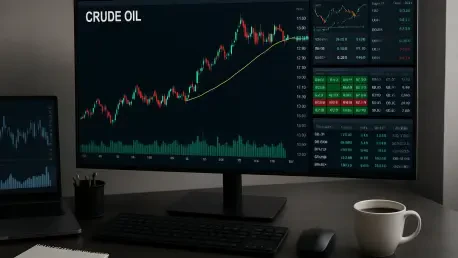

The rise of social trading ecosystems allows investors to mirror the real-time strategies of professional traders who specialize in global energy benchmarks. This technological advancement has essentially flattened the hierarchy of the commodities market, providing individuals with the same caliber of analytical tools that were once restricted to the trading floors of London and New York. In the current environment, crude oil maintains its position as the most heavily traded commodity, reflecting the ongoing complexities of global supply chains and the geopolitical nuances that influence production. Traders now navigate a landscape where West Texas Intermediate and Brent crude serve as the primary pulse of the energy sector, offering high liquidity and frequent price movement. The evolution of trading software has prioritized the seamless integration of global news feeds and real-time inventory data, enabling participants to react to sudden shifts in the market with unprecedented speed. This accessibility is a hallmark of the modern era, where the barrier to entry has moved from capital requirements to technological proficiency. As market volatility remains a constant factor, selecting a platform that offers robust execution and deep market insight has become the primary differentiator for successful engagement in oil trading.
Primary Financial Instruments: Shaping Modern Energy Markets
The diversity of financial instruments available today provides traders with various pathways to capitalize on price movements without ever handling a physical barrel of oil. Contracts for Difference have emerged as a dominant choice for retail participants, primarily due to the flexibility they offer in both bullish and bearish market conditions. By using leverage, traders can amplify their exposure to Brent or WTI prices, although this requires a sophisticated understanding of margin requirements and risk thresholds. In contrast, futures contracts continue to serve as the benchmark for institutional and high-volume traders who prioritize standardized exchange clearing and total transparency. These contracts facilitate a direct connection to the underlying commodity price, offering a level of precision that is essential for those executing large-scale hedging strategies or long-term speculative positions. The structural integrity of these instruments ensures that the market remains liquid and efficient, even during periods of extreme price fluctuation driven by shifts in global energy policy.
The shift toward digital speculation has replaced the necessity for physical infrastructure with high-speed data centers and mobile-first interfaces. This transition has fundamentally altered the interaction between the investor and the asset class, placing a premium on execution speed and the quality of the price feed. Modern platforms have integrated sophisticated order types and algorithmic execution to ensure that slippage is minimized, which is a critical factor when trading highly volatile assets like crude oil. Furthermore, the rise of Exchange-Traded Funds has provided a bridge for those seeking diversified exposure to the energy sector. These funds often track a basket of oil-related equities or a combination of futures contracts, allowing for a broader investment approach that mitigates the risks associated with the volatility of a single benchmark. This multi-faceted approach to market entry ensures that participants can tailor their strategies to their specific risk tolerance and financial objectives, reflecting the maturity and sophistication of the current trading landscape.
Reliable Entry Points: Retail and Collaborative Participants
For those who are just beginning their journey into the energy markets, the priority often rests on finding a platform that balances ease of use with stringent regulatory compliance. Mitrade has gained significant traction by offering an intuitive user experience that removes the clutter often found in professional-grade software. This platform focuses on providing a streamlined gateway for CFD trading, emphasizing clear risk management tools such as stop-loss orders and negative balance protection. By operating under the oversight of top-tier regulators like the Australian Securities and Investments Commission, it provides a layer of security that is essential for building confidence among retail investors. The emphasis here is on transparency and simplicity, ensuring that users can focus on interpreting market signals rather than navigating a complex interface. This approach has made it a preferred choice for individuals who value a clean, functional environment that prioritizes the safety of their capital while offering competitive leverage and tight spreads.
Collaborative trading has also seen a massive surge in popularity, with eToro leading the charge through its highly developed social investment network. The platform has effectively transformed trading from a solitary activity into a communal experience where users can discuss geopolitical developments and share insights on inventory reports in real-time. The signature CopyTrader functionality allows less experienced participants to automatically replicate the trades of seasoned energy experts, providing a practical educational tool for those still learning the ropes. This social layer adds a unique dimension to oil trading, as it aggregates the collective sentiment of thousands of participants, offering a broader perspective on market trends. By maintaining a strong regulatory framework, the platform ensures that this social interaction takes place within a secure and transparent environment. This blend of community engagement and professional-grade security has created a unique ecosystem where knowledge sharing is as valuable as the underlying technology, allowing for a more informed and connected trading community.
Specialized Systems: Technical Analysis and Automated Execution
Experienced traders and those with a focus on deep technical research often gravitate toward platforms that offer comprehensive analytical suites and high-performance execution. IG has established itself as a premier destination for power users by providing an exhaustive array of charting tools, technical indicators, and historical data. This depth of information is vital for traders who rely on pattern recognition and statistical analysis to forecast price movements in the WTI and Brent markets. Similarly, Plus500 has carved out a niche by focusing on execution efficiency and a streamlined, no-frills interface. It appeals to those who want to react quickly to market-moving events without being encumbered by excessive data or complex research modules. These platforms emphasize the reliability of their systems, ensuring that even during high-volatility sessions, such as those following an OPEC+ announcement, orders are processed with minimal delay. This focus on the “nuts and bolts” of trading makes them indispensable for participants who prioritize speed and reliability above all else.
The rise of algorithmic trading has further diversified the platform landscape, with providers like Pepperstone and CMC Markets catering specifically to the needs of automated strategy developers. Pepperstone offers seamless integration with MetaTrader and cTrader, providing the low-latency execution and tight spreads that are essential for high-frequency strategies. This technical focus allows for the implementation of complex bots that can scan the energy markets for arbitrage opportunities or momentum shifts 24 hours a day. On the other hand, CMC Markets provides a proprietary platform known for its customizable dashboards and deep liquidity, which is particularly beneficial for large-volume traders. Meanwhile, AvaTrade serves as a bridge for those who require a multi-platform environment, supporting everything from mobile trading to advanced automated systems. These specialized hubs ensure that whether a trader is manually analyzing a chart or deploying a complex script, they have access to the specific infrastructure required to maintain a competitive edge in a fast-paced and technologically demanding market.
Strategic Foundations: Risk Management and Long-Term Stability
The selection of a trading platform must ultimately be grounded in a rigorous assessment of regulatory standing and the cost of doing business. Industry experts consistently highlight that oversight from major authorities, such as the Financial Conduct Authority or the Australian Securities and Investments Commission, is the non-negotiable foundation of a secure trading environment. These regulators ensure that client funds are held in segregated accounts and that brokers maintain sufficient capital to weather market shocks. Beyond security, the competitive nature of the 2026 brokerage market has led to a significant compression in costs. The most effective platforms are those that offer the tightest spreads on oil benchmarks and clearly disclose all fees associated with overnight financing or currency conversion. This transparency prevents hidden costs from eroding the profitability of a trade, allowing investors to accurately calculate their risk-to-reward ratios. In a market where margins can be thin, the ability to minimize operational overhead through efficient platform selection is a critical component of long-term success.
The development of these platforms provided the necessary infrastructure to manage the inherent risks of the energy sector with greater precision. Looking forward, traders should prioritize the integration of automated risk alerts and real-time sentiment analysis into their daily routines to navigate sudden geopolitical shifts effectively. The tools available now, such as guaranteed stops and integrated economic calendars, were instrumental in helping participants maintain discipline during recent periods of high volatility. Moving into the next phase of market participation, the focus must remain on leveraging these analytical engines to protect capital while seeking growth. It is advisable to conduct periodic audits of platform performance, checking for consistent execution speeds and the availability of updated educational resources regarding production cycles and global inventory trends. By remaining proactive in platform evaluation and utilizing advanced risk management features, investors can ensure they are well-positioned to capitalize on the dynamic and evolving landscape of global oil trading, turning technological capabilities into a sustainable competitive advantage.