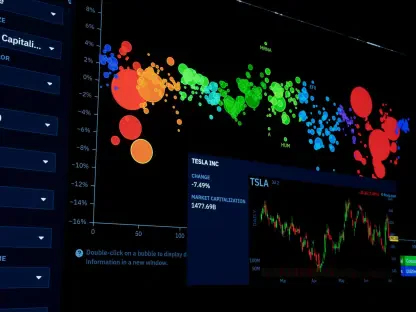
A significant divergence in Wall Street sentiment exists regarding Tesla’s Cybercab event, with price targets ranging from four hundred to four hundred seventy-five dollars per share. This uncertainty underscores a broader trend where the traditional financial infrastructure is no longer sufficient to capture the rapid fluctuations of modern high-growth equities. Investors are increasingly seeking alternative avenues that provide greater flexibility than conventional brokerage accounts, leading to the rise of platforms that merge cryptocurrency technology with stock market exposure. These environments allow for the trading of derivative products tied to major tech giants without the bureaucratic delays associated with T+2 settlement cycles. By leveraging the same high-speed engines used for digital assets, traders can engage with equity-based contracts in a way that was once reserved for institutional desks. This shift represents a fundamental redesign of how global liquidity is accessed, moving away from fragmented regional markets toward a unified digital ecosystem where traditional assets coexist alongside decentralized ones.
Market Dynamics: The Impact of High-Stakes Tech Volatility
The anticipation surrounding the release of a vehicle devoid of traditional steering wheels or pedals has fundamentally altered the risk profile for automotive investors. While some analysts view the shift toward a purely autonomous fleet as the ultimate catalyst for valuation expansion, others point to the significant regulatory and engineering hurdles that remain. This tension has turned Tesla into one of the most volatile and heavily traded assets globally, attracting a new generation of market participants who prioritize real-time response over long-term holding patterns. The current landscape favors trading platforms that can offer high-leverage instruments, allowing users to capitalize on these macro shifts with precise timing. As the market digests the implications of Tesla’s autonomy roadmap, the demand for sophisticated hedging tools continues to grow. This environment proves that the traditional divide between equity analysts and crypto speculators is rapidly vanishing, as both groups now track the same technical indicators and high-impact news events.
Beyond the immediate excitement of product launches, the broader automotive sector is navigating a complex recovery marked by fluctuating delivery numbers in major economic hubs. In regions like China, technical recalls and local competition have forced major manufacturers to recalibrate their growth projections, yet the underlying demand for smart mobility remains robust. Data indicating that advanced driver-assistance systems can lead to a substantial reduction in collision rates serves as a powerful long-term bull case for the industry. However, the path to full market penetration is fraught with geopolitical challenges and supply chain dependencies that can trigger sudden price corrections. Traders who utilize perpetual contracts for these assets are uniquely positioned to manage such risks, as these instruments do not require the constant rolling over of positions found in traditional futures markets. This structural advantage allows for a more streamlined approach to managing exposure in a sector where news cycles can move the needle by billions of dollars in a matter of seconds.
NvidiNavigating the Artificial Intelligence Infrastructure Supercycle
Parallel to the automotive evolution, the semiconductor industry is experiencing its own seismic shift, driven primarily by the relentless expansion of artificial intelligence infrastructure. Nvidia has emerged as the central architect of this movement, securing its position through strategic investments in foundational AI research and development. The massive capital expenditures planned by global hyperscalers over the next few years suggest that the hunger for high-performance data center chips is not a temporary bubble but a structural change in the global economy. By injecting capital into key players like Hugging Face, the industry leaders are ensuring that the software ecosystem remains tightly integrated with their hardware roadmap. This level of vertical integration creates a formidable moat, but it also makes the stock highly sensitive to any shifts in AI spending sentiment. For traders, this translates to a series of high-probability opportunities that require advanced tools to execute efficiently, as the delta between winners and losers in the hardware race continues to widen every quarter.
The ability to trade high-growth technology stocks via perpetual derivatives has fundamentally changed the tactical landscape for retail participants. Traditional equity markets are constrained by rigid opening and closing hours, which can leave traders exposed to significant overnight gaps when news breaks in different time zones. By adopting a crypto-native infrastructure for stock derivatives, platforms are effectively providing a 24/7 window into the most liquid companies in the world. This continuous market access is particularly valuable during the AI supercycle, where strategic announcements or earnings reports from related sectors can cause immediate ripple effects across the entire technology complex. Participants can now enter and exit positions with institutional-grade speed, utilizing features like cross-margin and isolated margin to fine-tune their risk parameters. This level of control was previously unavailable to the average user, who had to rely on slower, more expensive brokerage services that struggled to keep pace with the velocity of the modern digital economy.
Transparent Architecture: Rule-Based Logic in Modern Trading
One of the most significant advantages of the bridge between crypto and traditional stocks is the implementation of a transparent by design operational model. In legacy finance, traders often face hidden fees, opaque execution rules, and discretionary interventions that can negatively impact performance. Modern derivatives platforms have countered this by utilizing fixed, publicly disclosed schedules for all critical parameters, including funding rates and margin requirements. This rule-based execution ensures that the platform operates as a neutral facilitator rather than a market participant with conflicting interests. By automating these processes through sophisticated smart contracts and high-performance matching engines, the potential for human error or bias is virtually eliminated. This transparency fosters a higher degree of trust among users, as they can accurately calculate the cost of their trades and the requirements for maintaining their positions well in advance. As more traders migrate to these systems, the standard for what constitutes a fair trading environment is being redefined by the efficiency of decentralized logic.
The technological framework supporting these derivatives allows for an unprecedented level of portfolio diversification within a single user interface. Traders are no longer restricted to a handful of technology stocks but can instead move fluidly between various sectors, including healthcare, finance, and industrial manufacturing. For instance, a user can hedge a long position in a major bank like JPMorgan with a short position in a volatile tech stock, all while using the same collateral base. This consolidated approach removes the friction of managing multiple accounts and the complexities of currency conversions across different regional exchanges. Furthermore, the inclusion of classic industrial leaders like General Electric ensures that the platform caters to both momentum-driven speculators and more conservative hedgers. By democratizing access to the world’s most liquid financial instruments, these digital bridges are creating a more inclusive ecosystem where capital can flow freely to where it is most effectively utilized. This integration is a critical step toward the eventual full tokenization of global equity markets.
Institutional Standards: Security Frameworks for Global Users
Establishing a secure and compliant environment has become the primary differentiator for platforms looking to bridge the gap between retail users and institutional standards. This process involves securing registrations in multiple jurisdictions, such as the United States, Canada, and Australia, to ensure that operations align with local legal requirements. By adhering to these rigorous standards, a platform can build a trust framework that attracts millions of participants who might otherwise be wary of the digital asset space. This commitment to compliance is not merely a bureaucratic necessity but a strategic pillar that enables the long-term sustainability of the exchange. It allows for the integration of traditional banking rails and provides a clear pathway for professional investors to enter the ecosystem. As the regulatory landscape continues to evolve from 2026 to 2028, the platforms that have already invested in a robust legal foundation will be best positioned to lead the next wave of financial innovation, providing a safe harbor for global capital in an increasingly fragmented world.
To further bolster user confidence, leading derivatives exchanges are moving away from the speculative practices that have historically plagued the crypto industry, such as issuing native platform tokens or engaging in high-risk venture capital incubation. Instead, the focus has shifted toward fundamental safety and financial integrity, evidenced by the regular publication of proof of reserves and the commissioning of independent security audits. These measures ensure that user funds are held on a one-to-one basis and are not being used for external lending or investment purposes. This precision-oriented approach mirrors the standards seen in high-performance industries like Formula 1, where every component is scrutinized for reliability and speed. By prioritizing fund safety and operational transparency, these platforms are effectively closing the credibility gap between traditional brokerage houses and digital asset exchanges. The result is a high-performance environment where traders can focus on market strategy rather than worrying about the underlying stability of the infrastructure, aligning the platform’s values with the professional ethos of its user base.
Strategic Evolution: Integrating Equity Markets and Digital Assets
The integration of U.S. equities into a crypto-native derivatives framework represented a fundamental shift in how modern investors approached global markets. By removing the administrative friction typical of legacy systems, these platforms allowed for a more reactive and efficient deployment of capital. Those who successfully navigated this transition focused on utilizing high-performance tools to manage risk across a diverse range of assets, from autonomous vehicle pioneers to artificial intelligence architects. It was essential for participants to prioritize platforms that offered transparent, rule-based execution and a robust regulatory foundation to protect their interests. Moving forward, the emphasis shifted toward deeper technical integration, where the speed of digital asset markets met the established stability of traditional stocks. Investors were encouraged to refine their strategies by leveraging 24/7 market access and institutional-grade security features to hedge against global volatility. This era marked the end of fragmented trading and the beginning of a unified, inclusive financial landscape that prioritized the user’s ability to respond to change in real-time.
The shift toward unified trading environments necessitated a new set of best practices for both retail and professional participants. Investors learned that maintaining a competitive edge required a departure from static portfolio management toward a more dynamic, data-driven approach that utilized the full spectrum of available derivatives. By embracing platforms that bridge the gap between crypto and equities, traders were able to minimize liquidity risks and capitalize on cross-market correlations that were previously invisible. The successful strategies of this period were defined by the use of automated risk-control tools and a commitment to platforms that provided transparent proof of reserves. As financial technology continues to advance, the focus remains on the continued removal of intermediaries and the further democratization of high-leverage trading. The next logical step involves the broader adoption of these unified infrastructures by a wider range of global asset classes, ensuring that transparency and efficiency remain the cornerstones of the evolving financial system.