
A powerful wave of optimism centered on the artificial intelligence sector swept through Wall Street, propelling markets upward even as investors held their breath for the Federal Reserve’s first major policy announcement of the year. This dynamic created a fascinating tension in the market, where the seemingly boundless potential of technological innovation clashed with the sobering realities of macroeconomic management. The day’s trading activity was a clear reflection of this duality, with technology stocks leading the charge on the back of explosive industry news, while the broader market remained in a state of cautious anticipation. Investors were keenly focused on an impending deluge of information, from the central bank’s guidance on interest rates to a series of critical earnings reports from the technology behemoths that have come to dominate the economic landscape, setting the stage for a potentially volatile and revealing period.
Semiconductor Surge Signals Sustained AI Demand
The primary catalyst for the market’s bullish sentiment emerged not from Wall Street, but from the heart of the global semiconductor supply chain in the Netherlands, where a stunning report from ASML Holding provided tangible proof of the AI boom’s accelerating momentum. The company, which holds a virtual monopoly on the sophisticated lithography machines required to manufacture the world’s most advanced microchips, announced an unprecedented surge in fourth-quarter orders. Bookings soared to €13.2 billion, an amount that more than doubled the consensus analyst estimate and signaled a massive capital investment push from the world’s top chipmakers. This overwhelming demand for ASML’s cutting-edge equipment serves as a direct leading indicator for the future production capacity of chips that are the foundational building blocks for AI data centers. Companies like Taiwan Semiconductor Manufacturing and Intel rely exclusively on ASML’s technology to produce the high-performance processors designed by firms such as Nvidia, which are essential for training and running complex artificial intelligence models. This report was seen as a powerful confirmation that the AI revolution is transitioning from a speculative concept into a full-blown industrial expansion.
The explosive news from ASML sent immediate and powerful shockwaves across the global technology ecosystem, reinforcing investor conviction in the longevity of the AI trade. The company’s U.S.-listed shares surged by more than 6% in pre-market trading, but the impact was far from isolated. The positive sentiment quickly spread to its key clients and partners, with shares of AI standard-bearer Nvidia and chip-making giant TSMC also climbing in response. For market participants, ASML’s record-breaking bookings were interpreted as a definitive vote of confidence from the world’s most sophisticated manufacturers. It suggested that these industry leaders are preparing for a sustained, long-term period of robust demand for AI infrastructure, justifying immense capital outlays to expand their production capabilities. This tangible evidence helped solidify the narrative that the AI-driven technology boom is not a fleeting trend but a foundational shift in the economy, prompting a re-evaluation of growth prospects across the entire tech sector and providing a strong tailwind for the market ahead of other significant economic events.
Awaiting Guidance from Washington and Silicon Valley
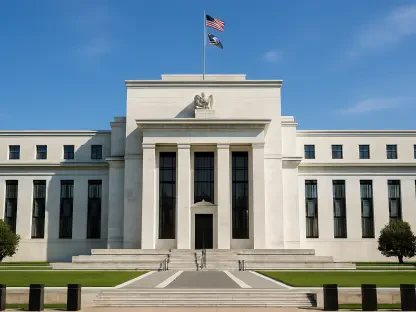
While the tech sector celebrated, a more watchful and circumspect mood prevailed concerning macroeconomic policy, as investors braced for the conclusion of the Federal Reserve’s inaugural two-day policy meeting of the year. The consensus was nearly universal that the central bank would opt to hold its benchmark interest rate steady, making the decision itself a relative non-event. Consequently, the market’s entire focus pivoted to the subsequent press conference to be led by Federal Reserve Chair Jerome Powell. Traders and analysts were poised to meticulously dissect every word and nuance of his commentary, searching for any forward-looking guidance on the potential timing, pace, and conditions for future interest rate cuts. According to data from the CME FedWatch tool, market pricing had already factored in an expectation of two quarter-point rate reductions by the close of 2026. This intense scrutiny underscored the market’s sensitivity to monetary policy, as the path of interest rates remains a critical variable for corporate valuations and overall economic growth, creating an environment of heightened anticipation for Powell’s remarks.
The day was also poised to be a crucial proving ground for the technology industry’s biggest names, with several members of the influential “Magnificent Seven” group scheduled to release their quarterly earnings reports after the closing bell. The spotlight was intensely focused on Microsoft and Meta Platforms, two giants that have committed tens of billions of dollars to building out vast data center infrastructures specifically for artificial intelligence workloads. Their financial results were expected to provide the first clear insights into the return on these monumental AI investments, offering a direct barometer of corporate and consumer adoption of new AI-powered services. These reports were seen as a critical test of the AI thesis, directly linking the capital expenditures on equipment from companies like ASML to tangible revenue growth. Adding to the high-stakes environment, electric vehicle maker Tesla was also slated to report its figures, with Apple’s highly anticipated quarterly update scheduled to follow, ensuring that the market would have a comprehensive health check on the technology sector and its influence on the broader economy.
Corporate Fortunes and Market Undercurrents
Beyond the overarching themes of AI and Fed policy, individual corporate developments created significant pockets of volatility and opportunity across the market. Telecommunications stalwart AT&T saw its stock climb 4% in pre-market hours after delivering an annual profit forecast that surpassed analyst expectations. The company’s positive outlook was underpinned by its aggressive strategic expansion of both its 5G wireless and fiber optic networks, a multi-billion dollar infrastructure push designed to capitalize on the soaring demand for high-speed connectivity. In a similar vein, data storage firm Seagate Technology experienced a notable pre-market surge of 9% after its third-quarter revenue and profit guidance handily beat Wall Street estimates, with the company citing robust demand for its storage devices. Analog chipmaker Texas Instruments also rose over 7% on a surprisingly strong first-quarter revenue forecast, suggesting a recovery in demand from key industrial and automotive markets as customers worked through excess inventory.
In stark contrast to the positive news in the technology and telecom sectors, the health insurance industry faced headwinds. Shares of Elevance Health tumbled 5% before the opening bell after the company released a 2026 profit forecast that fell short of Wall Street’s expectations. The insurer pointed to the persistence of elevated medical costs as the primary reason for the cautious outlook. This issue has been a persistent challenge for the industry, particularly after enrollment shifts in Medicaid programs left insurers with a membership pool requiring more frequent and expensive medical services. Meanwhile, looking beyond immediate earnings, a report from the Financial Times indicated that Elon Musk is targeting a mid-June initial public offering for his aerospace company, SpaceX. The potential IPO, seeking to raise up to $50 billion at a staggering valuation of approximately $1.5 trillion, would represent the largest in history if successful. This news, coupled with developments in the currency market where the U.S. dollar stabilized after a recent decline, highlighted the diverse and complex factors shaping investor sentiment on a pivotal day for the markets.
A Market Poised at a Crossroads
The day’s market activity ultimately reflected an environment brimming with both immense opportunity and significant uncertainty. The spectacular results from ASML provided a powerful and tangible validation of the AI investment thesis, suggesting that the technological revolution underway was not only real but was also accelerating at a pace that caught even seasoned analysts by surprise. This fervor provided a strong foundation for gains, particularly within the technology sector, as investors priced in a future of sustained growth driven by innovation. However, this optimism was carefully counterbalanced by the looming presence of the Federal Reserve and the critical earnings reports from market-leading corporations. The central bank’s commentary on inflation and interest rates held the potential to either reinforce the market’s positive trajectory or introduce a new wave of caution. Similarly, the performance of tech giants would serve as a crucial reality check, determining whether the massive capital investments in AI were already translating into the profitable growth that shareholders expected. The market had been clearly defined by these competing narratives, leaving it at a critical juncture where the coming disclosures would likely set the tone for weeks to come.