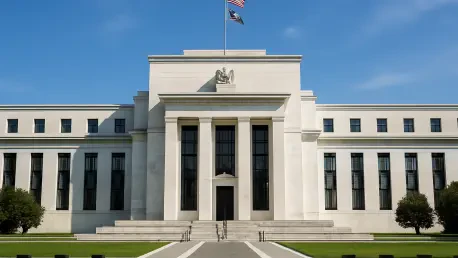

The Federal Reserve’s balance sheet has arrived at a staggering $6.7 trillion midpoint in this decade, representing nearly a quarter of the total annual economic output of the United States and serving as a constant source of friction among central bankers. This massive figure is not merely a technical accounting entry but a reflection of years of crisis management and evolving monetary policy that has fundamentally reshaped the American financial landscape. While the expansion of the balance sheet was largely seen as a necessary response to past economic shocks, the persistence of such a large footprint now raises urgent questions about long-term market distortions and the potential for unintended consequences. Economists and policymakers are increasingly debating whether the benefits of providing such massive amounts of liquidity still outweigh the complexities introduced to interest rate control and market independence. The consensus is shifting toward the idea that a smaller central bank presence is desirable, yet the path to achieving that reduction without destabilizing the global financial system remains a delicate and highly technical challenge.
Effective balance sheet management requires a paradigm shift that moves away from simply selling off assets and instead focuses on the underlying demand for the Federal Reserve’s liabilities. Experts such as Lorie Logan and Sam Schulhofer-Wohl have proposed that the minimum size of the balance sheet is ultimately determined by the public and private sectors’ demand for safe, liquid central bank obligations. Because the Fed must hold assets to back every dollar of its liabilities, shrinking the balance sheet is effectively a task of reducing the economy’s reliance on these specific forms of money. This perspective requires a deep dive into the roles of currency, bank reserves, and specialized accounts held by the Treasury and foreign authorities. Only by addressing the fundamental reasons why these entities hold Fed liabilities can policymakers hope to achieve a sustainable reduction in the central bank’s footprint. This systematic approach ensures that any contraction of the balance sheet is rooted in the practical realities of the modern financial system rather than arbitrary numerical targets.
Evaluating the Core Tradeoffs of Reduction
Private Value and Systemic Externalities
Federal Reserve liabilities, primarily consisting of physical currency and electronic bank reserves, represent the absolute pinnacle of safety and liquidity within the global financial architecture. These assets are unique because they carry zero default risk and are accepted as the final means of settlement for every transaction in the American economy, making them indispensable for households, corporations, and financial institutions. Because the Fed is the sole provider of these risk-free obligations, the demand for them remains consistently high, especially during periods of global uncertainty when private-sector collateral may be viewed with skepticism. Reducing the supply of these liabilities directly impacts the private benefits available to those who rely on them for daily operations and long-term security. If the Federal Reserve attempts to shrink its balance sheet too aggressively or without considering these needs, market participants may be forced into riskier or less liquid alternatives, which could inadvertently raise the cost of capital and introduce new vulnerabilities into the private credit market.
The broad availability of these liabilities creates significant positive externalities that enhance the overall stability of the financial system by reducing liquidity risk and facilitating the rapid flow of payments across borders. Safe assets provided by the central bank act as a lubricant for the gears of commerce, ensuring that banks can meet their obligations to customers without delay and that the repo markets function smoothly. However, maintaining a perennially large balance sheet is not without its negative externalities, as it may foster a sense of complacency among market participants who believe the central bank will always serve as a liquidity backstop. This perception can lead to excessive risk-taking, as firms might underinvest in their own liquidity management systems in favor of relying on the Fed. Furthermore, the massive circulation of physical currency, while beneficial for privacy and international trade, can facilitate illicit activities and tax evasion, creating a social cost that must be balanced against the central bank’s operational goals for the current 2026 fiscal environment.
Fixed versus Contingent Footprints
A central question for policymakers involves deciding whether the Federal Reserve should maintain a large, permanent presence in financial markets or a smaller “fixed” footprint that can expand rapidly through “contingent” facilities during times of stress. A large permanent balance sheet allows for a steady supply of liquidity, which simplifies interest rate management by ensuring that bank reserves are always ample and rates remain stable. However, this approach keeps the central bank deeply embedded in private market functions, potentially crowding out private-sector participants and distorting the pricing of various financial instruments. In contrast, a smaller fixed balance sheet would return more of the responsibility for liquidity provision to the private market, but it would require the Fed to maintain highly credible and ready-to-use tools for intervention. This shift would mean the central bank acts more like a firefighter that stays in the station until an emergency occurs, rather than a constant participant in daily market activities.
Transitioning to a contingent-heavy model requires a delicate balancing act, as the Federal Reserve must be prepared for sudden and massive expansions of its balance sheet if market conditions deteriorate. While a smaller daily presence might be philosophically appealing to those who favor limited government intervention, it necessitates a wider array of counterparties and more complex operational readiness to handle spikes in demand. For example, the central bank might need to interact with a broader range of non-bank financial institutions during a crisis to ensure that liquidity reaches the entire economy, not just the large commercial banks. This tradeoff means that while the “normal” size of the balance sheet might be lower, the potential for volatility in the Fed’s footprint increases significantly. Policymakers must therefore determine which type of central bank presence is more palatable for the long-term health of the economy: a predictable but large static presence or a smaller, more dynamic one that is prone to rapid and dramatic fluctuations during periods of financial instability.
Taxpayer Costs and Fiscal Impact
The financial operations of the Federal Reserve are inextricably linked to the fiscal health of the United States, as the central bank’s net income is regularly remitted to the U.S. Treasury to offset the federal deficit. When the Fed maintains a large balance sheet, it typically holds interest-bearing Treasury securities and issues liabilities like reserves, earning a “carry” on the difference between the interest received and the interest paid. In many economic environments, this arrangement generates significant revenue for the government, effectively reducing the net interest burden on American taxpayers. However, as interest rates fluctuate, the profitability of this carry can change, and a shrinking balance sheet could lead to a situation where the Treasury must issue more interest-bearing debt to the public to replace the financing previously provided by the Fed. This shift could inadvertently increase the overall cost of servicing the national debt, making balance sheet reduction a matter of fiscal policy as much as it is a matter of monetary policy.
Any strategy to reduce the central bank’s footprint must carefully account for the consolidated impact on the entire government’s balance sheet, rather than looking at the Federal Reserve in isolation. If the Fed drains reserves and sells its holdings of Treasury bonds, the private market must absorb that supply, which could exert upward pressure on bond yields and increase borrowing costs for the federal government. Starting in 2026, as the government continues to manage its debt obligations, the timing of balance sheet reduction becomes critical to avoid adding unnecessary volatility to the Treasury market. Economists must weigh the theoretical benefits of a smaller central bank against the practical reality of potentially higher interest expenses for the public. This fiscal dimension adds another layer of complexity to the debate, as the goal of a leaner central bank may occasionally conflict with the goal of minimizing the interest burden on the U.S. Treasury, requiring a coordinated approach between the two institutions to ensure long-term stability.
The Mechanics of Liability Management
Decoupling Assets from Liabilities
One of the most important conceptual breakthroughs in modern balance sheet management is the realization that asset policy can be decoupled from the overall size of the central bank’s liabilities. While the Federal Reserve is legally required to hold assets to back the money it issues, the specific composition and duration of those assets are discretionary choices that have distinct impacts on the economy. In theory, the Fed could match the duration of its asset portfolio to the duration of its liabilities, which would effectively neutralize its impact on the long-term interest rate term premiums that influence mortgage and corporate loan rates. By adopting such a “neutral” asset strategy, the Fed could shrink its footprint in terms of market influence without necessarily having to make immediate and drastic cuts to the total volume of liabilities. This approach allows the central bank to address concerns about its influence over the yield curve while still providing the liquidity that the financial system requires for daily operations.
By treating the duration of assets as a secondary factor, policymakers can focus more clearly on the primary goal of managing the demand for the Fed’s liabilities. The U.S. Treasury plays a vital role in this decoupling process, as it can adjust its own debt issuance to offset any duration risk created by the Fed’s portfolio holdings. For example, if the Fed holds a significant amount of long-term bonds, the Treasury can choose to issue more short-term debt, thereby maintaining a stable overall duration for the consolidated government’s debt held by the public. This coordination means that the size of the Fed’s balance sheet is not the only lever for controlling its impact on the broader financial markets. Instead, the central bank can focus on the technical necessity of each liability category—such as bank reserves and currency—while letting the Treasury handle the broader task of managing the maturity structure of government debt. This separation of duties provides a more flexible framework for reducing the central bank’s footprint while minimizing disruption to the long-term bond market.
Understanding the Composition of Liabilities
To develop an effective plan for shrinking the balance sheet, one must first understand the complex mix of liabilities that currently define the Federal Reserve’s presence in the economy. At the forefront is physical currency, which has grown to approximately $2.4 trillion due to its role as a global store of value and a medium of exchange, with more than half of all U.S. bank notes currently held outside the country. This international demand is largely beyond the direct control of the Fed and is driven by the global status of the dollar as a reserve currency. Alongside currency are bank reserves, which currently total roughly $3 trillion and serve as the foundation for the domestic payment system and regulatory compliance. These reserves are the primary tool through which the Fed implements its monetary policy, as the interest paid on these balances sets the floor for short-term interest rates in the wider economy. Managing the volume of these reserves is the most direct way for the Fed to control the size of its balance sheet.
Beyond currency and reserves, the Federal Reserve also maintains several specialized accounts that add significant volatility and size to its total footprint, such as the Treasury General Account (TGA). The TGA functions as the federal government’s primary checking account, and its balance can swing by hundreds of billions of dollars depending on the timing of tax receipts and government spending programs. These fluctuations often force the Fed to adjust its other operations to ensure that the total supply of liquidity in the system remains stable. Additionally, the Fed provides accounts for foreign monetary authorities and systemically important financial utilities, which use the central bank as a safe haven for their dollar-denominated cash. Finally, the Overnight Reverse Repo facility has become a massive component of the balance sheet, providing non-bank entities like money market funds with a safe place to park excess cash. Understanding how these diverse liabilities interact is essential for any policy aimed at a targeted and responsible reduction of the central bank’s overall size in 2026 and beyond.
Strategies for Reducing Currency and Reserves
Innovations in Payment Systems
Modernizing the way payments are processed in the United States offers a significant opportunity to naturally reduce the public’s reliance on physical currency and, by extension, shrink the Federal Reserve’s balance sheet. The promotion of instantaneous, 24/7 electronic payment rails—such as the FedNow service or the integration of highly regulated stablecoins—could provide consumers and businesses with digital alternatives that are as liquid and final as cash. If digital transactions become the primary method for even the smallest daily purchases, the demand for physical bank notes would likely see a gradual and structural decline. This shift would allow the Fed to retire a portion of its $2.4 trillion in currency liabilities, reducing the need for the central bank to hold matching assets. However, this transition must be managed with care to ensure that the digital systems are as resilient as physical cash and do not exclude those who lack access to traditional banking services.
While the appeal of a digital-first economy is strong, international experiences provide a cautionary tale about the potential risks of moving away from physical currency too quickly. In countries like Sweden, where digital payments nearly replaced cash, the government eventually had to advise citizens to keep physical money on hand as a backup in case of massive cyberattacks or electrical grid failures. This suggests that physical currency provides a unique layer of systemic resilience that digital systems cannot yet fully replicate, meaning some level of cash demand will likely persist as a security measure. Furthermore, any effort to reduce cash by discontinuing large denominations, such as the $100 bill, could have far-reaching geopolitical consequences. While such a move would certainly shrink the balance sheet and curb illicit activity, it might also undermine the global status of the U.S. dollar, as international holders might shift their wealth into other currencies or assets that offer similar levels of anonymity and portability.
Managing Reserves in an Ample Regime
In the current “ample-reserves” framework, the Federal Reserve maintains a large enough supply of liquidity to ensure that short-term interest rates remain stable without requiring frequent market interventions. To reduce the balance sheet within this system, the Fed must find ways to lower the aggregate demand that banks have for holding these reserves. One of the most effective strategies involves addressing the “stigma” associated with the Discount Window, which is the Fed’s primary facility for lending directly to banks. Many financial institutions currently hold excessive amounts of precautionary reserves because they fear that borrowing from the central bank will be viewed by regulators or the public as a sign of financial weakness. If the Fed can successfully transform the Discount Window into a routine and stigma-free business tool, banks would feel more comfortable operating with lower daily reserve balances, knowing they can easily access liquidity if an unexpected need arises.
In addition to cultural changes, regulatory and operational adjustments could significantly lower the total volume of reserves that the banking system feels compelled to hold. Current liquidity regulations often force banks to maintain massive buffers of central bank reserves, which are treated as the highest quality liquid assets, but these rules can sometimes be overly rigid. Modifying regulations to give banks more credit for holding high-quality collateral that can be quickly converted to cash at the Fed could reduce the need for them to hold static reserves on a permanent basis. Furthermore, improving the efficiency of the Fedwire system—the central bank’s large-value payment rail—could allow for more frequent netting of payments, reducing the amount of liquidity banks need to keep on hand to settle daily transactions. By focusing on these technical and regulatory levers, the Federal Reserve can shift the bank demand curve for reserves inward, allowing for a smaller balance sheet that still supports a robust and stable financial system.
Enhancing Market Efficiency and Distribution
Improving the Redistribution of Liquidity
A persistent challenge in balance sheet management is the uneven distribution of liquidity, where massive amounts of reserves are concentrated in a few large institutions while smaller or more specialized banks experience occasional shortages. This friction often forces the Federal Reserve to maintain a much larger total supply of reserves than is technically necessary for the system as a whole, simply to ensure that every corner of the market has enough cash to function. To address this, policymakers are looking at ways to revitalize the unsecured interbank lending market, where banks trade reserves with one another without requiring collateral. High regulatory and capital costs have made this type of lending less attractive for large banks since the mid-2020s, leading to a breakdown in the private-sector redistribution of liquidity. Reducing these penalties could encourage banks to lend their excess reserves to one another more freely, effectively lowering the aggregate demand for central bank-supplied liquidity.
Another promising tool for improving the distribution of liquidity is the implementation of competitive lending mechanisms, such as daily auctions of discount window loans. Instead of simply buying Treasury securities to inject reserves into the system, the Federal Reserve could auction off a set amount of liquidity to the highest bidders among eligible banks. This market-based approach would ensure that reserves flow directly to the institutions that value them most, rather than being stuck in the accounts of banks that do not currently need them. By using price signals to allocate liquidity, the Fed could reduce the need for a massive “safety margin” of reserves, as the private market would be more efficient at moving money to where it is most productive. This strategy would require a shift in how the Fed communicates with the market, but it could lead to a leaner and more responsive balance sheet that relies on market forces rather than central bank estimates of total reserve needs.
Leveraging the Standing Repo Facility
The Standing Repo Facility (SRF) has emerged as a critical “safety valve” that allows the Federal Reserve to maintain a smaller permanent balance sheet while still providing a robust backstop for the financial system. By allowing banks and primary dealers to instantly swap Treasury securities for reserves at a pre-set rate, the SRF provides a guaranteed source of liquidity that prevents sudden spikes in short-term interest rates. A strong and frequently utilized SRF gives banks the confidence to hold more of their liquidity in the form of Treasury bonds rather than idle cash reserves at the Fed. This is a vital development because it allows the central bank to drain permanent reserves from the system, knowing that it can provide “contingent” reserves the moment they are needed. The presence of a reliable ceiling on interest rates through the SRF reduces the volatility that typically accompanies a smaller balance sheet, making the path toward contraction much safer.
Furthermore, the Federal Reserve could potentially shrink its footprint by tolerating more day-to-day volatility in market interest rates, rather than intervening to keep them within a very narrow band. If the market understands that the Fed will not step in for every minor fluctuation, private-sector participants will have a greater incentive to develop their own liquidity management solutions. This shift in expectations would allow the Fed to maintain a much lower “buffer” of excess reserves, which currently adds hundreds of billions of dollars to the balance sheet. Ultimately, the Fed could transition toward a demand-driven floor model, where it offers to lend reserves to any bank at a rate very close to the interest paid on those reserves. In this scenario, the supply of money would expand and contract naturally based on actual market demand, eliminating the need for the central bank to maintain a large, static presence and allowing the balance sheet to reach a more efficient equilibrium.
Transitioning to Different Reserve Regimes
The Pros and Cons of Scarcity
One of the more radical options for reducing the central bank’s footprint is a return to a “scarce-reserves” regime, which was the standard operating model before the profound shifts caused by the 2008 financial crisis. In a scarce-reserves environment, the Federal Reserve intentionally keeps the supply of reserves low enough that market interest rates are consistently higher than the rate the Fed pays on those reserves. This creates a powerful financial incentive for banks to lend out every spare dollar they have, maximizing the efficiency of the money supply and resulting in the smallest possible central bank balance sheet. However, this model requires a high level of precision from the Fed’s trading desk, as even small errors in estimating reserve demand can lead to dramatic spikes in interest rates. While a lean system is theoretically more efficient, it leaves very little room for error and can make the financial system more prone to sudden liquidity freezes.
Beyond the technical challenges of managing a scarce regime, there are significant economic tradeoffs that must be considered by policymakers in the 2026 economic environment. Banks operating in a system with limited reserves might be forced to raise fees or interest rates on consumer and business loans to cover the higher costs and risks of managing their daily liquidity needs. This could lead to a less efficient economy for everyday borrowers, as the “tax” of reserve scarcity is passed down through the financial chain. Additionally, a scarce-reserves system can lead to behavioral changes that slow down the overall velocity of money, such as banks waiting until the very end of the business day to send payments in hopes of receiving funds from other institutions first. This type of “gridlock” in the payment system can create bottlenecks that hinder economic growth and increase the likelihood of systemic failures during periods of market stress, making the decision to return to scarcity a difficult value judgment for central bankers.
Tiered Systems and Non-Reserve Liabilities
To mitigate the potential negative impacts of a scarce-reserves regime, the Federal Reserve could implement a tiered interest rate system similar to those used by other major central banks around the world. This approach involves paying a higher interest rate on a specific “quota” of reserves held by each bank, while paying a much lower or even zero rate on any balances that exceed that amount. A tiered system encourages banks to be efficient with their excess liquidity on the margin while still providing them with a safe and interest-bearing core of liquidity to support their basic operations. This hybrid model allows the Fed to significantly reduce the total volume of reserves in the system without imposing a massive financial burden on the banking sector. By fine-tuning the quotas and interest rates, policymakers can guide the balance sheet toward a smaller size while still maintaining the stability and control offered by the current ample-reserves framework.
Managing non-reserve liabilities, such as the Treasury General Account and the accounts of foreign monetary authorities, also provides a pathway for shrinking the Fed’s total footprint. The central bank could encourage the U.S. Treasury to keep a larger portion of its cash in private bank deposits or in the private repo market, rather than concentrating it all at the Fed. While this would move those funds off the central bank’s balance sheet, it would require careful management to avoid exposing the Treasury to the risk of commercial bank failures or crowding out other private-sector borrowers. Similarly, providing foreign central banks with better tools to quickly monetize their Treasury holdings during periods of stress could reduce their need to maintain permanent, massive cash balances at the Fed. Each of these steps contributes to a smaller, more focused central bank that provides only the essential services that the private market cannot handle on its own, ensuring a more balanced role for the Federal Reserve in the modern era.
Strategic Implementation for Future Stability
The process of reducing the Federal Reserve’s balance sheet to a more sustainable size required a multifaceted strategy that prioritized operational efficiency and systemic stability over simple numerical targets. By focusing on the underlying demand for central bank liabilities, policymakers were able to identify areas where the private market could take a more active role in providing liquidity and managing risk. The successful reduction of the central bank’s footprint was not achieved through aggressive asset sales alone, but through a series of technical and regulatory improvements that shifted the way financial institutions interact with the Fed. These changes included the meaningful reduction of the stigma associated with the Discount Window and the enhancement of the Standing Repo Facility, which together provided a reliable “safety valve” for the system. These tools allowed the Federal Reserve to operate with a much leaner permanent balance sheet while maintaining the ability to respond decisively to any future economic shocks or liquidity shortages.
Moving forward from 2026, the Federal Reserve established a precedent for a more dynamic and responsive approach to balance sheet management that balances the need for a stable money supply with the desire for a smaller government presence in financial markets. The lessons learned during this period of contraction emphasized the importance of clear communication and gradualism, as sudden shifts in central bank policy can trigger unintended volatility in global markets. By coordinating closely with the U.S. Treasury and global monetary authorities, the Fed ensured that the reduction of its liabilities did not undermine the status of the dollar or the health of the broader economy. This strategic implementation focused on creating a resilient financial architecture where the central bank serves as a vital backstop rather than a constant participant. The resulting leaner balance sheet has provided the Federal Reserve with greater policy flexibility and a more transparent framework for navigating the economic challenges of the 21st century.