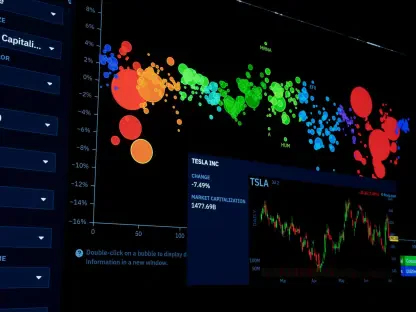

Bridging the gap between fragmented research and final portfolio reporting requires a digital environment that supports both backtesting and future scenario modeling. The recent release of AI Co-Investor 5.0 represents a significant evolution in institutional research and decision-support ecosystems, specifically designed for brokers and professional investment firms. Historically, the financial industry has struggled with a siloed approach where data collection, fundamental analysis, and portfolio construction exist as disparate processes. This fragmentation often leads to information decay and increased operational risk, particularly when navigating volatile global markets. By centralizing these functions into a single digital architecture, the platform enables asset managers to transition from reactive data processing to proactive strategic oversight. This shift is not merely about incremental speed; it is about creating a cohesive narrative from raw financial data to finalized investment strategy within a unified workflow.
Streamlining the Investment Lifecycle: A Modular Approach
The integration of the investment lifecycle within this updated platform is characterized by a modular yet interconnected approach that handles everything from initial discovery to granular valuation. Through the “Analyse” mode, professionals can conduct deep-dive investigations into specific sectors or individual corporations, utilizing primary sources such as regulatory filings and earnings call transcripts to ground their conclusions. Simultaneously, the “Explore” module utilizes advanced natural-language processing to navigate a massive universe of over 400,000 different financial instruments. Rather than relying on traditional, rigid screening filters that often miss thematic nuances, investors can now use conversational queries to identify assets that align with complex financial criteria. This fluid interaction with data allows for a more intuitive discovery process, enabling analysts to uncover value in equities, fixed income, and digital assets that might remain hidden within traditional spreadsheet-based models.
Moving beyond discovery, the “Construct” and “Manage” modes provide the heavy-duty computational power required for sophisticated portfolio architecture and ongoing maintenance. The platform’s optimization engine is capable of evaluating more than 17 trillion possible portfolio configurations, adjusting over 50 distinct parameters to meet precise risk tolerances and return objectives. This level of granularity ensures that every asset allocation is mathematically sound and aligned with institutional mandates. Once a portfolio is established, the management suite provides the necessary infrastructure for rigorous backtesting against historical data and the modeling of future economic scenarios. By incorporating real-time risk forecasting, the system allows asset managers to visualize how their holdings might react to sudden market shifts or macroeconomic shocks. This transition from static reporting to dynamic, forward-looking simulation provides a critical safety net for firms managing high-value institutional capital.
Enhancing Transparency: Evidence-Based Intelligence and Global Coverage
A core tenet of this technological evolution is the shift toward evidence-based artificial intelligence, which directly addresses the industry’s skepticism regarding “black box” generative models. In the high-stakes world of institutional finance, a conclusion is only as valuable as the evidence supporting it, which is why this system prioritizes full traceability and source attribution. Every insight generated by the AI is linked back to verifiable data points, allowing analysts to “drill through” to the original financial documents for validation. This commitment to transparency ensures that risk mitigation strategies are not based on algorithmic hallucinations but on factual, high-fidelity information. By maintaining this forensic level of accuracy, the platform helps investment firms satisfy regulatory requirements and internal compliance standards while leveraging the efficiency of modern automation. This approach fundamentally changes the relationship between the human analyst and the machine, fostering a collaborative environment built on trust.
To remain relevant in a high-frequency trading environment, the speed at which a system processes and incorporates new information is a primary competitive differentiator. The knowledge base of this platform updates every 60 seconds, ensuring that macro developments, geopolitical events, and sudden price actions are immediately reflected in all analytical outputs. This near-instantaneous synchronization eliminates the lag time typically associated with static research reports, allowing managers to pivot strategies before market opportunities dissipate. Furthermore, the platform acknowledges the increasingly globalized nature of modern capital markets by supporting over 150 different languages. This linguistic inclusivity allows local analysts to leverage global data in their native tongue without losing the subtle nuances of original financial text. By providing cross-asset coverage across equities, ETFs, crypto, and fixed income, the system offers a holistic view of the global financial landscape, catering to the needs of multi-asset investment houses.
Strategic Integration: Scaling Institutional Research for the Modern Firm
The strategic deployment of this technology focuses on flexibility and accessibility through various integration methods, including API and Master Control Platform (MCP) options. Large institutional clients can embed these analytical tools directly into their existing internal infrastructures, or even white-label the software to provide sophisticated research capabilities to their own client bases. This flexibility ensures that firms of different sizes can adopt institutional-grade tools without a complete overhaul of their legacy systems. At the same time, the maintenance of a streamlined “Light” version via personal applications signals a broader trend toward the democratization of high-level research. By making these forensic-level analytical tools available to a wider audience, the technology levels the playing field between individual investors and large-scale fund managers. This dual-track approach to accessibility reinforces the platform’s role as a foundational piece of digital infrastructure for the modern financial services industry.
The implementation of AI Co-Investor 5.0 ultimately established a new benchmark for how data-driven decisions were executed within the asset management sector. By consolidating research, optimization, and risk monitoring into a single utility, the industry successfully addressed the long-standing problem of tool fragmentation that previously hindered operational efficiency. Investment firms that adopted these unified digital environments found themselves better equipped to handle the complexities of a multi-asset, globalized market while maintaining strict adherence to evidence-based methodologies. Professionals discovered that the transition from reactive analysis to real-time, traceable intelligence became the standard for anyone seeking to navigate the financial landscape with confidence. Moving forward, stakeholders prioritized the integration of these systems into their core workflows to mitigate information overload. The shift toward transparent and highly computational portfolio management provided the forensic accuracy required to protect and grow capital in an increasingly digital and fast-paced global economy.