
The transition from localized disruption to systemic pricing adjustments marks a pivotal moment in how international commerce functions across the globe today. For decades, the global trading system operated on the assumption that geopolitical friction in the Middle East was a temporary aberration, a “black swan” event that would eventually resolve and return to a predictable, cost-effective baseline. However, as the world navigates through the current landscape of 2026, it has become evident that this baseline has been permanently dismantled in favor of a reality where risk is a structural, baked-in component of every commercial transaction. This shift is not merely a reaction to specific skirmishes but represents a fundamental repricing of global trade risk that forces corporations and financial institutions to move away from reactive crisis management toward a proactive strategy of risk absorption. The “slack” that once existed in the supply chain has evaporated, leaving no room for error or hesitation in the modern market.
Regional Dependency: Vulnerabilities in Energy and Soft Commodities
Asia stands at the epicentre of this pricing shift due to its extreme reliance on energy imports passing through the Strait of Hormuz, one of the world’s most sensitive maritime arteries. With approximately 80% of the region’s oil and liquefied natural gas (LNG) flowing through this single chokepoint, any sustained instability creates an immediate and heavy financial burden for importing nations that rely on these resources for industrial growth. Many of these economies are particularly sensitive to price fluctuations, meaning they have a very limited capacity to absorb the rising costs of energy and transportation without facing significant economic strain across their domestic markets. This dependency has forced a re-evaluation of national energy security strategies, as governments realize that the era of cheap, unfettered access to Middle Eastern hydrocarbons is likely over. Consequently, the cost of securing these shipments is now being factored into the long-term fiscal planning of regional states.
Beyond the immediate impact on energy markets, sectors such as metals and agriculture are grappling with their own unique sets of challenges that stem from increased regional volatility. Higher energy prices act as a double-edged sword for the metals industry, significantly increasing production costs while simultaneously tightening the credit limits available to trading partners. Meanwhile, the agricultural sector faces a more complex insurance environment for “soft” commodities like fertilizers and grains. Because these specific goods are often perishable, they are significantly harder to underwrite during times of prolonged conflict; a simple delay at a port or a canal can render a shipment worthless, leaving insurers with little hope of recovery. This reality has led to a noticeable contraction in the availability of traditional insurance for food-related shipments, driving up the price of basic necessities and creating a feedback loop of inflation that is difficult to break for global consumers.
Logistics Management: Escalating Costs and Route Diversification
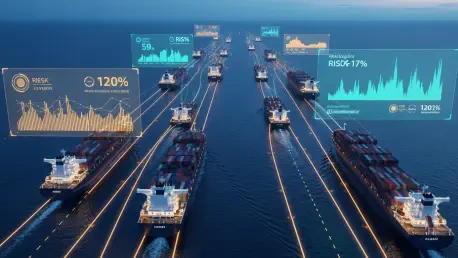
The most visible evidence of this repricing is found in the marine insurance market, where war-related premiums have reached unprecedented levels compared to standard historical averages. In some high-risk areas like the Persian Gulf, the cost to insure a single transit can now reach as much as 10% of the cargo’s total value, representing a massive overhead that was unthinkable just years ago. These are not standard annual rates that can be easily budgeted for; instead, they are short-term windows of coverage that often only provide protection for two to three weeks at a time. This creates a high-cost environment where traditional commodity pricing benchmarks often fail to capture the true expense of moving goods. Traders are finding that the cost of protection is sometimes higher than the profit margin on the goods themselves, forcing a total overhaul of how trade finance is structured and how risk is distributed between the buyer and the seller in a typical contract.
This surge in logistical costs has forced traders into a difficult calculation: pay the exorbitant insurance premiums required for direct routes or accept the significant delays of longer paths. Choosing the latter often involves circumnavigating entire continents, which adds weeks to delivery schedules and increases fuel consumption to levels that challenge corporate sustainability goals. This decision-making process has become far more cautious and data-driven than in the past, with companies utilizing advanced predictive modeling to determine the most cost-effective way to move cargo. The shift toward route diversification is no longer just a backup plan; it is a core operational requirement that factors into the final price of goods delivered to the end consumer. As logistical bottlenecks become a permanent feature of the trade map, the ability to pivot between different transportation modes and routes has become the primary metric for defining supply chain resilience in the current year.
Legal Protections: Force Majeure and Specialized Insurance
A growing gap has emerged between what companies believe their insurance covers and the legal reality of their policies when faced with sudden regional escalations. Many firms have historically relied on force majeure clauses to exit contracts during a conflict, but legal experts warn this can be a double-edged sword that creates unexpected liabilities. If a force majeure event is deemed legally valid, it may actually void certain non-payment insurance policies, as there is no longer a “legally enforceable debt” for the company to claim against in court. This nuance has brought legal scrutiny back to the forefront of trade risk management, as general counsel departments rewrite standard contracts to ensure that protection remains intact even during unforeseen events. The complexity of these legal frameworks means that a simple “act of god” clause is no longer sufficient to protect a company’s bottom line, requiring instead a highly specific and integrated approach to risk.
To navigate these legal and financial complexities, firms are increasingly turning to specialized solutions like Trade Disruption Insurance (TDI) and comprehensive pre-shipment cover. Unlike standard debt-based insurance, TDI protects against specific “named perils” such as physical damage, blockade, or contractual frustration when a project is stalled by political events. This specialized coverage is becoming the new standard for companies operating in volatile corridors, providing a layer of security that traditional policies simply cannot match. Pre-shipment cover has also become essential for protecting costs incurred at the origin point, ensuring that advanced payments and initial logistical outlays are not lost if a conflict escalates before the goods even leave the dock. By securing these protections early in the trade cycle, companies can mitigate the risk of a total capital loss, allowing them to remain active in markets that their competitors might find too dangerous to enter.
Commercial Resilience: Strategic Management and Future Outlook
In this fragmented and volatile market, the “price of hesitation” has become a defining factor for commercial success and long-term sustainability for global traders. Companies that wait for the headlines to clear before seeking insurance or financing often find that capacity has tightened and prices have already peaked, leaving them with no viable options. The consensus among industry experts is that “strategic” buyers—those who maintain consistent coverage and engage with the market throughout the business cycle—are much better positioned than “opportunistic” buyers who only enter the market during a crisis. By maintaining long-term relationships with insurers, these strategic firms gain access to coverage even when a specific risk sits at the very edge of an insurer’s appetite. This proactive engagement allows companies to lock in rates and capacity before the market reacts to new developments, giving them a significant cost advantage over those caught off guard.
Ultimately, the ability to build flexibility into shipping routes, legal contracts, and insurance portfolios is no longer just a tactical advantage but a requirement for survival. Success in the modern era of trade belongs to those who treat geopolitical risk not as an emergency, but as a standard, manageable variable in their daily operations. This requires a cultural shift within organizations, moving away from siloed departments toward integrated risk management teams that combine logistics, law, and finance. Those who have successfully adapted are using real-time data to adjust their exposure daily, ensuring that they are never over-extended in a single region or route. As the Middle East remains a focal point of global trade tension, the lessons learned here are being applied to other sensitive regions, creating a more robust and realistic global trade framework. The organizations that thrive will be those that have fully internalized the cost of risk as a permanent feature.
The global trading community eventually recognized that the period of low-cost, low-risk maritime transit was a historical anomaly rather than a permanent state of affairs. Leaders who moved swiftly to diversify their supply chains and secure bespoke insurance products managed to insulate their operations from the most severe financial impacts of regional instability. These entities prioritized the creation of “dynamic contracts” that accounted for shifting jurisdictional risks and fluctuating logistics costs, ensuring that their margins remained protected even in the face of sudden port closures. Moving forward, the most effective next step involved the integration of predictive analytics with traditional risk assessment to anticipate shifts in insurance capacity before they occurred. By treating geopolitical volatility as a permanent line item on the balance sheet, companies successfully transitioned from a state of constant crisis to one of calculated and sustainable commercial resilience.