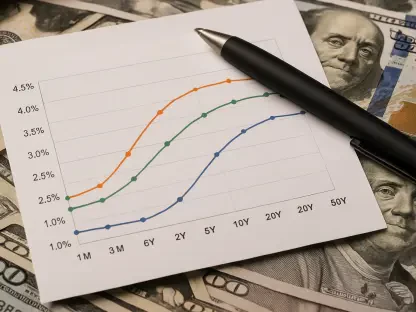

The delicate equilibrium of the Gulf financial landscape currently rests on a razor’s edge as the Qatar Stock Exchange navigates a complex convergence of internal regulatory overhauls and external diplomatic volatility. Following a particularly turbulent period where the market shed approximately 2.5% of its total valuation in late February, the QE Index recently slipped another 0.4% to hover around the 11,182-point mark. Major institutional heavyweights such as Qatar Islamic Bank, Industries Qatar, and Ooredoo have been identified as the primary catalysts behind this downward trajectory, reflecting a broader sense of caution among regional investors. Despite the general contraction, certain equities like QLM and Al Meera have managed to post gains of nearly 3%, even as the total market capitalization dipped toward QR669.4 billion. This fragmentation suggests that while the broader index faces significant headwinds, specific sectors are finding unique opportunities to hedge against wider volatility. Stakeholders are now meticulously parsing every shift in trading volume to determine if this is a temporary correction or a long-term trend.
Regulatory Reshuffling: The Impact of Index Rebalancing
A fundamental pillar of the current market narrative involves the scheduled index reshuffling mandated by FTSE Russell’s March semi-annual review. This administrative transition is set to fundamentally alter the classification of several prominent entities, most notably Zad Holding Company, which is scheduled to transition into the micro-cap segment. Simultaneously, Qatar National Navigation and Transport is prepared to exit the mid-cap group, a move that often triggers significant selling pressure from passive funds that mirror these indices. Furthermore, firms such as Dlala Brokerage, Inma Holding, and Qatar Oman Investment are slated for complete removal from the micro-cap category. These structural modifications are expected to be finalized by March 9 and will officially take effect at the market open on March 23. The anticipation of these changes has already led to heightened liquidity as fund managers reposition their portfolios to align with the new benchmarks, creating a ripple effect across the trading floor.
In conjunction with international index shifts, the exchange is preparing to implement a local 15% index-weight cap on February 26. This domestic regulatory mechanism is designed to ensure that no single stock can exert an overwhelming influence on the overall index, thereby promoting a more diversified and stable investment environment. Under this new rule, any corporate entity whose market weight exceeds the 15% threshold will have its excess weight redistributed among other index constituents. This policy reflects a strategic effort to mitigate the risks associated with market concentration, which has historically left the QE Index vulnerable to the performance of a few massive conglomerates. By enforcing these caps, the exchange aims to attract a broader range of international institutional investors who prioritize risk mitigation and balanced exposure. This regulatory shift represents a maturation of the local market as it seeks to align with global best practices while managing the inherent volatility of a resource-heavy economy.
Corporate Expansion: Strengthening Domestic Infrastructure
Strategic corporate actions are increasingly shaping the long-term sentiment of the market, even as short-term indices fluctuate. Aamal, operating through its joint venture Senyar Industries Qatar Holding, has officially announced its intention to enter into negotiations for the acquisition of Qatar International Cables Company. While the precise financial details of this transaction remain undisclosed for the time being, the move signals a clear intent to consolidate local manufacturing capabilities within the industrial sector. This acquisition strategy is viewed as a proactive response to the growing demand for infrastructure development within the region, positioning Aamal as a central player in the domestic supply chain. Investors have responded to these developments with a mix of optimism and scrutiny, recognizing that such consolidations could lead to improved operational efficiencies and larger market shares. This focus on industrial growth provides a vital counterbalance to the current volatility seen in the banking and telecommunications sectors.
Market liquidity is also receiving a significant boost from several targeted financial milestones and new listing activities. On February 25, Qatar Securities will officially begin its role as a liquidity provider for Al Mahhar, a strategic move intended to narrow trading spreads and stabilize erratic price movements for the company’s shares. In addition to this, the QNB Group has recently listed a QR1 billion, one-year bond on the stock exchange, featuring a competitive 4% annual coupon rate. Exchange leadership has characterized this listing as a major milestone for disciplined funding and as a critical step toward deepening the local debt market. These initiatives are essential for creating a more sophisticated financial ecosystem that can provide diverse investment vehicles beyond traditional equities. By enhancing liquidity and expanding the available asset classes, the exchange is working to build a more resilient platform that can better withstand external economic shocks while providing local corporations with reliable avenues for capital raising.
Geopolitical Pressures: Energy Markets and Diplomatic Tensions
The performance of the Qatar Stock Exchange remains inextricably linked to broader geopolitical developments, particularly those involving the relationship between the United States and Iran. Current negotiations regarding a potential new nuclear deal have introduced a layer of uncertainty that has trickled down into the energy markets, causing a noticeable softening in global oil prices. With crude oil recently settling near $71.38 per barrel, the energy-linked nature of many Qatari equities means that any significant fluctuation in the commodity market has an immediate and pronounced impact on domestic stock valuations. Investors are currently weighing the possibility of increased regional supply against the potential for renewed diplomatic friction, leading to a cautious “wait-and-see” approach that has limited aggressive buying. This external pressure acts as a constant headwind, often offsetting positive domestic news and complicating the efforts of local traders to establish a clear upward trend for the index.
Economic observers have noted that this geopolitical friction often leads to a flight toward safety, which can temporarily drain liquidity from emerging and frontier markets. Because the Qatari economy is so closely tied to the global energy transition and hydrocarbon exports, the stock market serves as a real-time barometer for regional stability. The potential for a new nuclear agreement could lead to shifted trade dynamics, which has caused many institutional players to hold their positions until a clearer political path is established. This environment requires investors to be highly attuned to international news cycles, as developments in Washington or Tehran can be just as impactful as local corporate earnings reports. As long as these high-stakes diplomatic maneuvers continue, the market is expected to remain in a state of flux, with volatility being the only constant. Navigating this landscape requires a deep understanding of how global political shifts translate into specific sectoral risks within the Qatari financial framework.
Strategic Pathways: Navigating Market Volatility
Market participants focused on diversifying their holdings to mitigate the impact of the upcoming FTSE rebalancing and the domestic 15% weight cap. It was recommended that investors prioritized companies with strong internal fundamentals and low debt-to-equity ratios to weather the period of high volatility. Analysis indicated that the industrial and manufacturing sectors offered more stability compared to the energy-sensitive heavyweights during the diplomatic uncertainty of the previous month. Financial advisors suggested that maintaining a liquid position allowed for the rapid reallocation of capital once the new index weights were finalized. By focusing on the resilience of individual stocks like Al Meera rather than tracking the broader index exclusively, many traders avoided the worst of the February decline. This tactical shift toward value-based investing helped protect portfolios from the broader market contraction that characterized the start of the quarter, providing a buffer against external geopolitical shocks.
Institutional entities moved to leverage the new bond listings and liquidity provision services to stabilize their long-term growth strategies. The listing of the QNB bond provided a blueprint for how corporate debt could be used to foster a more disciplined investment environment. Moving forward, stakeholders sought to integrate more fixed-income assets into their regional strategies to balance the inherent risks of the equity market. Regulatory bodies emphasized the importance of transparency in corporate acquisitions, such as the Aamal negotiations, to maintain high levels of investor confidence. These steps collectively strengthened the underlying infrastructure of the exchange, ensuring that it remained a viable destination for international capital despite regional tensions. The focus shifted toward enhancing market depth through varied financial instruments, which served to reduce the sensitivity of the index to oil price fluctuations. These actions established a more robust framework that prepared the market for future shifts in the global economic landscape.