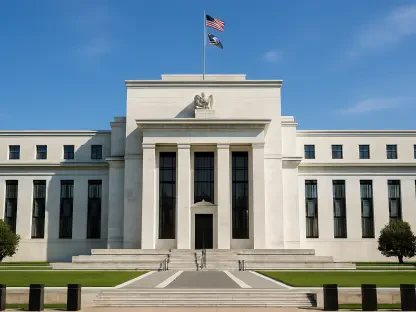

A remarkable shift in investor sentiment is currently reshaping the financial landscape, as a powerful rally in small-capitalization stocks directly challenges the pervasive recessionary fears that marked the beginning of President Trump’s second term. What began as a cautious and defensive market posture has rapidly evolved into a display of renewed confidence in the strength and durability of the U.S. domestic economy. This rotation away from the perceived safety of mega-cap multinational corporations toward smaller, domestic-focused enterprises signals a significant change in the market’s macroeconomic outlook. Investors are increasingly betting on sustained growth and are shedding the risk-averse strategies that dominated portfolios in previous quarters. The unfolding trend suggests that the market is looking past earlier anxieties, pricing in a period of economic resilience and opportunity that many analysts had previously discounted. This pivot is not merely a technical adjustment but a fundamental re-evaluation of the American economic engine’s potential, with far-reaching implications for various sectors and investment strategies in the months ahead.
A Market in Motion
The Russell 2000’s Historic Run
The most compelling evidence of this burgeoning optimism comes from the stellar performance of the Russell 2000 index, a key benchmark for small-cap stocks. In a stunning display of market strength, the index surged an impressive 8.2% within the first three weeks of 2026 alone, a gain that significantly outpaced the combined performance of the other three major U.S. indexes. This was not a fleeting moment of success but a sustained trend that saw the Russell 2000 outperform the S&P 500 for 15 consecutive trading days. This record-setting streak marks the longest period of such outperformance in three decades, underscoring the historic nature of the current market rotation. The movement represents a decisive shift in capital allocation, as investors pivot from the heavily weighted mega-cap technology stocks that have long dominated market returns. Instead, they are now channeling funds into smaller companies whose fortunes are more intimately tied to the health of the domestic U.S. economy, signaling a powerful belief in the prospects of “Main Street” America over global giants.
The investor pivot toward small-cap equities is more than just a search for higher returns; it reflects a sophisticated recalibration of risk and a deep-seated confidence in the U.S. economic trajectory. Small-cap companies are inherently more sensitive to domestic economic conditions and interest rate fluctuations than their multinational counterparts. Therefore, a sustained rally in this sector is widely interpreted as a leading indicator of broad-based economic health. The flow of capital away from defensive assets and into these more cyclically exposed stocks indicates that the market is no longer bracing for a downturn. Instead, it is actively positioning for an environment of durable growth. This rotation signifies a collective judgment by investors that the U.S. economy has successfully navigated the inflationary pressures and monetary tightening of the past few years and is now poised for a period of stable expansion, driving a renewed appetite for risk across the investment community.
Interpreting the Investor Pivot
The macroeconomic data provides a solid foundation for the bullish sentiment fueling the small-cap rally. Recent figures paint a picture of a remarkably resilient U.S. economy, confounding earlier predictions of a slowdown. In the third quarter, the nation’s Gross Domestic Product (GDP) expanded at a robust 4.4% annual pace, its fastest rate of growth since late 2023. This powerful economic expansion has been accompanied by encouraging signs on the inflation front. The personal consumption expenditures (PCE) price index, the Federal Reserve’s preferred inflation gauge, came in at 2.8% in November, meeting market expectations and moving closer to the central bank’s target. Furthermore, this controlled inflation has not come at the expense of the consumer, as both personal income and spending have continued to post steady increases. This combination of strong growth, moderating inflation, and a healthy consumer reinforces the narrative that the economy is on solid footing, providing a compelling justification for the investor rotation into domestically focused assets.
Adding another layer of optimism to the market outlook is the evolving stance of the Federal Reserve. After a prolonged period of aggressive monetary tightening to combat inflation, the central bank has signaled a potential shift in its policy. Market participants are now widely anticipating that the Fed will lower interest rates at least once more in the coming months. Such a move would serve as a powerful catalyst for small-cap stocks, which are particularly sensitive to borrowing costs. Lower interest rates would reduce the debt-servicing burdens for these smaller companies, many of which rely more heavily on financing for growth and operations than their larger, cash-rich counterparts. The prospect of cheaper capital not only improves profit margins but also encourages investment and expansion, further fueling economic activity. This anticipated monetary easing is seen by many investors as a green light, providing a clear and supportive runway for the small-cap rally to extend its impressive run throughout the year.
Broader Economic Context
Corporate Crosscurrents
Despite the overarching optimism in the market, the landscape is not without its specific challenges, as highlighted by recent events in the technology sector. Intel’s stock performance serves as a potent reminder that broad market trends do not insulate every company from its own unique headwinds. The semiconductor giant experienced a significant drop in its share price, even after reporting earnings that surpassed Wall Street’s expectations. The downturn was triggered by the company’s soft forward-looking guidance, which projected weaker-than-anticipated revenue and earnings for the upcoming quarter. Compounding this was the revelation of a net loss, raising concerns about profitability and competitive pressures within the fiercely contested chip industry. This development illustrates that investors remain highly discerning, punishing even established industry leaders for any signs of future weakness. It underscores the reality that corporate fundamentals and strategic execution are still paramount, and that the rising tide of the market will not lift all vessels, particularly those navigating difficult internal or industry-specific currents.
Beyond individual corporate earnings, the broader business environment is also being shaped by significant legal and regulatory developments that inject a degree of uncertainty into the market. A high-profile example is the lawsuit filed by President Trump against JPMorgan, one of the nation’s largest financial institutions. The suit seeks at least $5 billion in damages, alleging discriminatory “de-banking” practices. This legal battle introduces a complex variable into the financial sector, with potential implications for banking regulations and corporate-political relationships. In a separate sphere, the burgeoning autonomous vehicle industry faced a major setback. General Motors made the decision to halt its driverless car services nationwide. This move came in the wake of a ban imposed by regulators in California, a key market, following safety concerns. Concurrently, in a contrasting development, Tesla began operating its own robotaxi services in Austin, notably without the presence of in-car safety monitors. These divergent paths within a single industry highlight the volatile and rapidly evolving regulatory and competitive landscape that companies must navigate.
Looking Ahead with Cautious Optimism
The convergence of a strong stock market rally and solid economic indicators has painted a picture of an economy that successfully defied recessionary forecasts. The impressive performance of the Russell 2000 index, in particular, signaled a profound shift in investor confidence toward the domestic U.S. economy. This optimism was not unfounded, as it was supported by robust GDP growth, moderating inflation, and a healthy consumer base. The market’s positive momentum was further bolstered by the anticipation of a more accommodative monetary policy from the Federal Reserve, which promised to ease borrowing costs and fuel further growth for smaller enterprises. This created a powerful narrative of resilience and opportunity that defined the early part of the year.
However, the journey forward will likely require navigating a more complex terrain than the initial rally suggested. The challenges faced by individual companies like Intel demonstrated that broad market sentiment does not guarantee success for all, and that company-specific fundamentals remain critical. Moreover, significant developments in the legal and regulatory arenas, such as the lawsuit involving JPMorgan and the mixed progress in the autonomous vehicle sector, introduced elements of uncertainty that could temper unbridled optimism. These events served as a crucial reminder that while the macroeconomic outlook had improved significantly, specific sectors and corporations still faced unique pressures. Investors therefore recalibrated their strategies to balance the promising economic backdrop with the inherent risks and crosscurrents present within the dynamic corporate landscape.