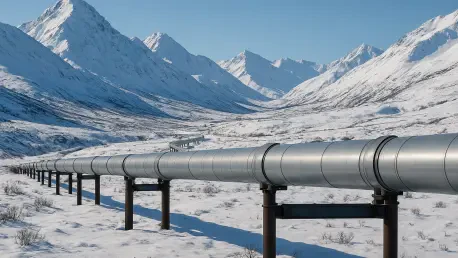

South Korean President Lee Jae Myung is currently navigating a complex diplomatic landscape where economic pragmatism clashes with the high-pressure energy policies championed by U.S. President Donald Trump. This $50 billion infrastructure proposal, which serves as a centerpiece of a broader $200 billion South Korean investment strategy in the American energy sector, represents one of the most ambitious transcontinental projects of the current decade. While the political optics of such a massive bilateral deal are favorable for strengthening the security alliance, the administration in Seoul has remained steadfast in its insistence on financial transparency and long-term commercial viability. This cautious approach reflects a significant shift in South Korea’s foreign policy, prioritizing data-driven decision-making over the traditional practice of making massive capital commitments solely to satisfy the demands of key strategic partners or to secure diplomatic leverage during high-level summits.
Logistical Advantages and Regional Energy Security
Navigating the Arctic waters from the North Slope to the liquefaction facility in Nikiski offers a logistical efficiency that traditional energy corridors simply cannot match in the current global market. For South Korean energy importers, the primary allure of the Alaska project lies in its remarkable transit time, which allows vessels to reach the peninsula in just seven to nine days, a sharp contrast to the nearly month-long journey required from the U.S. Gulf Coast. This shortened route not only reduces fuel consumption for transport ships but also significantly lowers the operational costs associated with maintaining a massive fleet of LNG carriers on the water. Furthermore, the northern maritime route provides a critical alternative to the increasingly volatile Strait of Hormuz, where geopolitical tensions often threaten the stability of global energy flows. By tapping into Alaskan reserves, Seoul could effectively insulate its energy supply chain from Middle Eastern disruptions.
Beyond the immediate logistical gains, the Alaska project represents a strategic pivot toward diversifying energy sources away from regions prone to sudden political instability or maritime blockades. The 800-mile pipeline required to transport gas across the rugged Alaskan interior is seen by some experts as a necessary investment for a nation that currently imports nearly all of its natural gas to fuel its industrial base. This infrastructure would provide a direct, secure link to the vast North Slope reserves, which have remained largely untapped for international export due to the lack of specialized export facilities. By securing a long-term supply from a politically stable domestic partner like the United States, South Korea could potentially negotiate more flexible terms that reflect its status as a premier global economic power. However, the realization of this vision depends entirely on the ability of both nations to align their environmental standards and engineering protocols.
Economic Obstacles and Collaborative Solutions
Despite the clear strategic benefits of shorter shipping routes, the sheer magnitude of the capital expenditure required for the Alaska pipeline creates a formidable barrier to final investment decisions. Industry analysts have pointed out that the construction costs for this single project are so substantial that they could theoretically fund three separate, large-scale liquefaction terminals along the U.S. Gulf Coast where infrastructure already exists. This high entry cost makes it difficult for Alaskan gas to compete with the landed prices of existing supplies from major exporters like Australia, Qatar, and Canada, which have already amortized their infrastructure costs. For South Korean utilities, the bottom line is often the deciding factor, and they are wary of committing to a project that might deliver gas at a premium compared to the global spot market. The competitive landscape in 2026 is unforgiving, and any new project must demonstrate a clear path to price parity.
The ultimate success of the Alaska LNG initiative depended on the ability of policymakers to harmonize aggressive geopolitical goals with the sobering realities of the global commodity market. It was clear that a simple appeal to the bilateral alliance would not be enough to overcome the massive financial hurdles associated with Arctic infrastructure development. Instead, the focus shifted toward creating a comprehensive energy partnership where risks and rewards were shared more equitably between Washington and Seoul. This included the introduction of specialized federal subsidies and the integration of South Korean technology in the construction of specialized ice-breaking LNG carriers. By transforming the project into a collaborative industrial venture rather than a simple sales agreement, both nations eventually found a path forward that addressed energy security without compromising fiscal responsibility. This pragmatic model set a new precedent for how major allies could manage large-scale energy transitions.