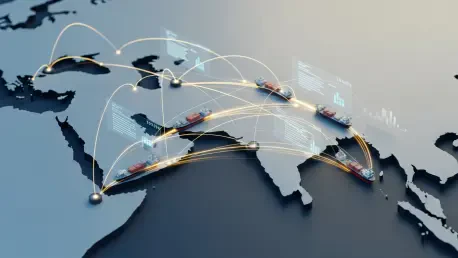

The flickering lights of stock market tickers across the globe have begun to glow green as news of the June ceasefire trickles through the digital ether, yet the celebration at the gas pump remains a distant hope for most households. While the diplomatic breakthrough in the Persian Gulf has eased the immediate threat of a wider war, the journey from a signed piece of paper to a flowing barrel of oil is paved with more obstacles than the optimistic headlines suggest. Energy markets, notoriously sensitive to geopolitical shifts, are currently navigating a “mirage of peace”—a state where the psychological relief of a deal has yet to materialize into the physical reality of lower energy costs.
The reopening of the Strait of Hormuz is undeniably the most significant economic event of the current period, but the complexity of the global supply chain means that recovery will be measured in months, not days. The world is watching a slow-motion restoration of the most vital chokepoint in existence, where every step forward is met with a logistical or legal hurdle. This is not merely a regional matter; it is a fundamental stress test for a global economy that has been starved of stability for far too long. This analysis serves as a guide to the phased restoration of the world’s most critical energy passage and the complex variables that will define the recovery period.
The Mirage of Peace: Why a Reopened Strait Is Not an Instant Economic Fix
The June ceasefire agreement was met with an immediate and sharp decline in speculative oil prices, as traders rushed to price in the end of the blockade. However, this downward pressure on paper trades does not immediately resolve the physical supply constraints that have built up over months of conflict. Consumers looking for instant relief at the pump are finding that retail prices are “sticky,” influenced more by current inventory shortages than by the promise of future shipments. The disconnect between market sentiment and reality is the primary reason why economic recovery feels so sluggish despite the positive diplomatic news.
Furthermore, the “light switch” fallacy—the idea that diplomatic signatures immediately translate to flowing crude—ignores the sheer mechanical scale of the oil industry. Pipelines must be repressurized, storage facilities must be balanced, and shipping schedules must be completely rebuilt from scratch. Until the first newly loaded tankers actually reach their destinations, the ceasefire remains an abstraction for the global economy. This lag ensures that while the threat of high prices has diminished, the reality of them will persist for several more months.
The Vital Artery: Why the Strait of Hormuz Dictates Global Energy Stability
Historically, the Persian Gulf has served as the circulatory system for the modern world, channeling approximately one-fifth of the global crude oil supply through a precarious corridor. The strategic importance of the Strait of Hormuz cannot be overstated, as its narrowest point is only a few miles wide, yet it carries the energy needs of entire continents. When this artery is constricted, the shockwaves are felt from the industrial hubs of East Asia to the heating systems of Northern Europe, proving that global stability is inextricably linked to this single geographic point.
During the height of the military conflict, established trade routes were abandoned in favor of high-risk “dark” transits and expensive bypasses. Shipping companies were forced to disable transponders and navigate unconventional paths to avoid detection, which drove insurance premiums to levels that made many shipments unprofitable. The restoration of this passage is not just about moving oil; it is about restoring the fundamental safety and predictability that allows the global energy market to function without a permanent “war premium” attached to every barrel.
Clearing the Path: Mine Removal and the Logistics of Trapped Fleets
The immediate logistical challenge involves the relocation of roughly 500 commercial vessels that have been stranded within the Persian Gulf since the blockade began. These ships cannot simply surge out of the Strait at once; they require a coordinated, phased departure to maintain maritime safety and prevent accidents in the narrow lanes. The backlog of empty and loaded tankers creates a secondary bottleneck that will take weeks to clear, even under ideal conditions.
Safety remains the paramount concern, as the technical requirements for mine clearance are extensive and time-consuming. Experts from maritime intelligence firm Kpler have suggested a six-month estimate for full maritime safety certification, as specialized teams must sweep the seafloor for unexploded ordnance and “smart” mines. Until these waters are declared officially safe, international insurers will likely refuse to provide coverage for standard commercial traffic. Additionally, the 50-day round-trip delay for tankers traveling to major Asian markets means that the impact of a reopened Strait will not be physically felt in those economies until later in the year.
The Production Hurdle: Reversing Oil Well Shut-Ins and Technical Lags
Restoring the flow of oil is further complicated by the “shut-in” effect, which occurs when production at the wellhead is forcibly stopped because storage tanks are full. When the Strait was blocked, several regional producers had no choice but to halt extraction, a process that can cause long-term technical damage to oil reservoirs. Restarting these wells is not as simple as turning a valve; it often requires expensive interventions to restore pressure and clear blockages caused by the sudden cessation of flow.
The speed of recovery will vary significantly across the region, creating a staggered return to market. Saudi Arabia and the United Arab Emirates are better positioned to pivot quickly due to their advanced infrastructure and alternative pipeline routes that partially bypassed the conflict zone. In contrast, Iraq faces a much steeper climb toward normalization. Analysts from Wood Mackenzie have projected a timeline of up to one year for Iraqi production to reach prewar levels, highlighting how local technical lags can delay the broader global recovery effort.
Legal Labyrinths: Sanctions and the Battle Over Transit Tolls
A significant diplomatic friction point has emerged regarding the legal status of the Strait, specifically the clash between the U.S. demand for “toll-free” passage and Iranian attempts to collect transit fees. This dispute touches upon the UN Convention on the Law of the Sea, which defines “innocent passage” in international straits. If Iran persists in attempting to monetize the passage, it could lead to a fresh round of maritime seizures and legal battles that would once again spook the energy markets.
The secondary sanction threat also remains a potent deterrent for shipping companies and financial institutions. Many of the entities Iran has designated to manage the waterway are closely linked to the Islamic Revolutionary Guard Corps (IRGC), an organization under heavy international sanctions. This creates a legal minefield where a shipping company might successfully navigate the physical Strait, only to find its bank accounts frozen for accidentally dealing with a sanctioned entity. Until a clear legal framework is established during the formal signing of the peace deal, many shipowners will remain on the sidelines.
A Recovery Roadmap: Phased Milestones for Restoring Global Supply
The transition from speculative market sentiment to the delivery of physical barrels followed a strict timeline that prioritized safety over speed. Stakeholders identified a target of 80% recovery for global supply by the end of the year, acknowledging that the final 20% would depend on long-term infrastructure repairs. Governments successfully managed domestic inflation by coordinating the release of strategic reserves, which bridged the gap while the Strait was being cleared of mines. This proactive approach prevented a total economic collapse during the most volatile months of the transition.
Insurers and shipowners eventually returned to standardized operations once a new maritime safety protocol was validated by international observers. Policymakers also addressed the impact of expiring fuel subsidies in Europe, ensuring that the return of global supply coincided with a gradual phasing out of emergency government support. The industry learned that true energy security required a diversification of routes, leading to increased investment in trans-continental pipelines that bypassed the most vulnerable chokepoints. Ultimately, the successful reopening of the Strait was not an end point, but a catalyst for a more resilient and legally transparent global energy framework.