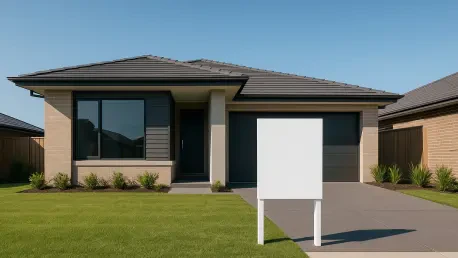

The refusal of three registered bidders to open the floor for a $3.95 million Rosebery bungalow illustrates a pervasive hesitance among today’s property seekers. This event captured the current cooling climate of the Sydney real estate landscape in mid-September 2026. The preliminary auction clearance rate has dipped to a revealing 53 percent, a figure that sits noticeably below the 60 percent benchmark usually required to sustain a balanced market environment. Sellers are finding themselves in a position where they must recalibrate their financial expectations to meet the cautious reality of the current buyer pool. The sheer volume of recent withdrawals—totaling 133 properties—suggests that many owners are choosing to pull their listings rather than face the public rejection of a failed auction. This trend points toward a patchy sales environment where the balance of power has shifted toward those looking to purchase, as high inventory levels and a lack of buyer urgency create a market defined by selectivity.
Selectivity in the Current Luxury Landscape
The architectural upgrades and premium status of the Rosebery bungalow were not enough to overcome the prevailing mood of market skepticism. Even though the property was presented as a high-end, four-bedroom renovated home with a clear price guide, the registered parties remained silent, effectively stalling the process. This specific instance highlights a broader phenomenon where buyers are performing extensive due diligence but are refusing to lead the charge during competitive bidding. Real estate agents have observed that even for properties requiring no additional work, the turnkey allure is secondary to the price point. When the reserve price exceeds the current market tolerance, even the most beautifully finished homes struggle to find a taker. This shift indicates that the modern buyer is prioritizing financial security and value over the convenience of a ready-made home, marking a significant departure from the aggressive acquisition strategies that dominated the market earlier in the year.
In contrast to the stagnation seen in some suburbs, specific high-quality assets still managed to generate friction between competing parties, albeit through long and arduous processes. The sale of a family residence in Roseville for $3.755 million served as a prime example of this endurance, with the auction described as a marathon lasting forty minutes before a result was achieved. This transaction demonstrated that while buyers are determined not to overpay, they are still willing to mobilize for homes that satisfy specific requirements for upsizing families in prime locations. The willingness to engage in such a lengthy negotiation suggests that the market is not entirely frozen but is instead moving at a much more deliberate pace. Buyers are carefully calculating the high costs of labor and materials, which makes renovated properties more attractive than those needing updates. However, they are approaching these deals with a level of scrutiny that ensures every dollar spent is backed by tangible value.
Economic Forecasts and the Development Sector
The development sector is currently experiencing a more conservative outlook as builders and investors weigh the potential for future financial shifts. A recent attempt to sell a duplex site in Ashfield fell short of its $3 million reserve, with builders offering bids that were significantly lower than the anticipated price. This segment of the market remains particularly sensitive to economic indicators, with many participants already pricing in the anticipated interest rate hikes expected by the conclusion of 2026. Experts agree that the current market momentum is being dictated by a surplus of available inventory relative to the actual pool of qualified, active buyers. With more choices on the market, individuals are no longer feeling the pressure to settle for less-than-ideal properties or overinflated price tags. They are prioritizing strict financial criteria and are comfortable waiting for the right opportunity to arise, leading to a higher rate of property pass-ins and lengthy negotiations.
The shift in Sydney’s housing dynamics required a fundamental change in how both buyers and sellers approached the negotiation table. As the market transitioned, successful participants were those who recognized that value was no longer a subjective target but a rigid requirement dictated by economic constraints. Sellers who adjusted their price points early were able to secure transitions, while those who remained anchored to past valuations saw their properties linger or be withdrawn. For buyers, the landscape provided a unique window to exercise leverage, demanding that homes met strict structural and financial benchmarks before any commitments were made. The lessons learned during this period suggested that the future of the market would depend on a more transparent alignment of expectations. Looking ahead, participants were encouraged to focus on properties with long-term resilience and to maintain a buffer for fluctuating interest rates. By prioritizing due diligence, the market found a new equilibrium.