
Priya Jaiswal stands as a titan in the world of international banking and market analysis, bringing decades of experience in navigating the complex intersections of geopolitics and global finance. As the world watches the escalating tensions in the Middle East with bated breath, her expertise offers a vital lens through which to view the crumbling stability of energy markets and the ripple effects felt from Wall Street to the smallest island nations. In this discussion, we examine the stark projections released by the OECD regarding the Iran conflict, the physical blockade of the world’s most critical energy transit points, and the widening gap between developed economies and those fighting for basic survival.
With the global economy potentially cooling from a 3.4% growth rate down to a mere 1.8% by 2027, how would you describe the atmosphere within the financial sectors facing this downturn?
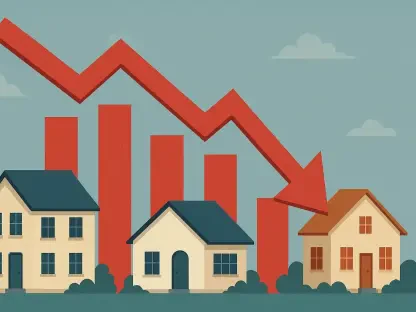
The mood in the financial district is increasingly somber, as these numbers represent more than just a statistical dip; they signal a return to the anxiety we felt during the height of the COVID-19 pandemic. While we entered 2026 with a sense of robust momentum, seeing growth projected to slide from 3.4% down to 2.1% this year, and eventually 1.8% by 2027, has forced many portfolio managers to brace for impact. This isn’t just a minor correction, but a structural blow that could push several major economies into a full-blown recession. You can almost feel the tension on the trading floors when the data suggests we are approaching levels of stagnation not seen since the global financial crisis of the late 2000s. We are looking at a landscape where inflation and unemployment aren’t just threats on the horizon—they are becoming the daily reality for millions of workers worldwide.
The report highlights a staggering 90% drop in traffic through the Strait of Hormuz; what does this choking of a primary energy artery mean for the stability of Asian markets?
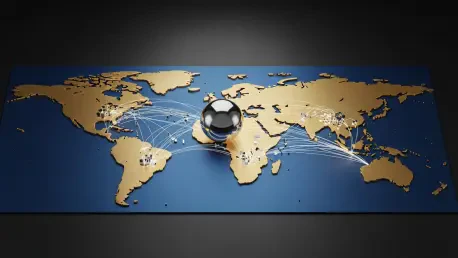
When you realize that traffic through the Strait of Hormuz has dwindled to a mere trickle—down more than 90% from pre-war levels—you begin to understand the sheer scale of the paralysis facing Asian economies. This narrow passage is the lifeline for about a fifth of the world’s total supply of crude oil, fuel products, and natural gas, and seeing that supply line effectively severed is catastrophic for nations like Japan or India that depend on these imports. The sense of urgency in these markets is palpable because, unlike other regions, they don’t have immediate domestic alternatives to replace the massive volume of Persian Gulf energy. As fuel costs skyrocket, the cost of manufacturing and transportation follows suit, creating a vicious cycle of price hikes that hits the manufacturing hubs of the East harder than anywhere else on the map.
How do these macroeconomic shifts translate into the daily struggles of people in poorer nations, especially those living on less than $3 a day?
For the nearly one billion people living in poorer countries and small island states, these energy disruptions aren’t just about stock prices; they are a matter of life and death. When energy prices surge, families living on less than $3 a day are forced to make impossible choices between keeping the lights on or putting food on the table. We are seeing a tragic trade-off where governments in these vulnerable regions must divert funds from essential public services, like healthcare and education, just to cover the national energy bill. With more than 30% of people in these nations already living below the extreme poverty line, the added weight of global inflation could erase decades of progress in a matter of months. It is a heartbreaking scenario where those who contributed the least to the geopolitical conflict are the ones paying the heaviest price in their daily search for survival.
Secretary-General Mathias Cormann emphasized targeted government spending, but how do leaders balance immediate relief with the long-term goal of energy conservation?
Leaders are currently walking a razor’s edge, trying to provide a safety net for those most in need without drowning their future in excess government debt. The advice from the OECD is clear: any government spending aimed at relieving the sting of energy costs must be strictly temporary and highly targeted toward the most vulnerable populations. If a government provides broad, permanent subsidies, they risk destroying the incentive for citizens and industries to save energy, which only worsens the supply crunch in the long run. There is a real fear that if these interventions aren’t handled with surgical precision, they will lead to fiscal instability that could haunt these nations for years after the conflict ends. It’s about finding a way to keep the heating on for a struggling family today without bankrupting the public services they will need tomorrow.
What is your forecast for the global economy if the current disruptions continue into the next fiscal year?
If the closure of the Strait of Hormuz remains a reality and energy shipments don’t begin to stabilize, we are looking at a very dark road where global growth remains suppressed at that 1.8% mark well into 2027. However, there is a glimmer of a “time-limited” scenario where, if production and shipments can somehow return to pre-war levels by the middle of this year, we might see growth slow to 2.8% and then potentially rebound to 3.1% next year. My advice for our readers is to prepare for a period of sustained volatility; diversify your interests and focus on resilience, as the “robust momentum” we once enjoyed is now entirely at the mercy of geopolitical stability and the restoration of global trade routes.