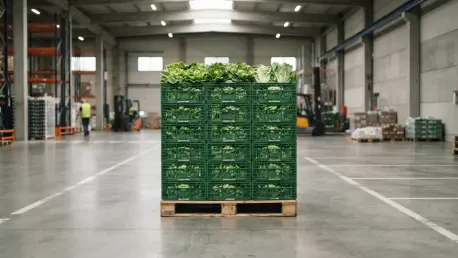

Modern food safety software allows packers to isolate impacted product lots in seconds rather than days, significantly reducing unnecessary food waste and costs. The current year has proven to be a difficult period for the American food supply chain, as widespread contamination incidents involving staple goods like eggs, blueberries, and lettuce have fundamentally shaken consumer confidence. With over 500 individual recalls recorded in fiscal 2026 and Cyclospora infections surging past 18,000 cases, the pressure on food packers and shippers has never been more intense. For these businesses, the ability to manage a safety crisis is no longer just a regulatory box to check but a vital necessity for long-term survival. When these incidents occur, the speed and accuracy of the response determine whether a brand maintains its reputation or faces devastating financial consequences. Digitalization has emerged as the essential tool to navigate this high-stakes environment by providing the real-time data required for total transparency.
Understanding the Operational Strain of Recalls
Navigating the High Stakes of Recall Protocols
When a safety alert is issued, packers must immediately execute a series of complex logistical maneuvers under extreme time pressure to protect public health and maintain regulatory compliance. The process begins with the instant identification and isolation of contaminated lots, followed by the mandatory submission of a Reportable Food Registry filing to the FDA within a strict 24-hour window. This timeframe is incredibly narrow, leaving no room for administrative delays or data inconsistencies that often plague manual record-keeping systems. Companies must simultaneously coordinate with stakeholders across the entire supply chain to ensure products are destroyed or returned while maintaining exhaustive documentation of every action taken. Every minute that passes without a confirmed isolation increases the risk of illness and the potential for severe legal liability. This pressure requires a systematic approach to data management that can withstand the scrutiny of federal investigators and maintain the trust of retail partners.
Effective coordination during a safety event involves more than just communication; it requires a documented chain of custody and verifiable proof of action for every unit produced. Packers must be able to demonstrate to regulators exactly how many units were in circulation, where they were shipped, and how many have been successfully recovered or diverted from the consumer market. This verification process is often the most grueling part of a recall, as it requires synthesizing information from warehouse logs, transportation manifests, and customer receipts into a cohesive, accurate report. Without a unified digital system, teams find themselves buried in conflicting documents, leading to errors that can trigger further regulatory action. The ability to provide a clean, documented audit trail is the key difference between a controlled response and a chaotic failure that erodes business trust. As contamination risks become more complex, traditional communication methods prove insufficient for these demanding requirements.
Assessing Vulnerabilities in Traditional Systems
Many organizations continue to operate with a fragmented landscape of paper logs, disparate spreadsheets, and disconnected software modules that create significant safety risks and operational gaps. This reliance on legacy systems creates massive vulnerabilities when a rapid response is required, as data extraction becomes a manual and error-prone endeavor during a crisis. When a packer is forced to comb through physical filing cabinets or multiple digital folders to trace a specific lot, the 24-hour reporting mandate becomes almost impossible to meet consistently. These delays are not merely administrative inconveniences; they represent a fundamental failure in the traceability chain that can lead to unnecessary product loss. If a business cannot pinpoint the exact location of a shipment within minutes, they are often forced to recall much larger quantities of food than necessary just to be safe. This overbroad approach results in massive financial losses and contributes heavily to food waste issues.
Beyond technical limitations, manual systems lead to internal communication gaps that exacerbate the stress of a recall event and increase the likelihood of human error among the staff. When critical information is siloed within a single department, the entire organization suffers from a lack of visibility, leading to contradictory messages being sent to customers and regulators. This lack of a single source of truth means that the warehouse might inadvertently move pallets that the quality control team has already flagged for isolation. Furthermore, training staff on manual protocols is notoriously difficult, as the complexity of the steps involved increases the risk of mistakes during high-stress situations. Without a centralized digital platform to guide the process, the organizational memory of how to handle a crisis is often tied to specific individuals rather than standardized procedures. This creates a precarious situation where the absence of a key employee could lead to a total breakdown of the safety protocol.
Establishing a Foundation for Brand Integrity
Beyond immediate crisis management, digitalization through platforms like TELUS Food Safety and Quality fosters a coordinated environment where quality control, legal, and warehouse teams work from synchronized, real-time information. This synchronization is critical during recall events, as it ensures that every department moves in the same direction and uses the most current data available. Automated reporting tools within these platforms generate regulatory filings and other mandatory documents with a single click, ensuring that deadlines are met without the stress of manual calculation. This level of automation reduces the cognitive load on staff during a crisis, allowing them to focus on the logistical challenges of product recovery and customer service. Furthermore, the real-time visibility provided by digital dashboards allows management to track the progress of a recall in real time, providing data-driven insights that improve future safety protocols. This transition to a data-driven culture becomes the hallmark of a modern operation.
The transition toward comprehensive digital food safety systems represents a fundamental shift in how the industry approaches public health and operational risk management. Successful companies prioritize the integration of automated traceability tools to ensure they remain compliant with evolving federal mandates while protecting their market share from preventable losses. By moving away from inefficient manual records, these organizations gain the ability to respond to contamination events with unprecedented speed and precision, which ultimately saves lives and preserves brand value. The move to digital platforms allows for a more transparent supply chain where data guides every critical decision during a crisis. These proactive steps ensure that businesses were fully prepared for the rigorous traceability requirements that arrived by 2028. Moving forward, the most effective strategy involves treating recall readiness as a perpetual state of being. This commitment solidified their position as industry leaders.