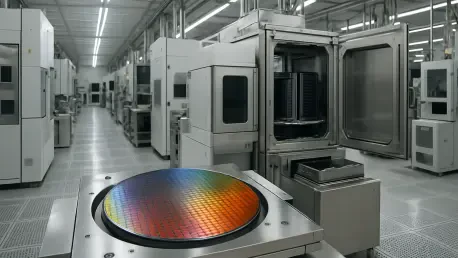

While Samsung Electronics reaches historic market capitalization levels, the average Korean worker increasingly identifies as a “sudden beggar” due to relative economic marginalization. This phenomenon, known locally as byeorak-geoji, is not a literal descent into poverty but a profound psychological reaction to the massive wealth inequality currently splitting the nation. As high-bandwidth memory chips drive South Korean exports to unprecedented peaks this year, the domestic reality is characterized by a thinning middle class and a service sector that feels entirely disconnected from the semiconductor windfall. The contrast is stark: specialized engineers receive life-changing performance bonuses while the average salaried employee watches their purchasing power evaporate under the weight of persistent inflation. This economic distortion suggests that the headline-grabbing success of the country’s largest conglomerates is functioning as a temporary facade, effectively masking a deeper structural rot that threatens the long-term stability of the domestic marketplace and social fabric.
The Widening Gap in the Dual Economy
The record-shattering performance of South Korea’s export engine has inadvertently accelerated the formation of a dual economy, where the benefits of growth are confined to a shrinking technological elite. While the national balance sheet looks healthier than ever, the internal reality is one of extreme fragmentation. This division is most visible in the contrast between chaebol employees and those working for small and medium-sized enterprises, who represent over 80 percent of the total workforce. The high-tech sector, specifically in AI-related hardware, has seen wages and bonuses skyrocket, yet this capital does not circulate into the broader economy. Instead, it remains locked in luxury consumption and high-end real estate, while the traditional manufacturing and service industries struggle with stagnant demand and rising operating costs. This systemic imbalance has led to a situation where national prosperity is measured by a few powerful entities rather than the collective well-being of the population.
Wealth Concentration: The AI Supply Chain Paradox
The primary driver of this economic distortion is the nation’s dominance in the global memory chip market, specifically regarding High Bandwidth Memory (HBM) required for artificial intelligence. Industry giants like Samsung Electronics and SK Hynix have effectively secured a stranglehold on the AI supply chain bottleneck, resulting in staggering financial results and historic market capitalizations that rival global tech leaders. However, this sector is fundamentally capital-intensive, requiring massive investments in automated fabrication plants rather than a broad expansion of the workforce. Consequently, the wealth generated by the AI revolution stays concentrated at the apex of the corporate hierarchy, benefiting shareholders and a select group of highly skilled professionals. For the rest of the nation, these technological milestones are abstract figures that offer no relief from the rising cost of living or the increasing difficulty of maintaining a middle-class lifestyle in an era of rapid technological displacement.
Jobless Growth: The Disconnect of the Small Business
The current economic cycle has exposed the limitations of “jobless growth,” where high export volumes fail to translate into meaningful employment gains across the domestic landscape. While the semiconductor industry generates nearly half of the nation’s total export value, it cannot provide the scale of employment necessary to support a population of fifty million. Small and medium-sized enterprises, which traditionally serve as the backbone of the labor market, find themselves increasingly marginalized and unable to compete for talent or capital. This has created a stagnant environment where private consumption remains sluggish despite the headlines of national success. The Korea Development Institute has been forced to repeatedly adjust its job growth forecasts downward, highlighting the reality that the chip boom is a specialized miracle rather than a general rising tide. Without a mechanism to distribute the windfall from high-tech manufacturing into other sectors, the country risks a future of permanent economic divergence.
Macroeconomic Pressure: The Interest Rate Burden
To manage the inflation and potential overheating caused by the concentrated export boom, the Bank of Korea has maintained a regime of high interest rates, which places an unbearable burden on ordinary households. These policy decisions are necessary to stabilize the national currency and manage the capital flows associated with the semiconductor trade, but they have the secondary effect of punishing domestic debtors. South Korean household debt has surpassed the 2,000 trillion won mark this year, accounting for nearly 90 percent of the national GDP. For the average citizen, the dream of homeownership has transformed into a nightmare of debt servicing, as market rates rise to balance the growth generated by the very industry that excludes them. The wealth gap is thus widened by financial policy: those at the top of the tech pyramid receive preferential financial treatment and bonuses, while the rest of the nation struggles to meet basic mortgage obligations.
Debt Crisis: The Reality of Real Estate Volatility
The structural reliance on debt to sustain domestic living standards has created a fragile real estate market that is increasingly susceptible to external shocks. Ordinary people find themselves anchoring their life’s savings—and their long-term financial security—to a property market that is strained by rising interest rates and project finance troubles. The bitter irony is that while semiconductor engineers receive tuition support and low-interest company loans, the general public faces a market where housing price-to-income ratios are among the highest in the developed world. This disparity has led to a widespread sense of hopelessness among those who did not enter the high-tech workforce. The realization that a standard salary is no longer sufficient to secure a stable future has pushed the population toward high-risk financial behavior. When the real estate bubble eventually faces the pressure of a shrinking demographic, the current export boom will provide little protection for millions of debt-laden families.
High-Risk Financial Survival Strategies
The desperation born of this economic divide has birthed the social trend known as yeongkkul, or “trading one’s soul to borrow,” where citizens take extreme risks to secure investment leverage. Driven by a pervasive fear of falling behind, young professionals are diverting student loans, emergency credit lines, and even military savings into high-stakes stock market funds and volatile crypto assets. This behavior is not motivated by simple greed but by an existential crisis; in a society where the social ladder is perceived as calcified, many believe that gambling on the AI boom is the final opportunity to escape a future of permanent debt. They see the semiconductor rally not as a national achievement, but as a closing window of opportunity for personal survival. This shift toward high-leverage investment strategies further destabilizes the domestic financial system, as the household sector becomes increasingly sensitive to any volatility in the global technology markets.
Existential Investment: The Fear of Falling Behind
The culture of “soul-trading” for leverage reflects a profound loss of faith in traditional labor and savings as a path to prosperity. In 2026, the psychological pressure of seeing acquaintances amass years of salary in months through semiconductor equity has pushed the average worker into speculative cycles that they are ill-equipped to navigate. This trend has created a feedback loop where the fear of being a “sudden beggar” drives more capital into a few select assets, further inflating prices and making entry-level housing even more unattainable for those who do not participate. The social fabric is fraying as the shared experience of economic stability is replaced by a high-stakes competition for relative status. This focus on speculative gains distracts from necessary long-term investments in education and vocational training for non-tech sectors, ensuring that the country’s economic base remains dangerously narrow and dependent on the continued success of a single industry.
Dutch Disease: The Talent Drain and Demographics
South Korea’s current prosperity carries the classic hallmarks of “Dutch Disease,” where a booming export sector siphons talent, capital, and policy focus away from the rest of the economy. This phenomenon is leading to a hollowing out of domestic industries that are essential for long-term resilience. As the brightest minds flock to semiconductors or the specialized finance sectors surrounding them, other critical fields—such as biotechnology, green energy, and creative services—lose their competitive edge. This vulnerability is compounded by the world’s lowest fertility rate, which signals a shrinking foundation for domestic demand over the next two decades. As the workforce disappears, the real estate assets currently propped up by massive debt will eventually lack enough buyers to prevent a systemic collapse. While AI and memory chips can drive export figures in 2027 and beyond, they cannot solve the biological and social reality of a nation that is rapidly losing its future human capital.
Volatile Monoculture: The Fragility of the Memory Cycle
The primary risk facing the nation remains the inevitable downturn of the global memory chip cycle, as historical data confirms that no technological boom lasts forever. While major conglomerates have built substantial cash reserves to survive a slump, the average South Korean household possesses no such buffer. If the “single engine” of the memory industry stalls due to a global demand slump or a technological shift, the resulting ripple effect would lead to reduced corporate bonuses, falling asset prices, and forced liquidations for millions of families. The government, facing its own chronic deficit pressures and the cost of an aging population, may find itself unable to bail out a population buried under 2,000 trillion won of debt. The prosperity of 2026 is largely an illusion of the aggregate—a monoculture that benefits a small elite while placing the majority in a state of perpetual anxiety, waiting for the inevitable correction that could trigger a lost decade.
Strategic Outlook: Diversifying the Domestic Foundation
While the semiconductor rally provided a temporary reprieve for national balance sheets, the underlying economic decay was not fundamentally addressed. Analysts eventually recognized that the reliance on a memory chip monoculture created a fragile stability that excluded the majority of the population from prosperity. Moving forward, South Korea must prioritize the deregulation of the service sector and incentivize small-business innovation to create a more resilient, multi-engine economy. It was observed that the demographic cliff and household debt levels were the true existential threats, requiring immediate policy intervention in affordable housing and wealth redistribution. By diversifying beyond hardware manufacturing and addressing the psychological divide of the “sudden beggar,” the nation could have secured a more equitable future. Ultimately, the lessons of the current era underscored that no amount of technological dominance could replace the need for a stable and inclusive domestic consumption base to weather the inevitable cycles of the global high-tech market.