
Priya Jaiswal is a recognized authority in Banking, Business, and Finance, with extensive expertise in market analysis, portfolio management, and international business trends. Her deep understanding of global supply chains and the intricate financial webs that connect raw materials to consumer products allows her to provide a unique perspective on the current disruptions in the electronics sector. In this discussion, Jaiswal breaks down the critical shortage of high-purity resin following geopolitical unrest in the Middle East and examines how this “sticky” inflation will ripple through the prices of smartphones, AI servers, and essential infrastructure. We explore the fragility of a market where 70% of a vital material comes from a single source and what this means for the future of domestic manufacturing and consumer purchasing power.
How has the recent geopolitical instability in the Middle East directly impacted the global supply of high-purity resin, and what makes the Jubail complex so indispensable to the electronics industry?
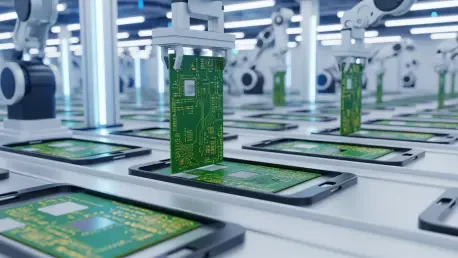
The situation at the Jubail petrochemical and industrial complex in Saudi Arabia is a classic example of a single point of failure in a globalized economy. When the complex was targeted by missiles on April 6 and 7, it didn’t just damage physical structures; it effectively severed the primary artery for high-purity polyphenylene ether resin, which is the foundational material for advanced printed circuit boards. While the physical repairs might be manageable, the broader logistics nightmare involving the Strait of Hormuz has created a massive bottleneck, with industry leaders like Dow guiding to a “275 day-plus” timeline before supply chains return to any semblance of normalcy. This specific site is crucial because it supplies roughly 70 percent of the world’s high-purity PPE resin, a substance that is nearly impossible to substitute in high-end technology. The plants were already shutting down in late March as transit through the region became untenable, and without this specific resin, the “nervous system” of our modern devices simply cannot be manufactured to the necessary standards of thermal and electrical reliability.
In terms of market economics, we have seen significant spikes in producer prices recently. How are these costs being absorbed by manufacturers, and what specific data points highlight the severity of this inflationary trend?
The financial pressure is becoming impossible to ignore, as evidenced by the April producer price index data which showed a 9.4 percent annual increase in processed goods prices—the steepest jump we have seen in over three years. For companies on the front lines, like the PCB maker TTM, the impact is even more dramatic; they have reported that their own stock price surged over 400 percent as they navigate these volatile waters, yet they are being forced to pass costs down, increasing their prices by anywhere from 5 percent to 25 percent. We also saw a shocking Goldman Sachs note indicating that printed circuit board prices rose by as much as 40 percent in the short window between March and April alone. When the cost of a core component like a PCB jumps by nearly half, manufacturers have to find a way to mitigate that hit, which often leads to “sticky” inflation where prices rise quickly but are very slow to come back down even after supply stabilizes.
Many consumers might wonder why manufacturers can’t simply switch to a different material. What are the technical and financial hurdles that prevent companies from using alternatives to high-purity PPE resin?
In the world of high-end electronics, you cannot simply swap one chemical for another as if you were changing a screw or a bolt; it requires a complete overhaul of the product’s engineering. High-purity resin is selected specifically for its ability to maintain signal integrity and heat resistance in demanding environments like AI servers, 5G smartphones, and automotive electronics. While engineers might look toward epoxy-based laminates or PTFE for lower-frequency applications, premium devices require rigorous requalification, redesign, and testing phases that can take months or even years. The current crisis has seen lead times for epoxy-resin inputs expand from a standard three weeks to a staggering fifteen weeks, illustrating how the entire ecosystem is being stretched thin. Because no alternative supplier currently exists to fill the 70 percent gap left by the Jubail complex, the industry is essentially in a holding pattern, waiting for a specific petrochemical “soup” that has no immediate peer in terms of performance.
Looking at the shift in global manufacturing over the last few decades, how has the decline of domestic production in the United States contributed to the current fragility of the electronics supply chain?
The historical data tells a very sobering story about the erosion of domestic manufacturing resilience. Back in 2000, the United States was responsible for 30 percent of the world’s printed circuit board manufacturing, but today that figure has plummeted to a mere 4 percent, with China now dominating the global market. Even though American companies still lead in design and high-level architecture, they are completely dependent on a global materials web that routes through a handful of vulnerable geographical points. As experts have noted, the skills and capacity to produce these high-purity resins have largely moved offshore, meaning that when a crisis occurs in the Middle East or a logistics freeze happens in the Strait of Hormuz, the U.S. lacks the immediate infrastructure to fill the void. This dependency creates a situation where even the most powerful tech giants are at the mercy of distant geopolitical conflicts and localized industrial accidents.
How will major tech players like Apple or Nvidia navigate this shortage compared to smaller manufacturers, and what should consumers expect to see when they visit a retail store this autumn?
A company like Apple is certainly better insulated than most because of its massive purchasing power and sophisticated long-term supplier agreements, but “insulated” is not the same as “immune.” While you might not see a “resin surcharge” listed on your receipt at the Apple Store, the pain will manifest in more subtle ways, such as fewer discounts, tighter inventory during major launches, and longer wait times for repairs. Apple and other giants may try to steer consumers toward more expensive, higher-margin configurations or slim down their promotional offers to offset the 40 percent shock in PCB costs. Smaller manufacturers and those producing lower-margin goods like midrange Android phones, routers, and gaming accessories have much less room to “eat” these costs and will likely have to raise base prices or delay releases. We are already hearing warnings from major suppliers like Victory Giant in China that the combination of rising resin and copper prices will make this autumn one of the most expensive periods for electronics in a decade.
Given the current 275-day recovery estimate for logistics and the ongoing inventory drawdowns, what is your forecast for the electronics market over the next twelve months?
My forecast for the next year is one of significant transition and “pricing pain” that will peak during the late autumn and winter holiday seasons as current inventories are finally exhausted. We are likely to see the retail prices of premium electronics, particularly foldable smartphones and high-performance AI servers, reach their highest levels in a decade due to the combined pressure of resin shortages, memory price hikes, and logistics constraints. I expect a “bifurcated” market where the largest companies use their cash reserves to secure what little material is available, potentially pushing smaller competitors out of the production cycle entirely for certain high-end components. Ultimately, unless we see a rapid reopening of the Strait of Hormuz and a miracle in repair timelines at the Jubail complex, consumers should prepare for a period of “scarcity pricing” where availability is just as much of a concern as the final cost on the tag.