A comprehensive analysis of recent financial data has uncovered a troubling trend in South Korea, where government efforts to stabilize the housing market are inadvertently driving households toward more expensive and riskier forms of debt. For the first time in three years, the outstanding balance on overdraft loans from the nation’s five major commercial banks has surged past the 40 trillion won threshold, reaching a staggering 40.76 trillion won ($27.7 billion). This significant spike comes after balances had remained relatively stable in the 37–38 trillion won range for the better part of two years, a period marked by rising interest rates. This development suggests that as traditional avenues for borrowing have been constricted by new regulations, households are now turning to less conventional and more costly methods to secure necessary funds, signaling a potential crisis in household financial health that stems directly from policies intended to prevent one. The situation reveals a critical disconnect between regulatory intent and real-world consequences.
The Unintended Consequences of Lending Curbs
The primary driver behind this alarming increase in high-cost debt is a phenomenon experts identify as a “balloon effect,” stemming directly from the government’s stringent lending regulations. In a determined effort to curb what was seen as speculative real estate purchasing financed by excessive borrowing, authorities implemented strict restrictions on mortgage lending and significantly lowered the limits available for new unsecured loans. However, a critical oversight in this policy framework has created an escape valve for pent-up demand. Existing, pre-approved overdraft credit lines were not subjected to these new, tighter rules. Consequently, as individuals and families found their access to conventional mortgages and personal loans choked off, they began to activate these dormant overdraft accounts en masse. These accounts, once a financial safety net, have now become a primary tool for accessing liquidity, fundamentally changing their role in household finance and exposing a significant loophole in the regulatory scheme.
This balloon effect illustrates a classic case of policy blowback, where pressure applied to one part of a system causes an unforeseen bulge in another. The government’s objective was clear: to cool an overheating housing market by cutting off the supply of easy credit that fueled it. The measures were decisive, targeting the main arteries of real estate financing. Yet, the strategy failed to account for the resourcefulness of households facing immense financial pressure. By not extending the new regulations to cover existing overdraft facilities, policymakers left a convenient and accessible pathway for borrowing open. This has not only blunted the intended impact of the housing market controls but has also created a new and arguably more dangerous problem. The shift in borrowing patterns represents a migration from structured, long-term debt to volatile, high-interest credit, undermining the foundational goal of ensuring long-term financial stability for the very households the policies were meant to protect from market volatility.
A Dual Threat to Financial Stability
Compounding the issue of surging overdraft usage, a second, equally concerning trend has emerged in the financial data marked deceleration in the repayment of existing mortgage loans. Throughout the earlier part of the year, monthly mortgage repayments consistently fell within the 5 to 6 trillion won range, indicating a stable and predictable pattern of debt servicing among homeowners. However, this changed dramatically in November, when repayments plummeted to 4.44 trillion won, with projections indicating that the figures for December are likely to decline even further. This sharp drop-off is not an isolated event but rather a direct consequence of the tightened credit environment. As access to alternative forms of credit, such as new unsecured loans, becomes increasingly difficult, borrowers are strategically delaying repayments on their existing mortgages. This maneuver allows them to preserve liquidity and maintain cash on hand for other needs, but it signals a household sector under significant financial duress, forced to prioritize short-term cash flow over long-term debt reduction.
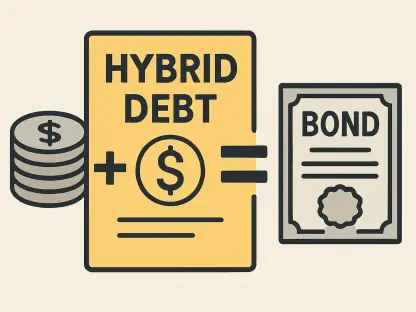
The combined effect of these two trends is a dangerous pivot toward more precarious forms of household debt, fundamentally altering the risk profile of the average borrower. Mortgage loans, while substantial, generally offer more favorable and stable terms for consumers. In October, their interest rates ranged from 4.12% to 4.47%, and they are typically structured with long-term, often fixed-rate, repayment schedules that provide predictability and security. In stark contrast, overdraft loans represent a much costlier and more volatile form of credit. Their interest rates are higher, ranging from 4.18% to 4.84%, and they are typically renewed on an annual basis. This short-term structure exposes borrowers to more immediate and frequent interest rate fluctuations, making their financial planning far less stable. The government’s measures, therefore, have inadvertently engineered a widespread shift from relatively safe, long-term credit to high-cost, short-term debt, eroding the financial stability of households.
A Shift Toward Precarious Debt
Ultimately, the government’s well-intentioned campaign to rein in the housing market produced a set of unintended consequences that shifted the financial burden onto households in a new and more perilous way. The strict limitations on mortgage and unsecured lending, designed to promote stability, instead created a vacuum that was quickly filled by riskier financial products. The reliance on high-interest overdraft loans, coupled with a slowdown in mortgage repayments, painted a clear picture of a populace under strain, forced to make difficult choices to maintain liquidity. This outcome demonstrated that constricting access to safer, long-term credit did not eliminate the demand for funds but merely redirected it toward more expensive and volatile short-term solutions. The very policies enacted to protect household finances had inadvertently pushed them onto a more precarious financial footing, trading one form of market risk for another that was more immediate and harder to manage.