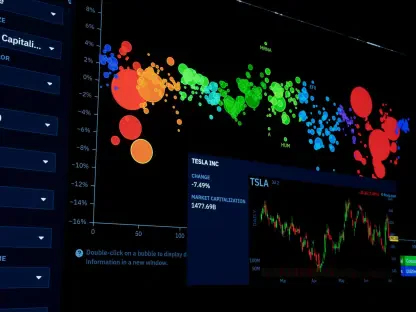

The sudden retreat of foreign institutional investors from Mumbai’s equity markets has triggered a sharp correction in the benchmark Nifty 50 and Sensex indices as global geopolitical tensions push Brent crude toward uncomfortable thresholds. This selling pressure reflects a broader reallocation of capital away from emerging markets with high valuation multiples toward regions showing renewed signs of economic stimulus and recovery. Financial analysts have observed that the premium at which Indian equities trade compared to their historical averages has become a point of contention for fund managers who are now seeking more attractive risk-adjusted returns elsewhere. The convergence of rising energy costs and a cooling enthusiasm for high-growth domestic stocks has created a challenging environment for retail participants who had previously enjoyed a sustained period of relatively low volatility and consistent gains across mid-cap and large-cap segments alike during the early months of this year.
Economic Risks
Energy Costs
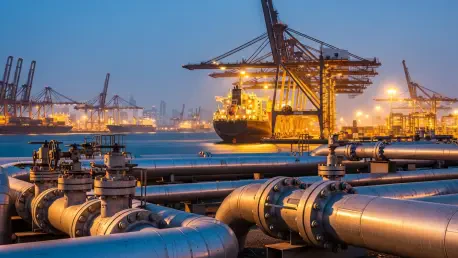
India’s heavy reliance on imported fossil fuels makes its economy particularly susceptible to fluctuations in the international energy market where Brent crude prices have recently climbed due to escalating supply concerns in the Middle East. As oil prices surge beyond the projected targets for the fiscal year, the domestic inflationary outlook has darkened, prompting fears that the central bank might maintain its restrictive monetary policy for a longer duration than initially anticipated. This scenario has directly affected the profitability of sectors ranging from logistics and transportation to manufacturing, as input costs rise while consumer demand remains sensitive to price hikes. Large industrial conglomerates are finding it increasingly difficult to pass these costs onto end-users without risking a significant contraction in sales volumes, which further complicates the earnings trajectory for the current quarter across all major domestic industrial sectors during this volatile period.
The immediate consequence of expensive crude oil is visible in the margin compression experienced by companies that utilize petroleum derivatives as primary raw materials in their production processes. Beyond the direct cost of energy, the secondary effects of higher fuel prices are trickling through the supply chain, increasing the overhead for last-mile delivery services and heavy-duty shipping. Market participants are closely monitoring the upcoming quarterly reports to gauge the extent of the damage to operating margins across the fast-moving consumer goods and automotive sectors. Investors have traditionally viewed Indian consumer demand as resilient, yet the double-edged sword of high interest rates and rising inflation is beginning to test the purchasing power of the middle-class demographic. Consequently, institutional traders are de-risking their portfolios by trimming positions in sectors that are most exposed to domestic consumption in the near term.
Capital Shifts
A significant portion of the capital exiting the Indian market is reportedly finding its way into other major Asian economies that have introduced aggressive policy measures to revitalize their domestic growth. For years, India remained the preferred destination for global emerging market funds due to its structural reforms and demographic advantages, but the recent valuation disconnect has made other markets look relatively undervalued. This pivot is particularly evident as institutional investors rebalance their weightings to capture the potential upside in northern Asian equities which are currently trading at a fraction of India’s price-to-earnings multiples. The sheer scale of foreign portfolio outflows has overwhelmed the buying capacity of domestic institutional investors who had previously served as a reliable cushion during periods of global instability. This changing dynamic suggests that the buy on dips strategy is being replaced by a more cautious approach.
Financial institutions and regulatory bodies recognized that long-term stability required a more diversified energy mix to insulate the domestic economy from the volatile swings of the global crude market. Policymakers emphasized the acceleration of green energy initiatives and the localization of supply chains to reduce the heavy dependence on foreign capital for maintaining market liquidity. Institutional participants shifted their focus toward companies with robust balance sheets and those capable of maintaining cash flows despite higher borrowing costs. The market eventually internalized these external shocks as investors transitioned toward value-oriented strategies that favored sectors with sustainable growth potential. Strategic advisors recommended that retail investors maintain a disciplined asset allocation while exploring defensive sectors to navigate the period of heightened uncertainty. These measures collectively ensured that the financial ecosystem became more resilient against capital flight.