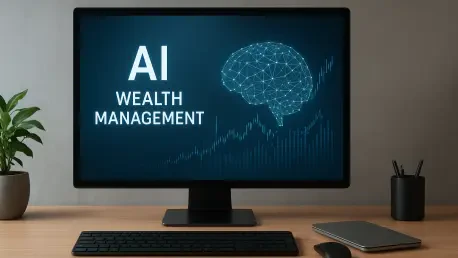

Advisors identify portfolio management systems as providing the highest return on investment, yet most firms have yet to integrate AI into these critical workflows. This gap has created a significant opportunity for New York-based Pave Finance, which recently secured a $15 million Series A funding round to accelerate its AI-driven wealth management platform. The investment round was notably oversubscribed, valuing the firm at $100 million pre-money and drawing support from a coalition of industry veterans. Investors include former executives from major financial institutions such as Goldman Sachs and Morgan Stanley, alongside technical leadership from companies like Google and Meta. This influx of capital follows a successful $14 million seed round, signaling strong confidence in the ability of high-level engineering to reshape traditional asset management. The firm’s mission focuses on providing sophisticated tools that allow wealth managers to scale their services without compromising the personalized attention that clients expect in an increasingly digital and data-centric financial landscape.
The Structural Shift in Financial Advisory Models
Scaling Personalized Investment Strategies
The global wealth management sector is experiencing a period of significant expansion, with industry projections suggesting that total assets under management could reach $217.4 trillion by 2031. This growth trajectory brings a complex set of challenges for financial professionals who must balance an increasing volume of clients with a rising demand for hyper-personalized investment strategies. Traditionally, manual portfolio construction has served as a primary bottleneck, limiting the number of high-touch accounts an advisor can realistically handle at one time. Pave Finance seeks to dismantle these operational constraints by automating the most labor-intensive aspects of portfolio design and maintenance. By leveraging artificial intelligence to process vast datasets, the platform enables advisors to deliver bespoke solutions that were once reserved only for the ultra-wealthy. This shift is becoming essential as firms transition from simple asset allocation toward holistic wealth planning that accounts for every nuance of a client’s unique financial goals.
Technical Infrastructure and Global Security Oversight
To achieve a high level of scalability, the platform maintains a robust infrastructure that tracks more than 50,000 global securities and integrates directly with over 170 custodians. This deep integration allows for a seamless flow of data, ensuring that every investment recommendation is based on the most current market conditions and individual account statuses. Advisors use these tools to tailor portfolios with extreme precision, incorporating specific tax considerations, risk tolerances, and even sector-specific exclusions. For instance, if a client wishes to avoid investments in certain industries for ethical reasons while maintaining a tax-efficient profile, the AI engine can recalculate the optimal portfolio mix in a matter of seconds. This capability fundamentally changes the relationship between the advisor and their software, moving from a static reporting tool to a dynamic engine for decision-making. Such technical sophistication ensures that experts focus on human relationships while the machine handles the complex math.
Market Consensus and the Future of Implementation
Redefining the Human-Machine Partnership
Research from leading industry groups like Cerulli and Schwab indicates that the wealth management sector is beginning to view artificial intelligence as an augmentative force rather than a replacement for human talent. While there were early concerns that automation might lead to reduced headcounts, the current reality suggests that AI acts as a capacity multiplier for busy firms. It streamlines the administrative and operational burdens that often consume the majority of an advisor’s workday, thereby freeing them to engage in high-value activities like complex estate planning or personalized behavioral coaching. The consensus among top-tier firms is that technology should handle the quantifiable aspects of wealth management, such as data processing and rebalancing, while humans provide the empathy and strategic vision that machines cannot replicate. This partnership is proving to be the most effective way to maintain profitability as clients demand more value for their wealth advisory fees in a competitive market.
Strategic Integration for Long-Term Growth
The successful valuation jump for companies specializing in automated wealth tools reflected a strategic shift in how the industry approached long-term growth and operational efficiency. Firms that prioritized the integration of these systems found themselves better equipped to handle the complexities of a multi-trillion-dollar market. Leaders recommended that organizations move beyond superficial AI applications and instead focus on deep-tier technical integrations that directly improved client outcomes and portfolio performance. By combining advanced engineering backgrounds from the tech sector with deep financial expertise, the market moved toward a new standard of bespoke service. This transition ensured that advisors no longer had to choose between operational efficiency and the quality of their advice. The focus ultimately rested on the necessity of automation as a baseline requirement for any firm seeking to scale in the current environment. Success was defined by the ability to resolve the tension between tradition and innovation through a commitment to excellence.