
Priya Jaiswal brings a wealth of expertise to our discussion today, offering a seasoned perspective on the intricate shifts within the banking and finance sectors. As an authority in market analysis and portfolio management, she is uniquely positioned to interpret how geopolitical instability—specifically the current tensions in Iran—ripples through the American economy. Today, we turn our attention to the maritime industry, a massive $230 billion sector that is currently navigating the choppy waters of record-high energy costs. From the Great Lakes to the East Coast, the rising price of fuel is doing more than just thinning wallets; it is fundamentally altering the summer rituals of millions of Americans and challenging the traditional business models of marinas and charter services.
Our conversation covers the psychological and financial toll of the 34% spike in regular gasoline and the even more dramatic 53% surge in diesel prices over the past year. We explore the specific “boater’s dilemma” regarding ethanol-free fuel, which has reached a staggering $7 per gallon in some regions, and how this is forcing families to choose between shorter trips or staying tethered to the dock. We also examine the resilience of small business owners who are balancing fuel surcharges against the risk of losing customers, and why some full-time cruisers are choosing to drop anchor in familiar waters rather than venturing toward the Canadian border.
With regular gas prices up more than 30% and diesel surging by over 50% from last year, how are recreational boaters physically changing their habits on the water this season?
The psychological impact of these numbers cannot be overstated, as we are seeing a significant pivot from “cruising” to “floating.” For families like the Amines in Michigan, the decision-making process starts at the dock of Portage Lake, where they have to calculate exactly how much of their 52-gallon tank they can afford to fill just to enjoy a sunny afternoon. Because regular gas is up 34% and diesel has skyrocketed by 53%, the days of aimless high-speed runs across the water are being replaced by what many call “dockside recreation.” According to industry experts like Ellen Bradley, boaters are explicitly stating that they will go slower, travel shorter distances, and spend much more of their time anchored in a single spot to swim or socialize. This shift isn’t just about the 100 million Americans who go boating; it’s a calculated response to a market where ethanol-free gas, a preferred choice for many engines, can cost up to $1 more per gallon than regular fuel, sometimes hitting a peak of $7.
For those who have committed to the “live-aboard” lifestyle, such as the Donohoes on their 50-foot vessel, how do these eye-popping fuel costs redefine the concept of a summer voyage?
When your home is a 50-foot boat like the Granuaile, which has a staggering fuel capacity of 1,500 gallons, a surge in diesel prices becomes a primary life constraint rather than a mere inconvenience. Neil and Kathleen Donohoe have spent seven years navigating from the Bahamas to Maine, but this year the financial math has forced them to drop anchor in the Chesapeake Bay area instead of heading further north. While maintenance has traditionally been their largest line item, the current cost to fill a tank of that size is simply too high to justify a trip to Canada or New England, especially when they feel it is insensitive to spend so lavishly while others are struggling. They are now relying heavily on marine apps to scout for the cheapest fuel prices, treating every gallon like a precious resource. It is a stark reminder that even for seasoned travelers, the reality of $7.99 per gallon diesel is enough to halt a journey that has been years in the making.
Professional maritime organizations, such as the Seattle Sailing Club, are facing unique pressures; how are they managing a fleet of 30 boats when their own fuel bills have jumped by over 10%?
The situation for commercial fleets is particularly precarious because they are entering their busiest season just as prices hit these historic highs. For an operation like the Seattle Sailing Club, which manages 30 boats, even a fleet that relies primarily on wind power still feels the burn because every vessel carries a gas or diesel backup engine for safety and maneuvering. Their fuel bill has already climbed by 10.7% since the onset of the conflict, and they watched diesel prices at their marina jump from $6.50 in April to nearly $8.00 by late May. This inflation isn’t just happening at the pump; it’s creeping into secondary services, such as wastewater pump-out providers who are now tacking fuel surcharges onto their standard bills. Managers like Lindsey Brown are essentially holding their breath, knowing that if these prices don’t stabilize, the “busy season” could turn into a period of significant financial loss rather than profit.
Inland businesses like NautiMi On the River are facing a different set of variables; is there a sense that high travel costs elsewhere might actually drive more local traffic to their docks?
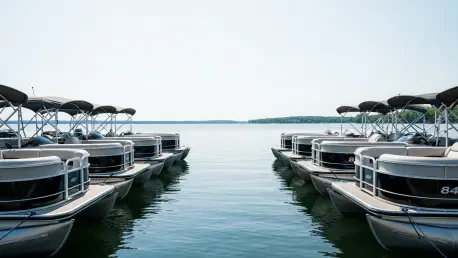
There is a fascinating “staycation” logic emerging among small business owners like Melissa Kunnert, who runs an ice cream and gift shop near the water. While she has chosen not to raise the $50-per-person price for her three-hour tiki-themed pontoon cruises, she is betting that people will choose her local experience over a long-distance road trip or flight. Her gamble rests on the idea that if customers are too afraid to use their own gas for a long haul, they might be more willing to spend that money on a local rental where the fuel cost is built-in. It’s a strategic play in a region like Traverse City, where the alternative for many is a total cancellation of plans. By keeping her prices steady despite the rising cost to fill her own pontoon, she is positioning her business as an accessible escape for a community that is otherwise feeling trapped by the price at the pump.
What is your forecast for the American boating industry as it balances these geopolitical pressures against a $230 billion market value?
Despite the current friction, the sheer scale of this $230 billion industry suggests that while behaviors will change, the fundamental desire to be on the water remains resilient. We see operators like Robert Hinds of Central Coast Angling already implementing $50 fuel surcharges to cope with the reality that it now costs $400 in diesel just to tow a 22-foot boat to a prime fishing spot. While he has seen cancellations from long-distance clients, such as those traveling from Nebraska, he remains confident that people from all walks of life will still find a way to get outside. My forecast is that we will see a “localization” of the boating market, where the 100 million participants focus on nearby waterways and more efficient engine use. The industry will likely survive this volatility, but the “gold rush” of long-distance cruising is on a temporary hiatus until we see a resolution to the global conflicts driving these energy spikes.