
Navigating the Paradox of Resilience in European Equities
The European stock market has recently demonstrated a surprising level of fortitude, characterized by the pan-European Stoxx 600 climbing consistently despite a backdrop of escalating global friction. This upward trajectory occurs at a time when traditional logic might suggest a retreat, as geopolitical uncertainties and fluctuating economic data usually trigger investor caution. Understanding this rally requires a look beyond the surface-level numbers to identify the specific catalysts driving optimism in the face of adversity.
This analysis explores the intricate balance between internal industrial sentiment and the external pressures of high energy costs and regional instability. By analyzing recent market movements, corporate developments, and macroeconomic indicators, it is possible to uncover the themes currently shaping the European financial landscape. From the divergence in share prices following major corporate news to the resilience of manufacturing climates, the goal is to provide a comprehensive overview of why Europe remains a focal point for global investors.
The Historical Foundation of Market Sensitivity and Industrial Shifts
To grasp the significance of the current market rise, one must look at Europe’s historical sensitivity to energy prices and geopolitical shifts. For decades, the European economy was deeply intertwined with global supply chains and energy imports, making it particularly vulnerable to disruptions in the Middle East. Past energy crises often led to prolonged stagnation, yet recent years have seen a shift toward industrial adaptability and more robust fiscal frameworks that buffer these shocks.
The transition from a consumption-led growth model to one that emphasizes industrial stability—particularly in nations like Germany and France—has created a “floor” for equity prices. Even as external tensions rise, the internal mechanisms of European industry have become more sophisticated in managing risk. This evolution allows markets to sustain gains that might have been lost in previous eras of instability.
Decoding the Primary Drivers of Recent Market Gains
The Geopolitical Premium and the Energy Sector Surge
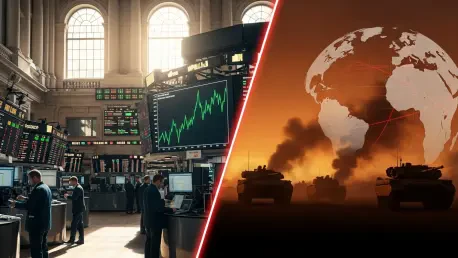
A primary driver of the recent market rally is the escalating tension between the U.S. and Iran, which has paradoxically benefited specific sectors within the European indices. As Tehran signaled its intent to maintain enriched uranium stocks, concerns over regional stability sent Brent crude prices climbing toward the $104 per barrel mark. While high energy prices are often viewed as a headwind for growth, they have fueled a significant rally in energy markets, providing a heavy weight of support for the Stoxx 600.
However, this energy-driven growth comes with a set of challenges. While energy companies see their valuations swell, the broader economy faces the threat of “cost-push” inflation. This creates a divergence where the stock market index rises even as the average consumer feels the pinch of higher fuel costs. Investors are currently navigating this duality, betting that the windfall for the energy sector will outweigh the temporary cooling of consumer demand.
Corporate Volatility and the Strategic Impact of Failed Mergers
Internal corporate dynamics have also played a crucial role in recent price action, highlighted by the high-profile collapse of merger talks between the Spanish beauty conglomerate Puig and the American giant Estée Lauder. This event led to a sharp divergence in the retail and cosmetics space; Puig’s stock plummeted by over 13%, while Estée Lauder experienced a double-digit surge in New York.
Such events illustrate that the European market is not merely reacting to macro trends but is also highly sensitive to individual corporate governance and strategic shifts. The termination of this tie-up suggests that investors are currently prioritizing stability and clear balance sheets over speculative growth through consolidation. This trend of “de-risking” portfolios by favoring established entities over uncertain mergers is an emerging theme that is helping to stabilize broader market indices.
Regional Divergence and the Nuance of Economic Indicators
A deeper look at the continent reveals a complex patchwork of economic health. In Germany, consumer confidence has reached its highest level in months, bolstered by improving income expectations, while France’s manufacturing climate index has hit a four-month high. These positive signals from the continent’s industrial powerhouses contrast sharply with the U.K., where a budget deficit exceeding official forecasts and a slump in retail sales point to significant fiscal pressure.
This regional divergence is often misunderstood by those looking for a singular “European” narrative. The reality is that the rise in markets is being propped up by industrial optimism in the Eurozone, which offsets the drag from the U.K.’s struggling retail sector and high government borrowing. By recognizing these regional differences, investors can better understand that the market’s rise is not a universal boom, but rather a calculated rotation into sectors and countries that show the most industrial resilience.
Emerging Trends and the Future of the European Landscape
Looking ahead, several emerging trends are likely to shape the future of European equities. The ongoing shift toward energy independence and the integration of advanced manufacturing technologies are expected to be the primary drivers of long-term growth. Furthermore, as regulatory environments evolve to address both fiscal deficits and climate targets, a realignment of capital toward “green” industrials and away from traditional high-carbon energy sources may occur.
Expert predictions suggest that while the current momentum is intact, the market remains “caught” between industrial sentiment and external friction. Future technological innovations in the energy sector could potentially decouple European growth from Middle Eastern geopolitical tensions, providing a more stable foundation for the next decade. However, in the near term, the focus will remain on how the European Central Bank and regional governments manage the delicate balance between curbing inflation and supporting a fragile recovery.
Strategic Recommendations for Navigating Current Volatility
For professionals and investors looking to apply these insights, the key takeaway is the importance of sector-specific analysis. The broad-based rally in the Stoxx 600 masks significant volatility in retail and consumer goods. Strategies should focus on identifying companies with strong pricing power that can weather high energy costs, as well as those positioned to benefit from the industrial recovery in France and Germany.
Actionable best practices include monitoring the 10-year Gilt yields and manufacturing climate indices as leading indicators for broader market health. Investors should also be wary of “merger fever” and instead look for organic growth stories in a high-interest-rate environment. By staying informed on regional fiscal policies—such as the U.K.’s borrowing trends—market participants can better anticipate shifts in currency stability and equity valuations.
Sustaining Momentum in an Uncertain Global Environment
The resilience of European markets suggested that localized industrial strength could effectively counter global volatility. This period proved that energy independence and manufacturing stability were the most critical assets for maintaining investor confidence. Analysts shifted their focus toward “de-risked” portfolios, prioritizing established entities over speculative mergers that carried high integration risks.
Ultimately, the market movement provided a blueprint for navigating a fragmented global economy. Strategic capital reallocation favored the Eurozone’s industrial core, which successfully absorbed external shocks. As the landscape evolved, the integration of green energy and fiscal discipline became the primary mechanisms for sustaining growth through subsequent cycles of geopolitical uncertainty.