
Priya Jaiswal brings a sophisticated financial perspective to the urgent crisis of global food insecurity. As markets grapple with the fallout of regional wars and volatile energy prices, her analysis bridges the gap between macroeconomic trends and the lived reality of small-scale farmers who sustain the world’s population. In this discussion, we explore how systemic shocks are dismantling years of progress, moving the epicenter of hunger toward Africa, and why traditional models of emergency food aid are no longer sufficient in an era of permanent climate disruption. We dive into the financial barriers preventing billions from accessing healthy diets and the critical infrastructure investments required to build a more resilient global food trade.
How do geopolitical tensions and the resulting energy shocks create a direct line to increased hunger for the world’s most vulnerable populations?
When conflicts flare up, the impact is felt far beyond the immediate battlefield, rippling through critical shipping lanes like the Strait of Hormuz and sending global energy markets into a sudden tailspin. We are currently looking at a precarious scenario where persistent geopolitical shocks could leave an additional 9 to 18 million people facing the hollow ache of chronic hunger if these disruptions continue to destabilize the supply chain. For a small-scale farmer, this isn’t just an abstract economic headline; it means the diesel fuel required to hear the steady, mechanical thrum of irrigation pumps becomes prohibitively expensive, and the sharp, chemical scent of necessary fertilizers becomes a luxury they can no longer afford. As production expenses climb for the producer, those costs feed directly into the retail price of a loaf of bread or a bag of grain, creating a vicious cycle where instability and starvation reinforce one another in a way that is incredibly difficult for any developing economy to break.
With the latest reports indicating that a staggering one-third of the global population cannot afford a healthy diet, how has the challenge of food security evolved beyond just a matter of production?
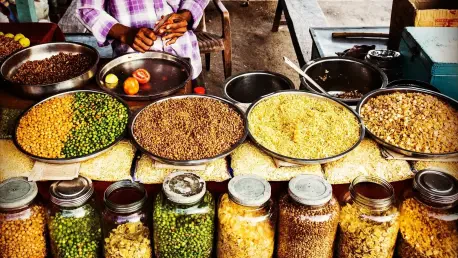
It is a sobering reality that while our global food production continues to grow and expand, roughly one-third of the human population still finds themselves staring at market stalls filled with food they simply cannot afford to buy. In low-income nations, this affordability gap becomes a massive chasm, affecting about 77% of the people who are forced to survive on nutritionally vacant calories because balanced, healthy diets are financially out of reach. We have effectively moved past the era where the primary goal was simply growing more crops; the true crisis now lies in the financial architecture and inflation that determine who actually gets to eat a meal. This economic strain is compounded by price volatility that makes every trip to the market a source of deep anxiety, as parents are forced to make the agonizing choice between quantity and the vital nutrition needed for their children to grow and thrive.
What specific economic and demographic factors are driving the shift of the world’s hunger epicenter toward Africa, and what are the implications for regional trade?
The shift we are witnessing is profound, with Africa now overtaking Asia as the region with the highest number of people facing hunger, a burden fueled by rapid population growth and economic gains that unfortunately haven’t kept pace with the needs of the people. By the year 2030, we expect that nearly 60% of the world’s chronically undernourished people will be living on the African continent, a statistic that demands a radical and immediate rethink of our global investment strategies. Currently, African nations are spending nearly $100 billion every single year just to import food from overseas, which is a massive drain on their domestic economies that could be better served by building local storage and distribution networks. We need to move away from this expensive dependency and instead focus on the dusty roads and regional trade routes that can empower local producers to feed their own communities rather than relying on the unpredictable whims of global shipping.
How should governments and international investors pivot their strategies to address the “new normal” of climate-driven agricultural disruption?
We have reached a point where climate disasters like devastating floods and prolonged droughts are no longer treated as “once-in-a-lifetime” events but are instead the daily reality for agricultural cycles around the globe. I have seen communities where droughts have stretched on for four or five exhausting years, leaving the earth cracked and the livestock skeletal, and we can no longer afford to rely on just showing up with emergency aid after the damage is already done. Governments must pivot their focus toward long-term resilience and adaptation, investing in programs that help rural communities withstand extreme heat and sudden deluges before the crops are destroyed in the field. It is about building the infrastructure of survival—improving water management, soil health, and crop variety—so that the millions of small farmers who provide the bulk of the world’s food aren’t left defenseless against an increasingly hostile sky.
What is your forecast for the global food system as we approach the 2030 milestone?
Looking toward 2030, my forecast is that we will face a dual reality: a world of technological abundance existing alongside a persistent, tragic core of over 500 million people suffering from chronic hunger. While we have the technical tools and the production capacity to mitigate these crises, the actual outcome depends entirely on whether we can stabilize geopolitical tensions and decouple food prices from the volatility of energy markets. If we do not accelerate our investments in climate adaptation and local infrastructure, especially across Africa, the fragility of our progress will remain exposed to every new conflict or storm. The future of food security isn’t just an agricultural challenge; it is a test of our global financial and political will to ensure that a healthy diet isn’t a luxury reserved for the few, but a basic standard for everyone.