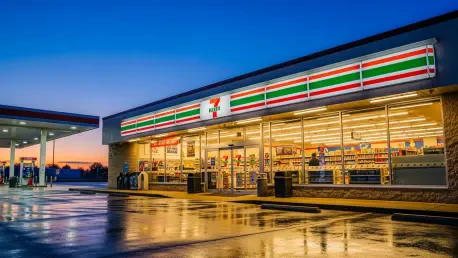

Toshifumi Suzuki did not merely manage a retail chain; he orchestrated a cultural shift that turned the humble neighborhood shop into the beating heart of modern urban infrastructure. His passing at the age of 93 marked the end of a career defined by foresight rather than tradition. While the 7-Eleven brand found its roots in American soil, it was Suzuki’s relentless drive in Japan that rescued the concept from obscurity and expanded it into a global titan with over 80,000 locations.
Suzuki understood that retail was about providing a lifestyle rather than just selling products. By viewing the store as a community hub, he reshaped daily habits, turning his Japanese unit into the parent of the original American franchise.
The Man Who Taught the World That a Corner Store Could Be Everything
Suzuki viewed every storefront as a laboratory for social change, pushing beyond the limits of traditional retail. He insisted that convenience should mean more than just accessibility; it had to provide a high-quality experience that replaced the need for multiple specialized trips to different vendors.
Under his guidance, the 7-Eleven brand became a symbol of reliability and innovation. His vision transformed a struggling American model into a profitable Japanese powerhouse, proving that localized management could outperform centralized corporate strategies.
The 1973 Inception and the Rescue of an American Icon
The journey began in 1973 when Suzuki founded the Japanese unit under the Ito-Yokado retail chain. He spotted a massive opportunity in the fragmented Japanese market, but the relationship between the parent and the subsidiary changed forever in the 1990s. When Southland Corp. faced severe financial distress, Suzuki moved to acquire a majority stake.
This strategic intervention led to the eventual formation of Seven & i Holdings in 2005. This shift effectively moved the center of the retail world from Dallas to Tokyo. By taking control, Suzuki ensured his vision for the brand would be implemented globally without corporate interference.
The “Conbini” Blueprint: Technology, Logistics, and Lifestyle Integration
Suzuki’s most enduring legacy was the “conbini” concept, a small-footprint store that functioned as a neighborhood hub. He prioritized the integration of fresh, high-quality meals, replacing the image of stale snacks with gourmet-level convenience. This transformation required a fundamental rethink of how logistics and customer needs interacted.
To achieve this, he utilized cutting-edge retail technology and a sophisticated supply chain to ensure every shelf met specific local needs in real-time. The stores became essential to the community, offering a range of services that turned a simple shopping trip into a comprehensive lifestyle experience for busy residents.
Beyond the Shelves: Banking, Luxury Retail, and the Seven & i Legacy
The empire’s growth was driven by a refusal to stay within traditional retail boundaries. Suzuki expanded the brand to include full banking services and utility bill payment centers, making the stores indispensable. He realized that if a customer could pay their bills and withdraw cash while buying lunch, they would never need to visit a traditional bank.
This diversification reached into high-end markets with the acquisitions of Barney’s Japan and the Sogo and Seibu department stores. The massive value created by these moves recently attracted multi-billion dollar takeover attempts from international competitors like Alimentation Couche-Tard, highlighting the immense global worth of the empire he built.
The Suzuki Playbook: Core Principles for Scaling a Retail Revolution
The Suzuki playbook functioned as a masterclass in identifying lifestyle gaps where traditional retail models failed to adapt. He utilized radical innovation and consumer-centric technology to bridge the divide between convenience and necessity. His strategy emphasized the importance of staying agile enough to acquire failing rivals while maintaining a hyper-local focus.
He demonstrated that scaling a business required a deep understanding of consumer behavior and a willingness to offer solutions before the customer even realized a need existed. Ultimately, Suzuki proved that a small corner store could be transformed into a powerful retail force through the relentless pursuit of efficiency and service, offering a blueprint for future leaders to navigate a changing marketplace.