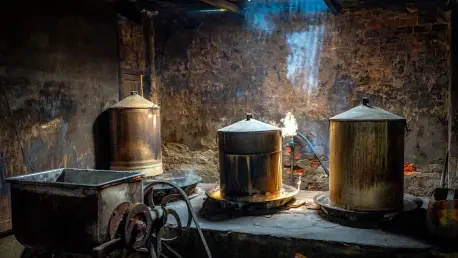

A humble backyard shed housing a copper still could potentially lead to a five-year federal prison sentence and a ten-thousand-dollar fine under a law that has remained unchanged since the days of Ulysses S. Grant. This legal reality stems from an 1868 Reconstruction-era statute that has remained largely untouched for over a century and a half. Now, a brewing legal battle has reached the U.S. Supreme Court, forcing the justices to decide if a total ban on home distilling is a legitimate exercise of federal authority or an unconstitutional overreach into private life.
A 150-Year-Old Prohibition Faces the Supreme Court
Distilling spirits currently carries the same federal weight as serious felony offenses. This long-standing prohibition is finally under scrutiny as the highest court evaluates the limits of congressional power. The case challenges whether the federal government can criminalize a non-commercial activity conducted within the home under the guise of tax collection.
The justices must determine if the ban serves a legitimate purpose today. As views on liberty evolve, the tension between historical statutes and contemporary rights has created a significant legal crossroads. This decision will define the reach of federal taxing power and the degree to which the government can monitor the domestic habits of private citizens.
The Collision of Tradition, Tax Law, and Personal Liberty
While Americans can brew beer and wine at home, distilling spirits remains strictly prohibited. This discrepancy has sparked a circuit court split, with the Sixth and Fifth Circuits reaching opposite conclusions. The debate centers on whether the taxing power allows for the criminalization of a private, domestic craft that never enters the stream of commerce.
As the Court prepares its review, the outcome will set boundaries for federal regulation. Proponents cite revenue protection, while critics argue the ban infringes on personal freedoms. This collision highlights the struggle to balance national authority with individual rights in an era of expanding federal oversight.
Dissecting the Legal Arguments and the Circuit Court Split
The Sixth Circuit upheld the ban, but the Fifth Circuit ruled it exceeded congressional authority. This conflict involves the “Necessary and Proper” clause, questioning if a total ban is required to prevent tax evasion. Some argue that such a broad interpretation could lead to regulating other domestic tasks like gardening to prevent untaxed food production.
The government relies on 19th-century fraud prevention, while plaintiffs call the law an antiquated relic. The “slippery slope” argument suggests that if distilling is banned to protect taxes, any home activity could be next. This uncertainty necessitates a definitive Supreme Court ruling to clarify the limits of the Taxing and Spending Clause.
Perspectives from the Courtroom: Fraud Prevention vs. George Washington’s Legacy
The Justice Department argues the ban is essential to prevent illegal commercial operations. They assert that spirits require strict oversight for tax compliance due to their high market value. Conversely, the Hobby Distillers Association points to George Washington’s history of distilling as a traditional American pastime that should be protected.
Scholars debate whether the Taxing Clause justifies criminalizing private behavior. The 1868 context of economic stabilization may no longer apply in the current century. This shift suggests that the original intent of the law should be re-evaluated by the Court to ensure it aligns with modern constitutional interpretations.
Navigating the Implications of the Forthcoming Ruling
A ruling for distillers would likely return regulatory power to the states. This shift would mirror existing frameworks for home brewing, allowing for local control over production limits. Enthusiasts are already looking toward state capitals to advocate for safety and production standards that reflect modern community values.
The role of state legislation became the new focus as federal decriminalization moved forward. Advocates suggested that localized permits would ensure safety without federal prison sentences. Ultimately, the legal shift encouraged a modern approach to domestic craft traditions that respected both revenue needs and individual autonomy.