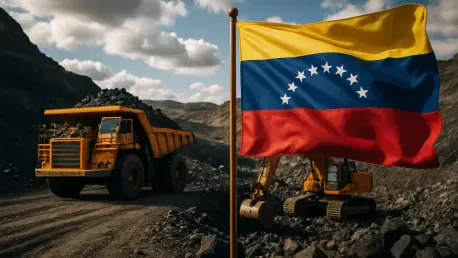

The untapped mineral wealth buried beneath the Venezuelan soil represents one of the most significant economic frontiers in the modern world, offering a potential lifeline for a nation navigating a complex political rebirth. For decades, the focus remained squarely on petroleum, leaving vast deposits of gold, copper, and diamonds at the mercy of chaotic and informal extraction methods. As the current administration shifts its focus toward a formalized industrial scope, mining is being positioned not just as an alternative revenue stream but as the primary engine for national recovery and long-term stability.
Transforming the Resource Landscape: An Overview of the Venezuelan Mining Sector
Venezuela is undergoing a profound strategic shift in its economic policy following the major political transitions that have redefined the national landscape. This new direction prioritizes the vast reserves of precious and industrial metals that were previously overshadowed by oil dependency and systemic instability. By moving away from the unorganized exploitation seen in earlier years, the government aims to establish a structured mining industry that contributes directly to the formal economy.
The transition involves a rigorous effort to replace informal syndicates with legitimate corporate entities capable of large-scale operations. This shift is a calculated move to prove to the global community that the nation is ready to manage its resources with professional oversight. As the administration works to clean up the sector, it is setting the stage for a period where mining becomes a pillar of the broader recovery strategy, attracting those who seek to participate in the country’s industrial renewal.
Market Dynamics and Economic Projections for Mineral Wealth
Shifting Trends in Latin American Resource Management
Investor sentiment regarding high-yield jurisdictions in Latin America is currently in a state of flux as capital seeks transparent and regulated environments. The era of the Mining Arc models, which were often criticized for lack of clarity, is being replaced by a drive for governance that aligns with international standards. Global demand for metals essential for modern technology and infrastructure is driving this interest, making the timing of Venezuela’s reforms particularly relevant for global supply chains.
Growth Indicators and Valuation of Mineral Reserves
Economic projections indicate that the formalization of the gold market alone could significantly alter the national fiscal outlook. Currently, the illicit gold trade is valued at billions, but bringing this activity into the legal fold is expected to multiply these figures and boost the gross domestic product. As the country works through its constitutional review, the anticipated influx of capital and royalty revenues suggests a trajectory of steady growth and reintegration into the global financial system.
Navigating Systemic Obstacles and the Legacy of Exploitation
One of the most significant hurdles facing the new administration is the shadow of lawlessness and environmental damage left by years of unlicensed extraction. Criminal syndicates and historical corruption within the military ranks have long profited from these chaotic zones, creating a culture of violence and exploitation. Overcoming the sovereign risk perception requires more than just new laws; it demands a visible dismantling of these criminal networks to ensure that future operations remain secure and state-sanctioned.
To restore trust, the government is implementing strategies to secure mining regions and replace violent informal economies with sustainable opportunities. This process involves a delicate balance of law enforcement and community engagement to ensure that the transition does not leave local populations vulnerable. By addressing these systemic issues head-on, the state is attempting to build a foundation of security that will satisfy the rigorous due diligence requirements of international financiers.
The New Legislative Framework: Governance and Compliance Standards
The recently approved mining bill introduces critical structural reforms designed to safeguard foreign assets and ensure legal certainty. A cornerstone of this framework is the implementation of independent arbitration for dispute resolution, which provides a layer of protection against the historical patterns of asset seizure. By offering a predictable legal environment, the legislation aims to lower the barrier for entry for major mining firms that require long-term stability for their investments.
Moreover, the bill strictly prohibits high-ranking government officials from holding mining titles, a measure specifically designed to eliminate conflicts of interest and reduce corruption. The law also categorizes mining into small, medium, and large-scale ventures to streamline the regulatory process. With a 30-year limit on concessions and a transparent structure for royalties and taxes, the framework establishes a clear set of rules that govern every stage of the mining lifecycle.
The Road Ahead: Innovation and Global Economic Reintegration
The restoration of the rule of law is expected to pave the way for the introduction of modern, sustainable mining technologies that minimize environmental impact. Rebuilding international ties is a key component of this journey, as evidenced by recent diplomatic efforts to reconnect with regional neighbors and global markets. As mineral scarcity becomes a more pressing concern globally, Venezuela’s return to the market could happen at an accelerated pace, provided the current reforms hold steady.
Technological partnerships will be essential for modernizing extraction methods and improving efficiency. The administration is looking toward global leaders in mining innovation to help transition from rudimentary techniques to high-tech operations. This focus on modernization is not just about profit; it is also about ensuring that the country’s mineral wealth is extracted in a way that respects ecological boundaries and sets a standard for future industrial development.
Shaping a New Era for Venezuelan Prosperity
The approval of the comprehensive mining bill acted as a decisive catalyst for shifting the nation’s economic momentum toward a more stable and regulated future. This legislative move signaled to the world that the era of state-sponsored exploitation had ended, replaced by a commitment to transparency and asset protection. Stakeholders were encouraged to view the upcoming constitutional review as the ultimate benchmark for the country’s dedication to these new principles. By prioritizing the rule of law and formalizing its vast mineral sector, the administration established a framework that balanced domestic labor needs with the expectations of global capital. The successful implementation of these reforms provided a unique opportunity for the nation to reclaim its position as a major player in the global commodities market while fostering a more inclusive internal economy.