
The Collision of Silicon Valley Strategy and National Security Mandates
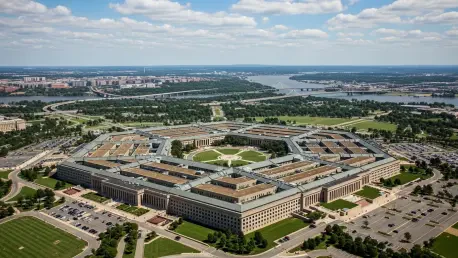
The intricate relationship between global e-commerce and national defense has reached a critical boiling point as a tech giant challenges its recent military classification in federal court. Legal experts observe that this lawsuit against the Department of Defense seeks to invalidate a designation that restricts the firm from obtaining vital American contracts.
Industry observers argue that the “Chinese military company” label acts as a severe commercial barrier. This classification triggers financial volatility, forcing institutional investors to reconsider their positions and causing significant ripples throughout the global technology market.
Deconstructing the Legal and Geopolitical Standoff
The standoff represents a fundamental disagreement over how international firms are categorized in an era of heightened security. Some commentators believe the case will clarify the boundaries of administrative power and the limits of executive branch designations.
Trade analysts suggest that the legal conflict is a byproduct of shifting regulatory landscapes. As governments prioritize security, the criteria for determining state affiliation have become increasingly opaque, leaving private corporations in a state of perpetual uncertainty.
Challenging the Pentagon’s Administrative Process in Federal Court
Legal scholars note that the central argument in the San Jose filing focuses on a perceived lack of transparency. The petition claims the military label lacks factual merit and was issued without the due process usually required by the American judicial system.
Observers of the court proceedings emphasize that proving corporate independence is difficult when geopolitical tensions influence regulatory outcomes. The demand for a fair review highlights the friction between national defense priorities and the rights of international business entities.
The Conflict Between Mandatory Compliance and Military Affiliation
Financial analysts point to the confusion between standard regulatory compliance and active military support. While the Pentagon cites links to state agencies, the company maintains that its independent board governs all strategic decisions without military oversight.
Security consultants warn that misinterpreting domestic laws—which all firms in the region must follow—could lead to unfair blacklisting. This debate questions whether standard cooperation with local regulators should be viewed as participation in a defense industrial base.
A Rising Tide of Judicial Pushback from Global Tech Entities
International trade experts highlight a growing trend of firms like DJI and WuXi AppTec using American courts to fight blacklists. These legal battles suggest that private entities are no longer willing to accept security labels without a significant fight.
Since the 2021 congressional mandate led to the blacklisting of nearly 200 entities, the pressure on global supply chains has intensified. These lawsuits disrupt the current trajectory of decoupling and force a reevaluation of how security lists are maintained.
Quantifying the Financial Fallout and Brand Erosion
Market analysts focus on the “irreparable harm” caused by the loss of American investors and the degradation of trust. Such labels serve as a deterrent, making it difficult for firms to maintain the capital necessary for long-term global expansion.
Historical data from previous blacklisting cases shows that capital outflows often follow these designations almost immediately. The erosion of brand reputation among international partners can take years to recover, regardless of the final legal verdict.
Navigating the Volatile Landscape of Cross-Border Trade and Security
Investment advisors recommend that global firms conduct deeper due diligence to navigate these shifting definitions of security. Understanding the thin line between mandated state cooperation and actual military support is now a prerequisite for international commerce.
Strategic consultants suggest that companies must proactively manage their regulatory profiles to avoid being caught in geopolitical crossfire. Navigating the complexities of Department of Defense lists is essential for protecting corporate valuation and maintaining investor confidence.
The Future of Corporate Identity in an Era of Geopolitical Rivalry
Corporate labels functioned as powerful tools in the strategic competition between superpowers, fundamentally reshaping how international supply chains operated. These designations were used to redefine market access and influence the flow of global capital across various jurisdictions.
The judicial intervention provided a necessary check on how national security interests balanced against the principles of fair trade. Ultimately, the resolution of these legal challenges helped establish a new framework for corporate identity in a deeply divided global economy.