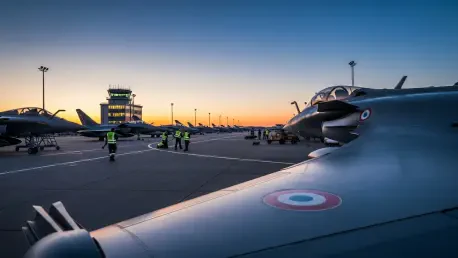

The thunderous roar of advanced jets over Germany’s Norvenich air base recently shattered more than just the morning stillness; it marked the definitive collapse of a long-standing European nuclear taboo. For decades, the mere suggestion of German involvement in French nuclear strategy was met with immediate dismissal in Berlin and protective skepticism in Paris. However, the joint announcement by Chancellor Friedrich Merz and President Emmanuel Macron has effectively dismantled that invisible wall, ushering in a landmark agreement that places German conventional forces at the center of French-led nuclear exercises by the end of 2026. This isn’t merely a technical upgrade in military cooperation; it represents a fundamental realignment of the continent’s security architecture.
This policy shift signaled a historic pivot toward a more unified European defense identity. The centerpiece of this initiative is the German military’s decision to integrate its elite air units into drills traditionally reserved for French personnel. By moving beyond the cautious policies of previous administrations, Berlin has signaled a readiness to assume greater responsibility for the continent’s stability. This transition represents a bold attempt to merge the tactical strengths of Europe’s two dominant powers into a singular, cohesive deterrent.
The Norvenich Pivot: Breaking Decades of Strategic Silence
The urgency behind this Franco-German rapprochement stems from a deepening anxiety regarding the long-term reliability of traditional security commitments. As global focus fluctuates, the continent’s leadership is grappling with the reality that the protective shield they have relied upon since the Cold War may no longer be ironclad. This topic carries significant weight because it represents a transition from passive reliance to active self-preservation. By moving to complement existing agreements with a distinctly European layer of deterrence, Berlin and Paris are attempting to insulate the region against shifts in global alliances that could otherwise leave it vulnerable.
The evolving geopolitical landscape has forced a reconsideration of what it means to be a sovereign power in the modern age. Reliance on external actors for ultimate security is increasingly viewed as a strategic liability rather than a convenience. Consequently, the push for autonomy is no longer just a rhetorical goal but a practical necessity driven by the need for a fallback mechanism. This shift has redefined the relationship between the two nations, turning past rivalries into a pragmatic partnership focused on collective survival.
The Cracks in the Atlantic Shield and the Rise of Self-Reliance
The new cooperation framework seeks to merge Germany’s ambition of fielding a formidable conventional military with France’s unique status as the sole independent nuclear power in the region. This synergy is intended to create a multifaceted defense posture that addresses both conventional and strategic threats simultaneously. Integrated nuclear drills, scheduled to commence by late 2026, will focus on the logistical and conventional support required for complex missions. These maneuvers serve as a practical demonstration of unity, proving that the two nations can operate as a single military entity when required.
Beyond the immediate tactical benefits, this partnership has created a ripple effect across the continent. Nations such as Poland, the Netherlands, and various Nordic states have expressed interest in the development of this defense coalition. This expansion suggests that the initiative is not merely a bilateral affair but the possible foundation of a broader security framework. By fostering operational interoperability, such as the successful in-flight refueling maneuvers between Rafale and Eurofighter jets, the alliance has provided a proof of concept for deeper regional integration.
Building a Coalition of Deterrence Beyond the Rhine
The shift in policy is underscored by a newfound pragmatism among the current leadership. Chancellor Merz has explicitly stated that the current climate demands “new answers,” signaling a departure from the rigid, defensive postures of the past. President Macron has framed the integration of German conventional forces as a method to bolster collective deterrence without requiring Germany to directly fund the French arsenal. This distinction was designed to bypass domestic political friction and focus on creating “strategic doubt” among potential adversaries.
Experts suggest that this partnership is a calculated attempt to mend the relationship after high-profile failures in industrial cooperation. Previous projects, such as the joint fighter jet program, struggled under the weight of competing national interests and bureaucratic hurdles. By focusing on shared tactical goals and operational trust rather than just industrial contracts, the two leaders have found a way to bypass the traditional pitfalls of European defense procurement. This approach prioritizes immediate readiness over long-term industrial disputes.
Expert Perspectives on the “New Answers” to Modern Threats
To ensure this nuclear partnership translates into genuine autonomy, the initiative followed a specific strategic framework. Leaders prioritized the development of European capabilities that ran alongside existing frameworks to avoid redundancy while ensuring a robust fallback mechanism. This required the establishment of permanent channels for military experts to share practices and develop joint doctrines, moving beyond high-level political rhetoric into the realm of practical, day-to-day cooperation.
The initiative ultimately focused on leveraging Germany’s conventional expansion to provide the necessary muscle for French strategic assets. These stakeholders envisioned a more resilient security front that prioritized political safeguarding to ensure the alliance outlasted individual leadership transitions. By cementing these ties through institutionalized military maneuvers, the partnership created a framework for resource optimization. This ensured that the continent remained prepared to address emerging threats through a unified and self-sustaining defense posture that minimized external dependencies.