
Proponents of the Infiltration Bill point to recent high-profile assassinations and cyber-attacks on soil as justification for total oversight of all foreign interactions. This legislative push occurs as the Islamic Republic navigates a historically precarious juncture, where the imperative of ideological preservation is increasingly at odds with the basic requirements of economic survival. By late August 2026, the state has found itself trapped between a mounting security paranoia and a catastrophic decline in national revenue. The government’s current trajectory suggests a fundamental shift toward a “fortress state” model, a strategy that seeks to insulate the regime from external influence while inadvertently strangling the domestic channels necessary for financial stability. This dual crisis is not merely a passing phase of hardship but a structural challenge that threatens the very foundations of governance in a world that remains interconnected despite the regime’s best efforts to withdraw.
The central tension in this narrative is the pursuit of what hardliners call “intelligence purity,” a state of absolute domestic control that views any international engagement as a potential vector for subversion. While the security apparatus tightens its grip, the nation’s financial heart is beginning to fail, with the Central Bank reporting a near-total depletion of accessible liquid reserves. This internal friction has created a scenario where the state is effectively sabotaging its own professional and middle classes in the name of safety. As officials debate the merits of the Infiltration Bill, the reality of empty coffers and a stagnant economy looms over every session of Parliament. The following sections will examine the legislative architecture of this new security paradigm and the cascading economic failures that are forcing the Iranian leadership to choose between absolute control and the risk of national bankruptcy.
The Legislative Expansion of State Oversight
The introduction of a 33-article legislative proposal, commonly referred to as the Infiltration Bill, represents an unprecedented expansion of the state’s authority over the private and professional lives of its citizens. Unlike previous national security laws that focused on the tangible theft of classified documents or physical espionage, this new framework targets the nebulous concept of “soft” influence. By criminalizing loosely defined cooperative activities with foreign entities, the bill effectively broadens the definition of treason to include routine international communication. This shift reflects a deepening insecurity within the ruling elite, who now view cultural, scientific, and media exchanges as primary battlegrounds in a global war for influence. The legislation explicitly mentions that providing information to international media or participating in foreign-funded workshops could result in severe criminal penalties, creating an atmosphere of pervasive suspicion.
Beyond the media landscape, the bill casts a wide net over the nation’s intellectual and scientific infrastructure. It suggests that any joint research project involving foreign scholars or grants from international institutions should be viewed through the lens of intelligence gathering. This approach essentially treats the pursuit of knowledge as a zero-sum game, where any interaction with the outside world is assumed to be a compromise of national sovereignty. Proponents argue that these measures are essential to prevent hostile intelligence agencies from using academic and civil society channels to manipulate Iranian decision-making. However, the practical effect is the systematic dismantling of the country’s professional networks. By placing a legal barrier between Iranian experts and their global peers, the state is risking a level of intellectual isolation that could take decades to reverse, all in the pursuit of a theoretical and absolute security.
The legal ambiguity of the Infiltration Bill is perhaps its most potent feature, allowing for a selective and highly political application of justice. Terms like “hostile intentions” or “soft subversion” are left largely undefined, granting security agencies broad discretion to interpret any foreign contact as a threat. This lack of legal precision has sent a chill through the business community, particularly those involved in international trade or the burgeoning technology sector. If a simple email exchange or a business conference can be reframed as an act of infiltration, the incentive for entrepreneurship and innovation vanishes. The result is a society where the safest path is total disengagement from the world, a prospect that sits in direct contradiction to the government’s stated goals of achieving economic self-sufficiency and technological independence.
Domestic Resistance and the Risk of Brain Drain
The legislative process surrounding the Infiltration Bill has exposed significant fractures within the Iranian political establishment, revealing a rare public disagreement between the executive branch and more conservative elements in Parliament. While the bill has moved through various stages of approval, high-ranking officials like Vice President for Legal Affairs Majid Ansari have voiced serious reservations. These critics argue that the law’s expansive reach and vague definitions will not only infringe upon the fundamental rights of citizens but also lead to the total paralysis of the nation’s professional sectors. The fear is that the security apparatus, in its zeal to protect the state, will inadvertently destroy the very human capital that makes the state functional. This internal debate underscores a growing realization that a country cannot be governed by security decrees alone, especially when its best and brightest are looking for the exit.
The most immediate and tangible consequence of this restrictive environment is the acceleration of the “brain drain” phenomenon, which has reached critical levels by 2026. Doctors, engineers, and researchers, who represent the backbone of Iran’s modernization efforts, increasingly view the new security framework as an existential threat to their livelihoods. When routine professional collaboration is equated with espionage, the risk of remaining in the country becomes too high for many. Reports from academic circles indicate a significant drop in the number of PhD candidates and a surge in applications for foreign visas among the nation’s youth. This mass exodus of talent creates a vacuum of expertise that the state cannot easily fill, leading to a gradual degradation of public services, infrastructure management, and medical care. The state is effectively trading its future prosperity for the short-term illusion of total internal control.
Furthermore, the bill’s implementation threatens to alienate the pragmatic factions of the government who believe that some level of international connectivity is a prerequisite for survival. These officials understand that Iran cannot solve its pressing environmental, health, and technological challenges in a vacuum. By cutting off the channels of scientific and professional exchange, the state is making itself more vulnerable to the very threats it seeks to avoid, such as public health crises or infrastructure failures. The ongoing deliberations in Parliament and the eventual review by the Guardian Council will be a watershed moment for the country. It will determine whether the regime will double down on a policy of total isolation or if the voices of pragmatism can carve out enough space for the country to maintain a functioning, if limited, relationship with the global community.
Financial Bottlenecks and the Oil Revenue Crisis
While the political class is embroiled in debates over security legislation, the Iranian economy is facing a crisis of solvency that threatens the state’s ability to perform its most basic functions. Despite years of official rhetoric claiming that the country has built a “resistance economy” immune to foreign pressure, the latest data from the Central Bank of Iran suggests otherwise. The lifeblood of the national budget—oil revenue—has slowed to a trickle as international buyers face increasingly stringent secondary sanctions. Even when oil is successfully sold through clandestine channels, the resulting revenue is frequently trapped in foreign banks. This has led to a systemic liquidity crisis where the government has billions of dollars on its balance sheets that it cannot actually spend or repatriate to fund its domestic obligations.
The situation is exacerbated by the fact that even regional partners are finding it increasingly difficult to settle their debts with Tehran. For instance, Iraq, a major importer of Iranian energy, has faced significant hurdles in transferring payments due to the fear of triggering American sanctions on its own banking system. This financial blockade has created a paradox where Iran is a net exporter of vital resources but remains cash-poor and unable to pay its own civil servants on time. The lack of liquid currency has forced the state to rely on increasingly desperate measures to keep the economy afloat, including the auctioning of state assets and the issuance of high-interest debt that may never be repaid. The inability to access foreign reserves has essentially put the Iranian government on a starvation diet, with no clear end in sight.
This financial strangulation is not just a macroeconomic problem; it has direct implications for the regime’s ability to maintain social order. Historically, the Iranian state has used its oil wealth to provide a wide range of subsidies and public services that help maintain a social contract with the populace. As these funds dry up, the state’s ability to buy social peace is rapidly diminishing. The Central Bank Governor, Abdolnaser Hemmati, has recently admitted that the lack of foreign currency is the primary driver of domestic instability, as it prevents the government from importing essential goods and stabilizing the exchange rate. Without a major breakthrough in international relations or a radical shift in economic policy, the state faces the very real possibility of a total financial collapse that no amount of security legislation will be able to contain.
Monetary Erosion and the Loss of Public Trust
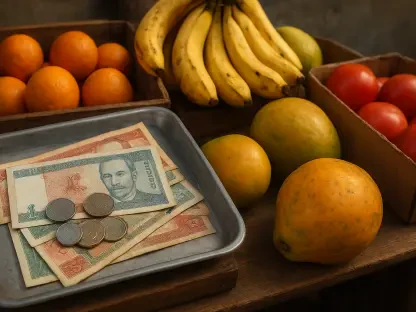
The most visible and painful manifestation of Iran’s economic crisis is the rampant inflation that has decimated the purchasing power of the average citizen. Although the government has announced modest wage hikes for 2026, these increases have been instantly neutralized by the skyrocketing cost of food, housing, and medicine. The Iranian Rial has entered a period of rapid devaluation, losing a significant portion of its value against the dollar in just the last few months. This currency volatility has created a climate of total economic uncertainty, where prices change daily and long-term planning is impossible. For the Iranian populace, the falling Rial is more than just an economic statistic; it is a constant reminder of the government’s failure to protect their standard of living and their future.
In response to the collapse of the national currency, many Iranians have turned to the gold market as a last resort to preserve their savings. This shift has turned domestic gold prices into a “distrust index” for the state’s economic management. When the price of gold coins reaches new psychological thresholds, it reflects a collective bet by the public that the government will be unable to stabilize the economy. This lack of confidence in the Rial has also led to a significant increase in the informal economy, as citizens and businesses seek ways to conduct transactions outside of the state’s failing financial system. By moving their wealth into gold and hard currency, the Iranian people are effectively withdrawing their support from the national economy, further starving the state of the resources it needs to function.
To mitigate the impact of this crisis on the most vulnerable segments of society, the state has expanded its reliance on electronic food vouchers and direct commodity distribution. However, even these basic safety nets are showing signs of strain as the liquidity crisis deepens. There are frequent reports of delayed voucher payments and shortages at state-run cooperatives, leading to long queues and growing public frustration. The Social Security Organization, which is responsible for the pensions of millions of Iranians, has also signaled that it is struggling to meet its obligations, raising the specter of widespread poverty among the elderly. This erosion of the social safety net is a dangerous development for the regime, as it removes one of the few remaining reasons for the public to remain invested in the current political order.
The Paradox of Digital Security and Modern Commerce
The tension between security and the economy is perhaps most acute in the digital sphere, where the state’s desire for control is directly undermining the infrastructure of modern commerce. In an effort to prevent the coordination of protests and the spread of foreign influence, the government has frequently implemented internet shutdowns and severe bandwidth restrictions. While these measures may succeed in the short term from a security perspective, they carry a devastating economic cost. The Minister of Communications recently acknowledged that internet disruptions have cost the digital economy trillions of Tomans, hitting the fintech and e-commerce sectors particularly hard. For a country that has invested heavily in developing its own digital infrastructure, these self-imposed outages are a form of economic sabotage.
The Infiltration Bill threatens to institutionalize these digital restrictions, moving them from temporary emergency measures to a permanent feature of the legal landscape. By viewing all international digital traffic with suspicion, the state is effectively cutting off its businesses from the global marketplace. Small-scale entrepreneurs, who rely on social media and international platforms to reach customers and source materials, find themselves increasingly isolated. This digital isolationism creates a significant barrier to entry for new businesses and discourages the kind of technological innovation that the government claims to support. The result is a stagnant tech sector that is unable to compete regionally or globally, further entrenching Iran’s economic isolation and making it more dependent on a diminishing pool of domestic resources.
This creates a fundamental paradox for the Iranian leadership: they desire the prestige and power that come with being a modern technological power, yet they are unwilling to allow the openness and connectivity that such status requires. The pursuit of a “national internet” or an isolated digital ecosystem is a massive undertaking that requires billions of dollars in investment—money the state currently does not have. Furthermore, even a fully realized domestic network cannot replace the value of the global internet for trade, research, and communication. By prioritizing digital security over digital commerce, the state is ensuring that its economy remains stuck in a pre-digital era, unable to leverage the tools that are essential for growth in the mid-2020s.
Geopolitical Isolation and the Rhetoric of Resistance
The external environment continues to be the primary driver of Iran’s dual crisis, as the United States and its allies maintain a policy of “maximum pressure” through secondary sanctions. These measures have proven to be remarkably effective at chilling trade even with countries that are not party to the sanctions themselves. By threatening to disconnect any financial institution that deals with Iran from the global dollar-based system, Washington has succeeded in turning the Iranian market into a pariah state. Recent developments in the United Arab Emirates, which was once a primary hub for Iranian re-exports, show that even traditional economic partners are now prioritizing their access to Western markets over their trade relationships with Tehran. This deepening isolation has left Iran with very few viable economic outlets, forcing it into a series of increasingly unfavorable bartering arrangements.
Rather than prompting a shift toward diplomacy, this geopolitical pressure has been used by hardliners to justify further domestic repression and the passage of the Infiltration Bill. The state-aligned media narrative focuses heavily on the “economic war” being waged against the country, framing every hardship as a consequence of foreign aggression. This rhetoric of resistance is designed to channel public anger away from government mismanagement and toward an external enemy. From this perspective, the Infiltration Bill is presented as a necessary defensive measure to protect the nation’s “cultural and political sovereignty” against a multi-faceted attack. By framing the crisis in existential terms, the regime seeks to delegitimize any calls for reform or compromise, portraying them as a form of surrender to foreign powers.
However, this “fortress state” mentality has its limits, especially as the economic costs of isolation continue to mount. While the regime may be able to suppress internal dissent through a combination of security laws and digital control, it cannot manufacture the resources necessary to run a modern state indefinitely. The attempt to bypass international trade routes through projects like the regional rail link with Iraq is a strategic move, but it is hindered by the financial instability of the entire region. Without access to the global financial system, even the most ambitious infrastructure projects struggle to attract the capital needed for completion. The ideological commitment to resistance is thus on a collision course with the reality of an empty treasury, creating a situation that is increasingly unsustainable for the leadership and the populace alike.
Strategic Alternatives for National Survival
The synthesis of these internal and external pressures revealed a state that had successfully guarded its ideological core while losing the ability to provide for its citizens. Throughout the latter half of the year, the securitization of civilian life created an environment where the boundary between professional expertise and criminal subversion all but disappeared. This shift significantly paralyzed the scientific and commercial sectors that were most needed to navigate the crisis of solvency. The divergence between the state’s narrative of victory and the emergency reports from the Central Bank suggested a looming collapse of public confidence. As the government exhausted its remaining stop-gap measures, such as food vouchers and asset sales, the underlying insolvency of the national project became an unavoidable reality for all layers of society.
In the final assessment, the leadership faced a stark choice between two divergent and unsustainable paths. One direction led toward a total “fortress state,” where Iran became more ideologically pure and internally secure but remained hollowed out and destitute. The alternative required a difficult pivot toward pragmatism, where the security-first approach was softened to allow for the intellectual and commercial breathing room necessary for economic stabilization. The evidence from the gold markets and the migration patterns of the professional class indicated that the public had already begun preparing for a future outside of the state’s failing systems. The decisions made during this period ultimately determined whether the Islamic Republic would evolve to meet the challenges of the modern era or if it would retreat further into a defensive posture that ensured its long-term decline.