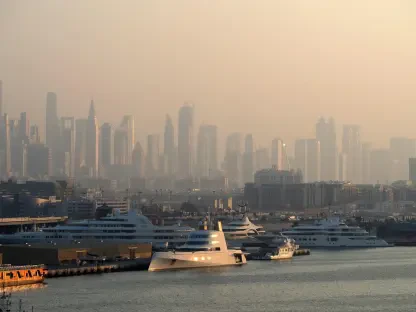

The vulnerability of global energy security has never been more apparent than in the current moment as a single precision strike on a critical maritime node threatens to destabilize international markets and disrupt the delicate balance of oil distribution. This reality materialized when a sophisticated drone attack targeted the Fujairah bunkering hub, a cornerstone of the Middle Eastern energy corridor. The resulting blaze and immediate cessation of activities sent ripples through the commodity exchange, highlighting the fragility of a system that relies on a few concentrated geographic points.
While local civil defense teams managed the physical fires without reported casualties, the operational paralysis of the facility has signaled a dangerous shift in regional hostilities. This was not an isolated incident but rather the second targeted strike on this terminal within a short window, suggesting a calculated effort to undermine the United Arab Emirates’ status as a safe haven for energy logistics. The immediate suspension of all oil loading operations has forced traders and shipping companies to confront a scenario where the primary outlet for crude bypasses is no longer functional.
The Critical Role of UAE Infrastructure in the Global Energy Landscape
The Fujairah hub operates as the third-largest bunkering center in the world, serving as a vital junction for vessels navigating the Arabian Sea. Its strategic significance is compounded by its location on the eastern seaboard of the UAE, which allows for the movement of massive volumes of crude without entering the internal waters of the Gulf. Consequently, any disruption here does not just impact local trade but effectively chokes the secondary artery of the global energy heartland.
Central to this network is the Habshan–Fujairah pipeline, a critical piece of engineering designed to move up to 1.8 million barrels of oil daily. By providing a direct land route to the Indian Ocean, this infrastructure was intended to render the Strait of Hormuz less of a singular point of failure. However, the recent aerial incursions demonstrate that even bypass routes are vulnerable to modern kinetic threats, putting the UAE’s vast export capacity at immediate risk.
Escalating Geopolitical Volatility and Market Reactions
Targeted Strikes and the Shift in Modern Asymmetric Warfare
The transition from conventional naval confrontations to drone-led incursions represents a new era of asymmetric warfare that favors low-cost, high-impact disruption. Energy infrastructure, once considered protected by traditional deterrence, is now frequently targeted by non-state actors and regional powers seeking to exert geopolitical pressure. These incursions allow aggressors to stall international shipping and damage economic interests without engaging in a full-scale ground or sea war.
Recent threats from the Islamic Revolutionary Guard Corps have expanded the scope of this conflict toward civilian commercial hubs, including the Jebel Ali port and Dubai International Airport. The explicit labeling of these locations as legitimate targets has created a climate of fear that transcends the oil sector. By targeting logistics and transit points, the opposition seeks to isolate the region and force a reconfiguration of international maritime security alliances.
Analyzing the $100+ Barrel: Price Surges and Performance Forecasts
Market reactions to the Fujairah incident were instantaneous, with Brent crude prices surging past the $106 per barrel mark. This represents a staggering 50% increase within a single month, a trajectory that reflects deep-seated anxiety regarding supply continuity. Traders are currently pricing in a long-term risk premium, as the suspension of loading operations at such a pivotal site suggests that the global surplus is thinner than previously estimated.
Forward-looking projections indicate that West Texas Intermediate and Brent pricing will remain volatile as long as the Strait of Hormuz remains impassable. If regional authorities cannot guarantee the safety of the eastern bypass, the market may see prices climb toward record highs. Performance indicators suggest that the current closure of primary shipping lanes will continue to drain global inventories, leaving little room for error in the coming months.
Navigating Operational Bottlenecks and Supply Chain Disruptions
The immediate logistical challenge involves containing the physical damage to storage tanks and loading piers while managing the backlog of idling tankers. Rerouting energy supplies is a complex task, as alternative ports often lack the specialized bunkering capacity or the deep-water berths found in Fujairah. This creates a bottleneck that delays the delivery of crude to major refineries in Asia and Europe, further tightening the global supply chain.
Moreover, the human element of this crisis cannot be overlooked, as high-tension zones pose a direct physical risk to the large expatriate workforce that manages these facilities. Companies are now forced to implement emergency evacuation protocols and enhanced security for local infrastructure. Identifying viable alternative supply routes is becoming a priority, yet few options exist that can truly compensate for the loss of the UAE’s eastern seaboard capacity.
Security Protocols and the Regulatory Response to Regional Threats
International maritime regulations are being rapidly updated to reflect the reality of aerial sabotage and the constant threat of drone swarms. Commercial shipping companies are now required to comply with emergency exclusion zones and rigorous safety standards that were previously reserved for active combat zones. These regulations aim to minimize the risk to civilian crews while maintaining a semblance of order in increasingly contested waters.
Regional authorities are also deepening their cooperation with international defense partners to deploy advanced counter-drone systems. The implementation of integrated air defense umbrellas around critical infrastructure is no longer an optional upgrade but a mandatory requirement for operational viability. This shift in security posture is essential for restoring the confidence of global insurers and shipping magnates who are wary of the mounting liabilities.
Future Outlook: Geopolitics as the Primary Driver of Energy Markets
The long-term viability of the Middle East as a stable energy provider is being called into question by these persistent hostilities. While the region remains the world’s most significant source of hydrocarbons, the recurring nature of infrastructure attacks may lead to a permanent shift in how global powers view energy security. Innovation in defense technology will play a major role in determining whether these hubs can remain operational in a landscape defined by persistent asymmetric threats.
Sustained high energy costs are also likely to accelerate the global transition toward alternative energy sources as nations seek to reduce their exposure to Middle Eastern volatility. If prices remain elevated, the economic incentive for rapid decarbonization and the adoption of nuclear or renewable power will intensify. Ultimately, the stability of the market will depend on whether military breakthroughs or diplomatic resolutions can reopen the vital transit routes that sustain global commerce.
Synthesizing the Impact of Regional Instability on Global Oil Security
The Fujairah strike served as a catalyst for a broader re-evaluation of how geopolitical risks were integrated into global energy inflation models. It demonstrated that the technical capacity to bypass geographic choke points meant nothing if the terminus of that bypass remained unprotected from aerial sabotage. Stakeholders across the energy spectrum recognized that the era of secure, uninterrupted transit had been replaced by a period of high-stakes defensive maneuvers and unpredictable supply shocks.
Strategic recommendations for investors focused on diversifying energy portfolios and hedging against prolonged periods of regional instability. It became clear that managing risk required a focus on technological resilience and the support of international security frameworks. Moving forward, the industry prioritized the development of autonomous defense systems and reinforced infrastructure to mitigate the vulnerabilities exposed by this era of targeted disruption.