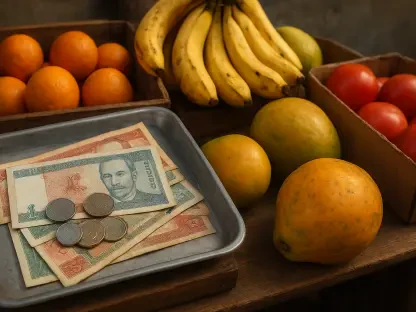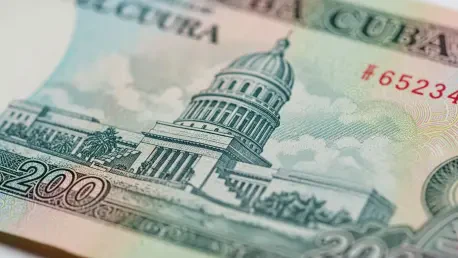

The informal currency exchange market in Cuba has become the primary indicator of the nation’s economic health, revealing a deep-seated instability that official government reports often fail to capture. As the second half of 2026 begins, the parity between the Cuban peso and foreign currencies has reached a critical breaking point, with the Euro recently hitting an unprecedented peak of 790 pesos. This surge reflects a broader trend of monetary erosion where the domestic currency is increasingly abandoned by citizens who seek to preserve their savings through more stable international assets. Unlike previous years where volatility was often cyclical, the current trend suggests a structural shift in how value is perceived and traded across the island. The disparity between the state’s fixed exchange rates and the reality of street prices has created a dual economy where the majority of commercial transactions now bypass traditional banking systems entirely, favoring the black market’s agility and responsiveness to supply.
The Divergence: Major Foreign Currencies
While the Euro experiences an aggressive upward trajectory, the United States dollar has entered a phase of relative stability, maintaining a high-level plateau of approximately 673 pesos in the informal market. This stubborn price point is not a sign of the peso’s strength but rather a reflection of the dollar’s role as a staple for essential imports and small-scale private enterprise. The persistent shortage of physical greenbacks in state-run financial institutions forces local entrepreneurs to turn to informal networks to fund their supply chains, keeping demand high despite the exorbitant costs. Because the government is unable to provide sufficient foreign exchange for the burgeoning private sector or for those preparing for migration, the dollar remains a foundational element of the underground economy. This stability at a high price suggests that the market has priced in the current scarcity, yet it provides little relief for the average consumer whose purchasing power continues to evaporate under the weight of sustained inflation.
The Euro’s climb to 790 pesos highlights a phenomenon frequently described as “hyper-euroization,” where the European currency is favored for its utility in specific high-value sectors and international travel. Travel to Europe and certain segments of the luxury market now operate almost exclusively on Euro-denominated pricing, pushing the currency to new heights as demand outstrips the available supply in the streets. This divergence between the Euro and the dollar is also driven by the strategic choices of residents who perceive the Euro as a safer long-term haven during periods of extreme domestic inflation. Consequently, the widening gap between these two currencies complicates the financial planning for households, as they must navigate a fragmented market with multiple price points for the same goods. This trend further marginalizes the national peso, relegating it to a currency of necessity for small, everyday purchases while any significant accumulation of wealth or capital is immediately converted to more reliable assets.
Systemic Failures: The Digital Currency Paradox
Adding to the complexity of this monetary crisis is the presence of the Freely Convertible Currency, or MLC, which serves as a digital credit for use in government-authorized stores. Currently fluctuating around 471 pesos per unit, the MLC has become a lightning rod for speculation because its utility is directly tied to the inventory levels of state-run retail outlets. When these stores suffer from chronic shortages of basic food items and hygiene products, the value of the MLC tends to drop as consumers find the digital credits less useful for their immediate needs. Conversely, a sudden shipment of high-demand goods can cause a spike in demand for MLC as people scramble to fund their accounts for shopping. This volatility creates an additional layer of risk for the Cuban public, who must decide whether to hold their assets in physical cash or commit them to a digital system that remains vulnerable to supply chain disruptions and shifting government policies that often change without warning or public debate.
A fundamental driver of the current turmoil is the massive disconnect between the Central Bank of Cuba’s official exchange rates and the reality of the parallel market that governs daily life. Official rates remain frozen at levels that bear no resemblance to the prices found in informal channels, rendering the government’s financial interventions largely ineffective for the average citizen. This policy gap has forced the population to rely on social media platforms and decentralized messaging groups to track daily exchange rates, which have effectively replaced formal banking indicators. As the state loses control over the valuation of the peso, it also loses the ability to manage inflation or implement coherent fiscal policies, leading to a feedback loop where the public’s lack of trust in the banking system further fuels the informal market’s dominance. This lack of institutional oversight means that the national economy is increasingly dictated by the laws of supply and demand in the shadows, where price discovery happens outside the reach of the law.
Socioeconomic Impacts: Practical Steps Forward
The human cost of this monetary decline is profound, as the prices for nearly all essential goods, from medicine to basic calories, are now intrinsically linked to the informal exchange rates. For the majority of the workforce who receive their salaries in Cuban pesos, the rising cost of the Euro and the dollar translates into a crushing loss of purchasing power that makes even basic subsistence a daily challenge. Stagnant wages in the public sector have failed to keep pace with the hyperinflation triggered by the peso’s collapse, creating a widening wealth gap between those with access to foreign remittances and those without. This environment fosters a persistent cycle of economic hardship, where households are forced to make impossible choices between essential services and nutritional needs. The resulting social strain is visible in every community, as the dream of financial stability remains elusive for a generation caught in the crossfire of systemic inefficiency and the unrelenting pressure of a devaluing currency.
Addressing this multi-faceted crisis required a shift toward monetary unification and the elimination of the dual-currency system that had long distorted local prices. Policy experts emphasized that the state must facilitate a transition where the official exchange rate aligns more closely with market realities, thereby reducing the influence of the informal sector. By establishing transparent banking mechanisms and incentivizing the use of the national peso through improved retail availability, authorities sought to restore confidence in the domestic financial system. Furthermore, structural adjustments in the agricultural and manufacturing sectors were proposed to enhance local production, which would alleviate the constant pressure on foreign exchange reserves for basic imports. These measures, combined with a legal framework that supports private entrepreneurship and foreign direct investment, provided a clear pathway for stabilizing the economy and protecting the purchasing power of the average household against future volatility.