
While the financial markets often mistake a temporary plateau for a permanent victory, Cleveland Fed President Beth Hammack warns that a 3% inflation rate is a simmering fever rather than a recovery. Her recent messaging challenges the prevailing sense of complacency among economists who have grown accustomed to elevated price levels. She suggests that the longer the Federal Reserve waits to reach its stability goals, the more likely it is that high prices will become a permanent, unshakeable fixture of daily life.
The Growing Price of Procrastination in a 3% Inflation Economy
The danger of current fiscal policy lies in the assumption that a slight cooling of data equals a solved problem. Hammack asserts that maintaining a 3% annual inflation rate is far from the central bank’s long-term mandate, risking a scenario where the American economic psyche is fundamentally altered. If the public begins to view these levels as the new normal, the psychological toll could be as damaging as the financial one.
Delaying decisive action creates a trap where minor fluctuations in the market are interpreted as progress, even as the core issues remain unaddressed. Hammack argues that the cost of waiting to act will eventually outweigh the temporary discomfort of a rate hike. Without a swift return to the 2% target, the erosion of purchasing power will continue to degrade the standard of living for the average citizen.
Why the Five-Year Inflationary Cycle Demands a Shift in Strategy
The United States has moved into a sustained period of fiscal pressure that characterizes the five-year inflationary cycle starting in 2026. This prolonged duration matters because it risks creating an “inflationary mindset,” where consumers and businesses bake price increases into their long-term expectations. Such a shift makes future stabilization efforts significantly more painful as the economy adjusts to a higher baseline of cost.
Addressing this at the annual symposium in Jackson Hole, Hammack highlighted that the current economic trend is not just a statistical anomaly but a fundamental shift. Protecting household purchasing power requires an aggressive response that acknowledges the cumulative weight of years of rising costs. The strategy must move toward proactive measures rather than reacting to monthly data prints that provide an incomplete picture.
Analyzing the Hawkish Stance Against Persistent Market Pressures
As a leading hawkish voice on the Federal Open Market Committee, Hammack recently dissented against the decision to maintain the current rate range of 3.5% to 3.75%. Her argument rests on the belief that financial conditions are not yet sufficiently restrictive to curb the unique drivers of today’s inflation. These include geopolitical instability from the Iran war and the massive resource demand triggered by the artificial intelligence boom.
While some policymakers categorize these as temporary supply shocks, the persistent strain on the economy suggests that a quarter-point hike is a necessary preventive measure. New trade tariffs and energy demands continue to put upward pressure on prices, making the current neutral stance insufficient. For Hammack, the risks of doing too little far outweigh the risks of a marginal increase in borrowing costs.
Evidence from the Field: The Human Cost of Economic Despair
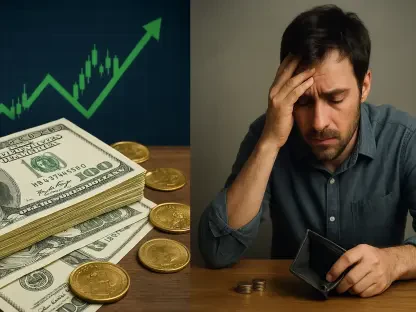
The credibility of this urgency is bolstered by firsthand observations of the real-world suffering experienced by American families. During a visit to Erie, Pennsylvania, Hammack reported a palpable sense of despair among workers who hold stable jobs yet find themselves priced out of basic comforts. These interactions provide a qualitative perspective that macroeconomic spreadsheets often fail to capture properly.
Lived experience reveals that even small luxuries, such as taking children out for ice cream, have become significant financial stressors for many households. This trend suggests that while top-line data may show gradual improvement, the reality for the workforce remains a constant struggle against a rising cost of living. These anecdotes serve as a stark reminder that economic stability is a human necessity, not just a mathematical target.
Bridging the Gap Between Policy Urgency and Market Expectations
Navigating the landscape required a deep understanding of the disconnect between the “act now” mantra and the broader market anticipation of a holding pattern. Investors prepared for two distinct possibilities: a continued pause that risked further embedding inflation, or a sudden December hike that could catch the market off guard. Monitoring the internal debate within the Fed became essential for anticipating whether the central bank would prioritize definitive data or take aggressive steps.
The Federal Reserve ultimately weighed these divergent paths while considering the long-term structural damage to the U.S. economy. Decision-makers reflected on the necessity of preventing an inflationary mindset from taking root in the public consciousness. By evaluating the balance between aggressive tightening and waiting for clarity, policymakers sought to establish a framework that prioritized the restoration of purchasing power above all else.