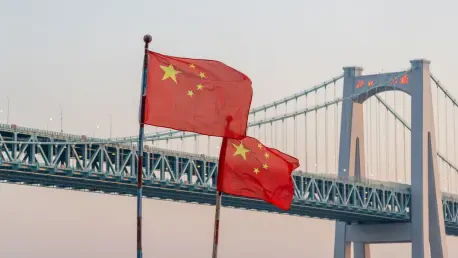

The rhythmic clinking of fine crystal and the hushed diplomatic exchanges in the opulent halls of Evian-les-Bains cannot mask the palpable tension surrounding a seat that remains stubbornly vacant. While the Group of Seven remains the premier club for the world’s wealthiest industrialized democracies, the absence of the “great global dragon” creates a glaring void in discussions regarding the future of the global financial system. As leaders gather in historic settings like Evian-les-Bains, they find themselves in a paradoxical position: they are attempting to steer the global economy while excluding the very nation that powers its manufacturing heart. This omission is not merely a matter of protocol but a fundamental challenge to the group’s ability to govern a world that has moved far beyond the divisions of the previous century.
Hosting a G7 summit today without the world’s second-largest economy is increasingly compared to staging a soccer World Cup without the participation of Brazil. The technicality of the membership rules remains intact, but the competitive and economic reality is fundamentally altered by such a significant exclusion. The group continues to represent a massive concentration of historical wealth and military power, yet it struggles to project authority when the primary driver of global growth is not present at the table. This dynamic forces the G7 to act as a reactive body, often spending more time discussing Chinese policy than their own collective initiatives.
The Invisible Giant at the Dinner Table: Why a G7 Without China Feels Incomplete
The sheer scale of the Chinese economy has reached a point where its exclusion from the world’s most exclusive economic forum feels like an act of strategic denial. In the current global landscape, every major decision regarding interest rates, trade routes, or currency stability is inextricably linked to the actions of the People’s Bank of China and the manufacturing output of the Pearl River Delta. By maintaining a club that excludes this behemoth, the G7 risks irrelevance, as the most consequential shifts in global markets often occur in Beijing rather than in London, Paris, or Washington. This creates a summit atmosphere where the most important participant is also the most discussed ghost.
Moreover, the absence of China hampers the G7’s ability to address systemic risks in the global supply chain. Recent years have demonstrated that Western industrial stability is heavily reliant on Chinese components, from semiconductors to basic consumer goods. Without a formal mechanism for direct economic coordination, the G7 is forced to rely on indirect pressure and unilateral policies, which often lead to market volatility rather than stability. The group’s attempts to manage the global financial architecture without the world’s largest creditor nation suggest a disconnect between historical prestige and contemporary economic gravity.
A Tale of Two Eras: Shifting From the 1975 Rambouillet Vision to a Chinese-Dominated Reality
When the G7 was formed in 1975, China was an economically isolated nation reeling from internal upheaval and ideological conflict with the West. At that time, the meeting at the Chateau de Rambouillet focused on a cohesive vision of individual liberty and open markets shared by a handful of transatlantic giants. China was viewed then as a secondary power, largely irrelevant to the group’s mission of stabilizing the world economy after the oil shocks of the mid-seventies. The group’s identity was forged in a world that was clearly divided, where the West held a near-monopoly on advanced industrial capability.
However, the subsequent decades witnessed an unprecedented transformation that turned a “tiny panda” into an economic behemoth that now dwarfs almost every member of the original group except the United States. This rapid ascent has forced a re-evaluation of the G7’s relevance, as the group struggles to manage global trends that are now inextricably linked to Chinese policy. The transition from an era of Western dominance to a multipolar reality has happened with a speed that many international institutions have failed to match. Today, the “Rambouillet vision” of a world governed by a small circle of democratic allies faces its greatest test as it attempts to maintain order in a landscape dominated by a non-member.
Economic Interdependence versus Ideological Integrity: The Core Conflict of the 21st Century
The primary obstacle to China’s inclusion is the foundational identity of the G7 as a collection of “open, democratic societies.” While China is a “shoo-in” for membership based on its $1.2 trillion trade surplus and dominance in technology, its authoritarian governance and restrictions on civil liberties stand in direct opposition to the 1975 Rambouillet declaration. This creates a friction point where economic necessity meets moral gatekeeping. G7 nations now face the “elephant in the room” on every agenda item: they cannot achieve meaningful progress on global carbon emissions or secure the rare minerals needed for green energy without Beijing, yet they refuse to grant a seat to a government that fundamentally rejects their political values.
This conflict is further complicated by the reality of digital surveillance and human rights concerns that have become central to Western foreign policy. Rankings from the World Press Freedom Index and studies on economic liberty consistently place China at the opposite end of the spectrum from the G7 members. To invite such a power into the inner sanctum of democratic governance would require a total abandonment of the group’s original charter. Consequently, the G7 is trapped in a cycle of needing China’s cooperation for survival while simultaneously being duty-bound to oppose the very system that has made China so successful.
The ‘Trojan Horse’ Theory: Expert Warnings on Fracturing Western Alliances
Many geopolitical analysts and G7 leaders warn that inviting China into the inner circle would result in strategic paralysis rather than cooperation. Critics point to the failed experiment with Russia and the G8 as a cautionary tale, suggesting that a non-democratic power could act as a “Trojan horse” designed to undermine the group’s cohesion from within. There is a palpable fear that Beijing could leverage its influence to tempt individual members into breaking ranks for bilateral favors, potentially dissolving the united front that allows the G7 to challenge security threats or unfair trade practices. The fear is that a G8 with China would simply be a venue for gridlock, where no consensus could ever be reached on sensitive security or human rights issues.
From Beijing’s perspective, the G7 is often viewed as a relic of the Cold War, further complicating any efforts toward a formal partnership. Chinese diplomats have frequently criticized the group for maintaining a “small circle” mentality that they claim does not reflect the interests of the broader global community. This mutual distrust ensures that even if an invitation were extended, it might be rejected or used as a platform for public confrontation rather than quiet diplomacy. The risk of internal fracture remains the single greatest deterrent to expanding the group’s membership to include any power that does not share its fundamental democratic DNA.
Strategic De-risking: Frameworks for G7 Nations to Counterbalance China’s Global Reach
To navigate this complex landscape, G7 leaders developed specific frameworks to engage with China from a distance while protecting their own industrial bases. The strategy focused on “rebalancing” trade to prevent Chinese exports from destabilizing Western technology and automotive sectors. This practical approach involved securing alternative supply chains for critical minerals, establishing collective stances on digital security, and urging China to act as a “catalyst for solidarity” on environmental issues. By maintaining this “priority subject” status for China without offering full membership, the G7 attempted to uphold its democratic mandate while acknowledging the inescapable reality of a multipolar world.
The summit participants eventually established a formal protocol for a “Critical Mineral Club,” which sought to reduce the group’s dependence on Chinese mining and processing. This initiative signaled a shift away from pure globalization toward a more fragmented, security-conscious economic model. Furthermore, the group coordinated a series of new investment standards aimed at preventing technological leakage while still allowing for the necessary flow of capital to maintain market growth. These actions underscored a new era of diplomacy where the focus moved from integration to insulation, ensuring that the G7 remained a cohesive unit even as the global influence of the “great dragon” continued to rise. Through these actionable steps, the group reaffirmed its commitment to democratic values while building a more resilient, albeit more divided, global economic architecture.