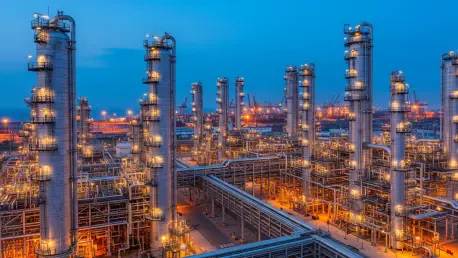

For nearly a century, the global petroleum landscape has been defined by a rigid hierarchy where resource-rich nations in the developing world provided the raw materials while industrial powerhouses in the West and Asia managed the high-value refining processes. This traditional division of labor often left nations like Nigeria in a precarious economic position, forced to export their own crude oil only to buy back expensive finished fuel products at international rates. The emergence of the Dangote Petroleum Refinery in Lagos is now dismantling this long-standing colonial-era model, moving beyond a localized fix for domestic shortages to become a strategic global asset. It is aggressively redrawing international trade routes and elevating Nigeria’s status within the international energy market, signaling a profound shift in how energy security is defined in the modern era. What was once seen as a localized industrial project has matured into a sophisticated hub capable of challenging the dominance of traditional European and Asian refining centers, effectively turning Nigeria into a net exporter of refined products and a stabilizer for the global fuel supply chain.
Scaling Capacity and Technological Sophistication
Expansion: A Path to Global Dominance
The sheer audacity of the Dangote Petroleum Refinery is best illustrated by the aggressive trajectory of its production expansion, which is already set to redefine the limits of industrial output in the downstream sector. While the facility initially launched with a massive capacity of 650,000 barrels per day, the administrative leadership is already executing plans to double this volume within a remarkably short timeframe. By integrating a second massive crude distillation unit and optimizing existing infrastructure, the refinery is on track to reach an unprecedented capacity of 1.4 million barrels per day by the end of 2028. This rapid scaling is not merely a feat of engineering but a calculated strategic maneuver designed to flood the regional market with high-quality fuel, thereby making it nearly impossible for older, less efficient refineries in other parts of the world to compete. This expansion effectively positions Nigeria as the central clearinghouse for energy products in Africa and beyond, creating a competitive platform that leverages economies of scale to influence supply chains across multiple continents. Such growth reflects a fundamental shift in corporate ambition, where a single private enterprise can dictate the pace of energy security for an entire geographic region through sheer industrial volume and logistical efficiency.
Technology: Refining at World-Class Standards
As the sprawling complex in the Lekki Free Zone continues to evolve, it is establishing itself as one of the most technologically advanced industrial installations on the planet. This technological edge is not just about size; it is about the sophistication of the refining processes that allow the facility to produce high-grade gasoline, diesel, and aviation fuel that meet the strictest Euro V international standards. By utilizing state-of-the-art residual fluid catalytic cracking and hydroprocessing technologies, the refinery can process a wide variety of crude grades into high-value products with minimal environmental impact compared to legacy plants. This capability is critical for entering highly regulated markets in Europe and North America, where fuel quality is non-negotiable. By concentrating such immense and high-quality production in a single hub, Nigeria is transitioning from a passive participant in the oil market to a dominant force in the downstream sector. This shift signals a major change in the balance of power within the global energy league, as the facility proves that it can match or exceed the technical output of the world’s most famous refining hubs in Rotterdam or Singapore.
Economic Transformation and Sovereignty
Breaking: The Cycle of Import Dependency
A central theme in this industrial evolution is the definitive end of Nigeria’s long-standing and costly dependence on imported refined petroleum, a situation that had previously crippled the national economy. Despite its status as Africa’s top crude producer, the country was historically plagued by persistent fuel shortages, long queues at filling stations, and extreme foreign exchange pressures because it lacked its own processing power. The refinery effectively breaks this cycle, allowing the nation to secure its own fuel supply and stop the constant drain on its financial reserves that were once spent on subsidies and import costs. By refining its own crude on home soil, Nigeria has successfully stabilized its domestic energy market and protected its economy from the volatility of international fuel price fluctuations. This move toward self-sufficiency is a critical step in achieving true economic sovereignty, as it removes a major point of vulnerability that external actors previously exploited. The ability to control the entire value chain from extraction to the pump provides a level of national security that was previously unimaginable for most resource-dependent nations in the Global South.
Retaining: Value Within National Borders
Beyond providing domestic stability, the facility is enabling Nigeria to capture the full economic value of its natural resources for the first time in its modern history. Instead of losing the industrial profits and “value-add” margins to overseas processors in Europe or India, the country is now retaining that wealth within its own borders. This transition from a “resource-exporting” economy to a “value-added” industrial powerhouse represents a fundamental change in how Nigeria participates in the global hydrocarbon chain. By refining its own oil, the nation is keeping jobs, technology, and wealth at home, which in turn fuels ancillary industries like fertilizer production and petrochemical manufacturing. This retention of value creates a multiplier effect across the broader economy, stimulating growth in logistics, engineering, and maintenance services that were previously outsourced to foreign firms. The success of this model serves as a blueprint for other resource-rich nations, demonstrating that the path to middle-income status lies in the localized transformation of raw materials into finished consumer goods, rather than merely acting as a supplier for the industrial appetites of the developed world.
Influence on International Fuel Markets
Markets: Filling Global Supply Gaps
The refinery’s global impact is perhaps most visible in the international aviation fuel market, where it has strategically stepped in to fill supply gaps caused by major geopolitical conflicts and shifting trade policies. With traditional supply routes in the Middle East and Eastern Europe compromised by regional tensions, and major players like Russia suspending certain exports to stabilize their own internal markets, a massive void appeared in the global fuel chain. The Dangote facility was able to pivot its operations with incredible speed to maximize jet fuel production, filling this vacuum and capturing high-value demand from international airlines that were desperate for reliable supply. This agility has turned the refinery into a vital stabilizer for the global aviation industry, ensuring that international flight corridors remain operational despite disruptions elsewhere. By acting as a swing producer that can redirect its output based on global demand signals, the facility has shown that an African-based refinery can be just as responsive and influential as the established giants in the Persian Gulf, effectively de-risking the global energy network through geographic diversification.
Supply: Nigeria as a European Stabilizer
European nations, which have traditionally relied on Gulf states and North American refineries for their aviation fuel, are increasingly looking toward West Africa to maintain their energy security levels. During certain peak periods, the Dangote refinery has supplied a substantial portion of Europe’s imported jet fuel, with export volumes reaching up to 100,000 barrels per day to major European hubs. This shift highlights the facility’s ability to act as a critical stabilizer in the international energy network, offering a shorter and more direct shipping route compared to traditional suppliers in the Far East. It demonstrates that a single African industrial asset can now influence the energy security of entire continents, providing a competitive alternative that forces traditional market leaders to reassess their pricing and logistics strategies. As European refineries continue to face pressure from aging infrastructure and tightening carbon regulations, the modern and efficient capacity provided by Nigeria offers a necessary safety valve. This relationship is not just transactional; it is a fundamental realignment of the energy partnership between Africa and Europe, where the former is no longer just a source of raw crude but a sophisticated partner in the refined product market.
The Future of the Global Energy Network
Trends: Migration to Emerging Markets
On a broader scale, the success of the Dangote project reflects a undeniable global trend where refining capacity is moving from Western economies to emerging markets in the Global South. Aging infrastructure and increasingly strict environmental regulations in Europe and North America have led to a significant decline in new refining investments in those regions, creating a vacuum that modern mega-refineries are eager to fill. In their place, highly efficient plants are being built closer to raw material sources, using advanced technology to outpace older, less flexible facilities that are struggling to adapt to modern fuel standards. This suggests that the future of global fuel production will be led by technologically advanced hubs in developing nations that can leverage lower operational costs and proximity to feedstock. This migration of industrial power is not a temporary fluke but a structural change in the global economy, as the centers of heavy industry follow the growth of demand and the availability of resources. The rise of these new hubs marks the end of the era of Western industrial hegemony in the energy sector, paving the way for a more multipolar and resilient global energy map.
Vision: Establishing an African Energy Major
The vision for this energy revolution extends far beyond the borders of Nigeria and aims for a broader continental impact that could redefine African industrialization for the next generation. With potential expansion projects already being considered in East Africa and the development of a sophisticated logistical network across the continent, the Dangote Group is evolving into a unified energy major. This strategy involves controlling the entire product lifecycle—from the initial crude processing to global commodity trading and retail distribution—allowing the company to exert significant influence over international trade policies and pricing. By proving that massive and complex industrial projects can not only survive but thrive in the African business environment, the refinery is leading a movement of industrial reclamation that positions the continent as a central hub of the world’s energy map. Policy experts recommended that neighboring African nations integrate their energy infrastructure with this hub to maximize regional self-reliance and reduce collective exposure to global shocks. The project successfully dismantled the myth that large-scale refining was the exclusive domain of the West, ensuring that the next phase of energy development was rooted in localized expertise and continental cooperation.