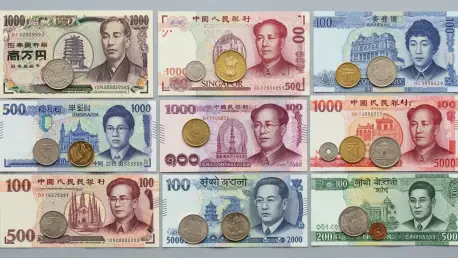

The sudden recalibration of American monetary policy toward a sustained high-interest-rate environment has sent shockwaves through global financial centers, forcing policymakers across Asia to confront a rapidly depreciating currency landscape that threatens regional stability. This shift, characterized by the Federal Reserve’s commitment to curbing persistent inflationary pressures, has effectively reversed the capital flow expectations that many emerging markets had banked on for the 2026 to 2028 fiscal cycle. As the dollar strengthens against a basket of major currencies, the domestic purchasing power in nations like Vietnam, Thailand, and Indonesia faces a significant erosion, complicating the cost of imports and escalating the burden of dollar-denominated debt. While some analysts initially predicted a cooling period, the reality of “higher for longer” rates means that central banks in the East must now navigate a narrow corridor between supporting domestic growth and defending their exchange rates. The ripple effect extends beyond mere numbers on a screen; it impacts the pricing of essential commodities and the strategic planning of multinational corporations operating within the ASEAN bloc. Consequently, the resilience of the Asian economic miracle is being tested by a fiscal gravity emanating from Washington, demanding a more sophisticated set of defensive maneuvers than previously anticipated in the early months of the decade.
Structural Vulnerabilities: The Mechanics of Regional Depreciation
The mechanics of this currency devaluation are rooted in the widening interest rate differential between the United States and major Asian economies, which triggers a relentless exodus of “hot money” seeking better yields elsewhere. In Japan, the Yen continues to struggle against the greenback, as the Bank of Japan’s cautious approach to rate hikes contrasts sharply with the Fed’s aggressive posture, leading to a historic weakening that strains the national trade balance. Similarly, South Korea’s Won has faced intense speculative pressure, prompting government officials to issue verbal warnings and consider direct interventions to stabilize the market. This environment creates a feedback loop where weakened currencies drive up the price of energy and raw materials, further fueling the very inflation that central banks are trying to suppress. For export-heavy economies, a cheaper currency is often viewed as a competitive advantage, yet in the current climate, the increased cost of imported components and logistical overhead often offsets any gains in trade volume. Furthermore, the volatility itself acts as a deterrent for foreign direct investment, as institutional investors remain wary of entering markets where currency swings can evaporate profits overnight. The current trajectory suggests that without a synchronized global effort to manage liquidity, the disparity in monetary tightening will continue to favor the dollar, placing immense strain on the liquidity buffers of smaller, more open economies across the Pacific.
Strategic Resilience: Navigating the New Monetary Paradigm
To mitigate these systemic risks, regional authorities implemented a variety of diversified fiscal strategies aimed at enhancing domestic self-reliance and reducing over-dependence on dollar-based transactions. Many central banks across Asia accelerated the development of bilateral swap lines and increased their allocations of alternative reserve assets to provide a safety net against sudden capital outflows. These proactive measures were complemented by structural reforms designed to improve the transparency of local bond markets, thereby attracting more stable, long-term institutional capital. Leaders also focused on deepening regional trade integration through frameworks like the RCEP, which helped stabilize demand even as global financial conditions tightened. In the private sector, corporations utilized advanced hedging instruments to protect their balance sheets from further currency fluctuations, prioritizing operational efficiency over aggressive expansion. Looking ahead, the focus shifted toward fostering internal consumption and technological innovation to insulate local economies from external shocks. While the Fed’s hawkish stance initially caused significant disruption, it ultimately served as a catalyst for a more robust and integrated Asian financial ecosystem. By prioritizing fiscal discipline and regional cooperation, these nations secured a path toward sustainable growth that was less susceptible to the shifting winds of Western monetary policy.