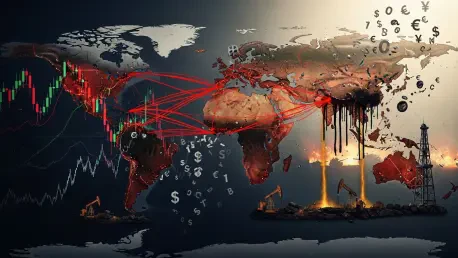

The rapid escalation of geopolitical tensions in Western Asia has triggered a systemic shock to the international financial order, forcing a radical reassessment of global growth prospects for the remainder of 2026 and into the next year. According to the mid-year update of the World Economic Situation and Prospects report, the ongoing conflict in Iran has materialized as a primary catalyst for a profound supply shock that transcends traditional energy markets to destabilize trade, public finance, and food security. What began as a series of localized energy disruptions on February 28 has expanded into an unpredictable crisis, prompting international observers to downgrade global growth forecasts to 2.5% for 2026. Under more severe conditions, this figure could plummet to 2.1%, representing one of the weakest economic performances recorded in the current century. This instability underscores the fragility of the post-pandemic recovery and highlights how regional conflicts can rapidly evolve into systemic threats to global progress and human development.
Systemic Disruptions to Global Trade and Energy Markets
The Reversal of Global Disinflation Trends
The most immediate and visible consequence of the current conflict is the abrupt reversal of the global disinflation trend that had characterized the early part of the decade. After several years of hard-won price stabilization, global inflation is now projected to climb to 3.9% this year, reflecting a significant increase over previous projections. This inflationary spike is particularly acute in South and Western Asia, where the synergy of skyrocketing energy prices and increased transport costs is eroding real incomes at an alarming rate. As fuel prices fluctuate unpredictably, the cost of moving goods through critical maritime corridors has surged, creating a secondary inflationary wave that affects everything from industrial components to consumer electronics. This economic environment is not merely a statistical concern but a direct threat to social stability, as rising costs for basic necessities threaten to push vulnerable populations back into poverty and undo years of progress in wealth distribution and economic equity.
Agricultural Resilience and the Fertilizer Crisis
Beyond the energy sector, the conflict has placed the global agricultural industry under immense strain, creating a ripple effect that jeopardizes long-term food security across multiple continents. A critical component of this crisis is the surge in fertilizer prices, specifically urea, which has seen costs increase by over 60% since the onset of hostilities. Because Iran and the surrounding region play a pivotal role in the production and export of chemical precursors for agriculture, the disruption of these supply chains has left farmers globally struggling to maintain soil productivity. The resulting increase in production costs is inevitably passed down to consumers, but the more pressing concern remains the potential for significantly reduced crop yields in the coming harvest cycles. This situation forces a difficult choice for many developing nations that must now decide between subsidizing agricultural inputs or facing widespread food shortages, further complicating the already precarious balance of international humanitarian aid and resource allocation.
Regional Economic Vulnerabilities and Monetary Policy Shifts
Divergent Growth Paths Across Major Markets
The geopolitical distribution of economic burdens remains strikingly uneven, as different regions navigate the fallout based on their energy independence and industrial foundations. Western Asia faces the most dramatic slowdown, with regional growth expected to collapse to 1.4% as infrastructure destruction and the halting of oil production cripple local economies. In contrast, the United States has shown a degree of resilience, maintaining a 2% growth rate bolstered by significant investments in artificial intelligence and robust consumer demand. However, the European Union and the United Kingdom remain highly vulnerable to the volatility of energy imports, with growth projections stagnating at 1.1% and 0.7%, respectively. Meanwhile, China continues to see its growth moderate toward 4.6% as it recalibrates its trade strategies to account for more expensive logistics. This fragmentation of economic performance suggests that the global recovery is no longer a unified movement but a series of isolated struggles defined by geographic proximity to the conflict.
Central Bank Policies and the Debt Servicing Challenge
Logistically, the current crisis has forced central banks into a complex balancing act that complicates the fiscal health of many nations through 2027. To combat the rising tide of inflation, many monetary authorities have been forced to delay anticipated interest rate cuts, keeping borrowing costs high at a time when investment is desperately needed. This policy shift is particularly damaging for developing nations, which are now facing increased debt-servicing burdens that drain national treasuries of funds intended for public services. Many of these countries lack the fiscal space to protect their citizens from rising costs, leading to a widening gap between the global north and south. The persistence of high interest rates acts as a drag on innovation and infrastructure development, effectively pausing many initiatives tied to the Sustainable Development Goals. As capital flows toward safer assets in more stable markets, the risk of sovereign debt defaults increases, creating a potential for a secondary financial crisis that could extend far beyond the immediate geographic area of the war.
Strategic Transitions Toward Economic Security
To mitigate the risks identified during the recent economic downturn, the global community prioritized the acceleration of the transition to renewable energy sources. This shift was viewed not only as an environmental necessity but as a fundamental pillar of national security, intended to reduce the systemic reliance on volatile fossil fuel markets that often fueled regional instabilities. Policymakers emphasized the importance of diversifying supply chains and investing in domestic manufacturing capabilities to ensure that critical industries remained shielded from geopolitical shocks. This approach required a unified international effort to share technological advancements and provide financial support to developing economies, ensuring they were not left behind during the transition. By fostering a more resilient and decentralized energy infrastructure, nations aimed to create a buffer against future price spikes and supply disruptions. The collective response to the crisis ultimately highlighted the need for a more robust framework of international cooperation, where economic stability was treated as a shared responsibility rather than a regional concern.