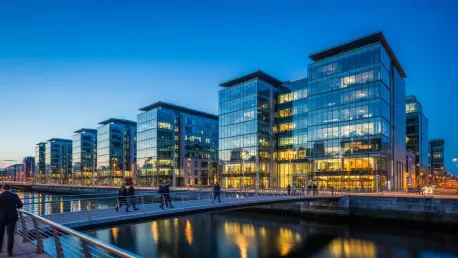

Walking through the vibrant streets of Dublin today, one might find it impossible to reconcile the visible signs of a flourishing society with the startling statistical volatility appearing on the balance sheets of the national treasury. The Irish economy has long been a subject of international fascination, earning the moniker of the “Celtic Tiger” during its initial rapid ascent from a largely agrarian society to a sophisticated global tech and pharmaceutical powerhouse. This transformation was not merely a local phenomenon but a fundamental shift in how small nations can leverage globalization to punch far above their weight in the international arena. However, this success has brought a unique set of complications where traditional macroeconomic indicators often provide a distorted or incomplete picture of the actual lived experience of the populace. While high-level data suggests a period of intense instability, the ground-level reality remains one of bustling commerce, low unemployment, and a sense of continued momentum that seems to defy the grim forecasts of global analysts who focus solely on raw figures.
The core of this economic paradox lies in the massive influence of multinational corporations that have chosen Ireland as their European or global headquarters. These organizations, primarily from the American technology and pharmaceutical sectors, have woven themselves into the fabric of the nation’s financial identity, creating a system where corporate accounting can swing national statistics by billions of dollars overnight. This phenomenon creates a disconnect between the “on-paper” wealth of the country and the actual domestic economy that supports local businesses and families. To understand the modern Irish landscape, one must look beyond the simple metrics of growth and contraction to examine the resilient labor market and the burgeoning domestic vitality that persists despite the massive swings in corporate reporting. This deep dive into the Irish economic machinery reveals a nation that is navigating the challenges of extreme success, balancing the benefits of global investment against the localized pressures of rapid urban development and rising costs.
A Resilient Labor Market and Domestic Vitality
The divergence between statistical reports and the daily reality in Dublin is most apparent when examining the current state of the Irish labor market. Despite headlines suggesting an economic slowdown, the country is experiencing a period of near-full employment, with the jobless rate hovering consistently below five percent as demand for skilled and unskilled labor remains incredibly high. This robustness is visible in every sector, from the high-tech corridors of the “Silicon Docks” to the bustling hospitality and service industries that define the city’s social life. Businesses are actively recruiting both locally and internationally, with reports of foreign workers securing lucrative positions within days of their arrival. This energetic job market provides a strong buffer against global economic headwinds, ensuring that consumer spending remains high and that the local population feels a sense of financial security that is not reflected in the volatile gross domestic product figures that often capture the attention of international media.
Furthermore, this internal economic energy is mirrored in the thriving cultural and social landscape of the country’s major urban centers. Restaurants are frequently booked weeks in advance, public transportation networks are operating at peak capacity, and major cultural festivals continue to draw record crowds of both locals and tourists alike. This domestic vitality suggests that the underlying fundamentals of the Irish economy are much stronger than a cursory glance at national accounts might imply. Competitive wages in the service sector, combined with the presence of a highly educated and mobile workforce, have created a self-sustaining cycle of growth that appears resilient to external shocks. The confidence of the average Irish consumer remains high, driven by the knowledge that job security is currently at a historic peak. This creates a fascinating environment where the micro-level experience of prosperity stands in stark contrast to the macro-level fluctuations that dominate the conversations of financial experts and international policy advisors.
Statistical Anomalies: Decoding the Record GDP Contraction
The global financial community was recently stunned by reports indicating that Ireland’s Gross Domestic Product had contracted by a staggering twelve percent, a figure that represents the largest drop in the nation’s history. This contraction was so massive that it single-handedly shifted the growth trajectory for the entire Eurozone, turning what would have been a modest regional gain into a collective decline for the currency bloc. However, this downward spiral was not the result of a traditional recessionary cycle marked by business failures and mass layoffs. Instead, it was a technical correction within the pharmaceutical sector, which had previously seen an unprecedented surge in exports. When these global giants shifted their production schedules or moved intellectual property assets across borders, the resulting shift in revenue was recorded as a domestic loss for Ireland, even though no physical factories closed and no employees lost their livelihoods. This event highlights the precarious nature of using traditional GDP as the primary metric for assessing a highly globalized economy.
This recurring issue has led many economists to use the term “leprechaun economics” to describe the way multinational accounting can fundamentally distort national wealth statistics. Because Ireland is a hub for global intellectual property, the profits generated by software sales in Asia or drug exports in the Americas often pass through Irish subsidiaries to take advantage of favorable regulatory environments. While this brings significant tax revenue to the state, the money itself rarely enters the local circulation, making the GDP figure an unreliable measure of domestic health. In response to this confusion, Irish officials and statisticians have increasingly prioritized Gross National Income, or GNI*, which attempts to filter out the noise created by multinational profit-shifting and depreciation on foreign-owned assets. By looking at this more refined metric, a clearer picture emerges of a stable, growing economy that is simply the host for massive global financial flows that do not always reflect the reality of life for those living in Cork, Galway, or Dublin.
Economic Disparities: The Challenge of High Living Costs and Housing
While the presence of global tech giants like Apple, Microsoft, and Google has been a boon for tax revenue and high-end employment, this corporate success has introduced severe structural challenges for the broader population. The attraction of Dublin as an English-speaking gateway to Europe, supported by a highly skilled workforce and deep cultural ties to the United States, has turned the city into one of the most expensive places to live in the world. The influx of high-earning professionals has driven demand for luxury apartments and high-end services, which has in turn pushed rental prices to levels that are increasingly unsustainable for the average worker. This housing crisis has become the primary point of social tension in Ireland, leading to widespread frustration and protests against the perceived prioritization of corporate interests over the basic needs of the citizenry. The disparity between the record-high tax receipts collected by the government and the lack of affordable housing options creates a significant social divide that threatens long-term stability.
Moreover, the high cost of living extends beyond just the housing market, impacting everything from childcare to energy and basic consumer goods. Ireland now ranks among the most expensive countries in Europe, a fact that often offsets the benefits of the high wages found in the technology and pharmaceutical sectors. For those working in essential public services or the hospitality industry, the gap between their income and the cost of maintaining a standard of living in the capital has widened significantly. This has led to a “hollowed-out” effect in certain urban areas, where the people who keep the city running can no longer afford to live within a reasonable distance of their workplace. While the state treasury remains flush with cash from corporate taxes, the challenge of converting that wealth into tangible improvements in public infrastructure and housing remains the most pressing political and economic issue of the current era. The government’s ability to solve this riddle will likely determine the social cohesion of the nation for the coming decade.
Strategic Pathways: Future Risks and the Need for Economic Balance
The evaluation of Ireland’s economic trajectory revealed a clear necessity for structural reform that prioritized domestic stability over multinational volatility. Experts identified several key pathways toward a more sustainable fiscal future, focusing primarily on the diversification of the industrial base to reduce reliance on a handful of foreign technology and pharmaceutical titans. This transition involved a renewed emphasis on nurturing home-grown innovation and small-to-medium enterprises that remained more deeply rooted in the local community than global corporations. Furthermore, the government recognized that the persistent housing shortage represented the most significant threat to long-term growth, prompting the immediate allocation of resources toward large-scale public residential projects. These steps aimed to bridge the gap between abstract macroeconomic success and the tangible well-being of the citizenry, ensuring that growth was inclusive and resilient against external shocks.
Policymakers also addressed the inherent risks associated with shifts in international trade policy and potential changes to global tax regulations. The vulnerability of the Irish model to decisions made in Washington or Brussels necessitated a proactive approach to economic diplomacy and the development of new trade partnerships beyond the traditional transatlantic corridor. By investing heavily in green technology and renewable energy infrastructure, the nation sought to establish itself as a leader in the next generation of industrial development, moving away from its role as a purely financial and administrative hub. These forward-looking strategies emphasized the importance of creating a balanced economy where the benefits of global integration were shared more equitably across all levels of society. The successful implementation of these initiatives proved vital in transforming the statistical wealth of the nation into a stable and prosperous reality for all residents, marking a new chapter in the country’s economic evolution.