
The architectural stability of the Kremlin has long rested upon a silent social contract where political passivity is exchanged for economic predictability and a rising standard of living. For over two decades, the Russian leadership has leveraged this arrangement to consolidate power, presenting the presidency as the sole bulwark against the chaotic hyperinflation and structural collapse that defined the late twentieth century. However, as the global landscape shifts through 2026, the cracks in this foundation are becoming increasingly visible to both internal observers and international analysts. The immense popularity that once served as the bedrock of the current administration’s legitimacy is showing significant signs of erosion, signaling a potential shift in the domestic political climate. This transition is not merely a matter of ideological disagreement; it is a visceral response to a changing economic reality where the state’s focus on military expansion has begun to cannibalize the financial security of the average household.
The Face of Falling Approval
Tactical Shifts in Public Image
To counter the measurable cooling of public sentiment, the Russian leadership has recently pivoted toward a more populist and tactile style of retail politics. For the first time since the internal security crisis involving the Wagner Group, the president has resumed performing public gestures of warmth and personal accessibility, such as embracing children and engaging in unscripted interactions during regional visits. These calculated appearances are designed to humanize a leader who has spent much of the last few years isolated within a tight security apparatus. By projecting an image of the “people’s president,” the Kremlin hopes to recalibrate a public persona that has become increasingly associated with the grim realities of a prolonged conflict. This return to traditional public relations indicates a high level of concern within the political administration regarding the disconnect between the ruling elite and the citizenry, particularly as the “special military operation” enters a more taxing phase.
These efforts at image restoration come at a time when public confidence has reached some of its lowest levels since the onset of current geopolitical tensions. Despite the high-visibility nature of these public appearances, the strategic intent behind them is clear: to bridge the gap created by years of perceived detachment. Analysts suggest that these gestures are not merely for show but are vital tools for maintaining a sense of national unity during a period of extreme stress. However, the effectiveness of such tactics remains in question as the population becomes more attuned to the performative nature of state-supported media coverage. As the gap between the polished images on state television and the lived experience of the average Russian worker continues to widen, the traditional methods of charismatic leadership are facing their most rigorous test. The challenge lies in whether a few moments of televised warmth can compensate for the growing anxiety surrounding the nation’s long-term trajectory and its place in the modern world.
Divergent Trends in Poll Results
Quantitative data from a variety of polling organizations, including those with close ties to the state like VTSIOM and FOM, illustrate a consistent downward trend in presidential approval. VTSIOM recently reported a notable drop in the president’s favorability to approximately 65.5%, a sharp decline from the mid-seventies recorded during earlier peak periods. Even more telling is the data from FOM, which shows approval hovering just above the lowest points recorded since the initial days of the 2022 invasion. While these figures might still appear high by Western standards, within the context of the Russian political system, such fluctuations are often precursors to broader social shifts. The erosion of this statistical buffer suggests that the rally-around-the-flag effect, which initially unified the country, is finally beginning to dissipate under the weight of persistent economic and social pressures.
Furthermore, the independent Levada Center has identified a significant decrease in the number of citizens who believe the country is moving in the right direction. This metric is often considered more indicative of long-term stability than simple approval ratings, as it reflects the public’s holistic view of the national future. Currently, a substantial portion of the population—roughly 60%—describes the political situation as either “tense” or “critical.” This level of pervasive pessimism echoes the widespread disillusionment of the 1990s, a period the current administration has spent twenty-six years promising to never repeat. When the majority of the populace views the status quo as fundamentally unstable, the narrative of the “guarantor of stability” loses its persuasive power. This shift in perception is particularly dangerous for the Kremlin because it moves the public discourse from a debate over specific policies to a more fundamental questioning of the government’s ability to provide basic security and order.
Economic Strain and Internal Friction
The High Cost of a War-Oriented Economy
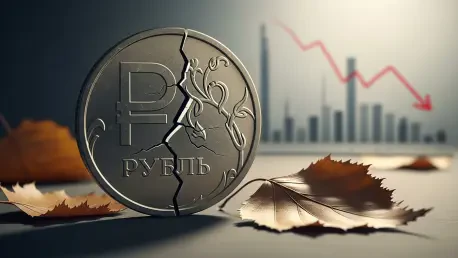
The primary catalyst for this brewing discontent is the undeniable impact of a war-oriented economy on the civilian sector. While massive state infusions into military-industrial complexes initially artificially buoyed GDP figures and kept unemployment low, the long-term consequences are now manifesting as a severe “wallet crisis” for the average citizen. Resources that were once earmarked for infrastructure, healthcare, and social services have been redirected toward the front lines and munitions factories, leaving the domestic economy starved for investment. This imbalance has triggered persistent inflation, making essential goods and services increasingly expensive for the working class. As the purchasing power of the ruble continues to stagnate or decline, the frustrations of the populace are naturally gravitating toward the leadership responsible for these fiscal priorities.
The civilian sector is currently bearing the brunt of a structural shift that prioritizes tanks over technology and shells over social welfare. Since mid-2023, there has been a steady decline in how Russians perceive their personal financial prospects, with many reporting a necessary reduction in daily consumption. This economic deterioration makes the public significantly more receptive to criticism of the Kremlin, as the ideological justifications for the current conflict begin to pale in comparison to the struggle of making ends meet. Economists note that while the defense industry is booming, the lack of diversification and the drain on skilled labor have left civilian industries in a state of atrophy. This divergence between a flourishing military sector and a struggling domestic market creates a volatile social dynamic, where the successes touted by the state are increasingly disconnected from the reality of the dinner table.
Administrative Friction and Prohibition Fatigue
The mounting economic and social pressure has exposed a widening rift within the Russian political establishment, pitting security hardliners against pragmatic political administrators. The security services, primarily the FSB, have consistently advocated for a more repressive approach to maintain order, including increased internet censorship and the potential blocking of popular communication platforms like Telegram. In contrast, the political wing, represented by figures like Sergei Kiriyenko, warns that the public is suffering from “prohibition fatigue.” These administrators argue that excessive restrictions are counterproductive and could serve as the final spark for widespread social unrest. They suggest that a population already burdened by financial stress requires outlets for expression and communication, and that removing these digital safety valves could lead to a more explosive form of dissent.
This internal struggle over the best way to maintain control has occasionally spilled into the public eye, revealing a lack of consensus on the path forward. The debate over censorship is not merely about technology; it is a fundamental disagreement about how to manage a society under duress. The security apparatus views control as the only way to ensure survival, while the political wing fears that over-regulation will alienate the very base upon which the government’s legitimacy rests. This friction suggests that the monolithic image of the Kremlin is more fractured than it appears, with different factions vying for the president’s ear. As the economic situation remains dire, these internal divisions are likely to deepen, complicating the state’s ability to respond coherently to emerging crises. The administrative wing’s fear of “prohibition fatigue” reflects a sophisticated understanding of the limits of state power in the digital age.
Political Narratives and Future Stability
Managing Public Perception Through Internal Blame
To navigate these treacherous waters, the Kremlin appears to be reverting to a classic Russian political trope: the “good Tsar, bad boyars” narrative. This strategy involves positioning the president as a wise and well-meaning leader who is unfortunately being misled or poorly served by his subordinates. Recently, a series of public criticisms leveled by Russian celebrities against presidential advisors have been interpreted by some analysts as a managed operation. By allowing these figures to voice frustrations about censorship and the lack of accurate information reaching the top, the state can channel public anger toward the bureaucracy rather than the leader. This tactic provides a convenient scapegoat for the country’s various struggles, allowing the president to maintain a facade of infallibility while promising to correct the mistakes of his “misinformed” staff.
By distancing himself from unpopular policies like internet restrictions or specific economic failures, the president can attempt to preserve his image as a defender of the common man. However, the effectiveness of this strategy is beginning to wane as the scale of the national crisis grows too large to be blamed on a few advisors. The public is increasingly aware that the major decisions regarding the nation’s direction are centralized, making the “bad boyar” excuse less believable than it was in decades past. Nevertheless, this narrative remains a key pillar of the Kremlin’s survival strategy, serving to delay the moment of direct accountability. It also serves as a warning to those within the administration that they may be sacrificed at any time to protect the leader’s approval ratings. This creates a culture of fear and sycophancy that may further distort the information reaching the presidency, potentially leading to even more detached policy decisions.
Historical Parallels and Strategic Opportunities
The current atmosphere of instability has provided a significant strategic opportunity for the Communist Party of Russia to position itself as a viable alternative for the discontented. Party leaders have begun to issue stark warnings, drawing parallels between the current social unrest and the conditions that preceded the 1917 Revolution. By tapping into the public’s economic grievances and the sense of historical irony—that twenty-six years of “stability” have led back to the chaos of the 1990s—the party is gaining ground among those who feel abandoned by the current system. This resurgence highlights the fragility of the pro-government coalition and suggests that the political landscape is becoming more competitive, even within the constrained environment of Russian democracy. The prospect of upcoming elections serves as a focal point for this frustration, as the opposition looks to capitalize on the “wallet crisis.”
To maintain its grip on power, the Russian leadership must now look toward innovative solutions that go beyond traditional repression or image management. A critical next step for the administration will be to address the structural imbalances in the economy by incentivizing the civilian sector and easing the regulatory burden on small businesses. Without a genuine effort to restore the purchasing power of the average citizen, the social contract will continue to unravel. Future stability depends on the state’s ability to pivot from a purely military focus to one that acknowledges the necessity of domestic prosperity. International observers and domestic stakeholders alike should watch for signs of a genuine economic recalibration, as this will be the truest indicator of whether the current system can adapt or if it is destined to repeat the cycles of collapse seen in the past. Strengthening local governance and providing more transparent economic data could also help rebuild the trust that has been so severely damaged over the past year.