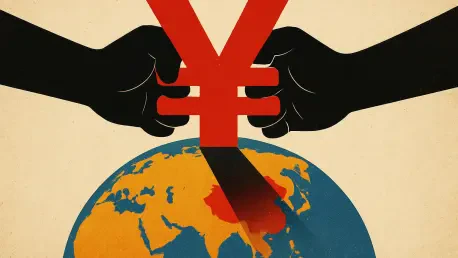

A 2025 report from the energy think tank Ember confirms that China’s manufacturing efficiency is making the global shift to sustainable energy financially accessible for poorer nations. This finding directly challenges the “China squeeze” hypothesis, which asserts that the immense industrial output of the world’s largest exporter suppresses the growth potential of developing nations. Proponents of this theory argue that by flooding international markets with inexpensive goods, China effectively crowds out emerging players, preventing them from establishing their own industrial foundations. However, this perspective often relies on the assumption that global trade is a zero-sum game with fixed limits. Critics of the squeeze narrative suggest that the global market is far more fluid and expansive than traditional models suggest. Instead of acting as a barrier, the expansion of one major economy frequently creates a vacuum of demand and supply chain opportunities that other nations can fill effectively.
Reimagining Trade Balances: Mutual Growth
The conventional economic wisdom regarding trade deficits with China is undergoing a significant transformation as analysts reevaluate the flow of capital. For decades, a negative trade balance was viewed as a sign of economic weakness or a loss of domestic manufacturing power to an external rival. In the current landscape of 2026, many experts now perceive these deficits as a strategic transfer of purchasing power that allows developing nations to acquire critical resources at a fraction of the cost. By importing high-quality, low-cost equipment and materials from China, these countries can redirect their limited domestic capital toward essential internal investments like infrastructure and education. This shift in economic thought reframes China’s role from a predatory competitor to a catalyst for regional prosperity. Under this interpretation, the surplus generated by Chinese exports provides the material flexibility necessary for other nations to stimulate their own local markets.
A critical component of this evolving relationship is China’s transition into a “factory to the factories,” where the focus has shifted from finished consumer goods to intermediate machinery and high-tech components. By supplying the precise tools and automation technology required for modern production, China is effectively lowering the barriers to entry for manufacturing across the globe. Developing nations no longer need to invent these complex systems from scratch; they can instead integrate Chinese components into their own industrial frameworks. This structural evolution suggests that the Chinese supply chain serves as a foundational support system rather than a bottleneck for global competition. As Chinese manufacturers move up the value chain toward more sophisticated robotics and semiconductors, they leave behind the labor-intensive sectors that other emerging economies are now better positioned to occupy. This creates a symbiotic cycle where global industrialization is shared.
Strategic Impacts: Industrialization and Green Transition
Evidence of this constructive engagement is increasingly visible through large-scale industrial projects across the Global South, particularly within the African continent. Economic and trade cooperation zones, largely funded and facilitated by Chinese investment, have begun to generate billions in output while creating hundreds of thousands of local jobs. These zones are not merely extraction points; they are becoming integrated manufacturing hubs that provide vocational training and technological transfer to the local workforce. Such initiatives demonstrate that China’s outward investment is a proactive driver of industrial capacity in regions that have historically been underserved by Western capital. By building the roads, ports, and power plants necessary for trade, these investments foster a more integrated global economy where manufacturing capability is distributed more broadly. This approach counters the notion of a “squeeze” by showing that Chinese engagement builds infrastructure.
The global imperative to address climate change has further highlighted the benefits of Chinese manufacturing prowess, particularly in the renewable energy sector. China’s dominance in the production of electric vehicles, advanced lithium batteries, and solar panels has dramatically lowered the cost of the green transition for developing countries. In 2026, nations that were previously unable to afford expensive Western energy solutions are now deploying renewable grids using cost-effective Chinese hardware. Without this high-volume production and the resulting economies of scale, the transition to renewable energy would likely have remained a luxury reserved for the world’s wealthiest nations. This affordability is essential for ensuring that the global push toward net-zero emissions does not further widen the economic gap between the North and South. By making decarbonization technologies accessible to all, China provides the tools necessary for an equitable transition.
The analysis of modern trade dynamics suggested that the “China squeeze” theory was more of a geopolitical narrative than a reflection of complex economic realities. To capitalize on the landscape from 2026 to 2030, developing nations adopted policies that leveraged affordable imports to build domestic high-value industries. Policymakers shifted their focus away from protectionism and toward the integration of regional supply chains that utilized existing manufacturing hubs. They prioritized the acquisition of intermediate goods and technical expertise to bridge the gap between local resources and global markets. Instead of viewing trade as a zero-sum conflict, these countries sought to align their industrial goals with the availability of low-cost technology. This approach ensured that the benefits of global manufacturing efficiency were shared across borders, creating a more resilient international economy. Moving forward, the focus remained on fostering domestic innovation.