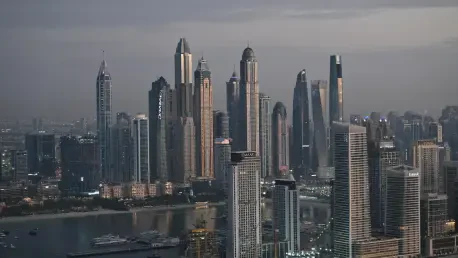

The skyline of Dubai, once a shimmering testament to the power of global integration and architectural ambition, now stands as a silent witness to the profound vulnerabilities inherent in a hyper-connected trade hub during times of regional instability. As the intensifying conflict between the United States and Iran introduces significant friction into what was once a frictionless economic model, the United Arab Emirates finds itself at a critical crossroads where past successes must be defended against present geopolitical realities. For decades, the nation has functioned as the premier global crossroads, anchoring its economic identity on seamless connectivity, high-end tourism, and its status as a financial safe haven, but these pillars are currently under immense pressure from direct strikes on critical regional assets. The stability of the Emirates is no longer a given in the eyes of many global investors, as the narrative shifts from one of aggressive expansion to one of strategic preservation. This fundamental change requires a careful re-evaluation of how the UAE maintains its hard-won reputation as a secure hub for international capital while simultaneously managing the physical and psychological toll of a nearby war.
The Paralysis of the Tourism and Hospitality Sectors
The tourism industry, which serves as a vital engine for the UAE economy, has borne the brunt of the regional instability with a severity that has caught many institutional analysts off guard. With the sector contributing nearly $70 billion to the national GDP as of early 2026, the virtual shutdown of major transit hubs like Dubai International Airport has created a devastating ripple effect through the entire service economy. The cancellation of tens of thousands of flights across the broader Middle East has not only halted the flow of leisure visitors but has also signaled a synchronized collapse in demand that few hospitality models are equipped to handle. This sudden evaporation of transit traffic means that the luxury infrastructure designed for high-volume turnover is now sitting largely idle, forcing operators to reconsider their staffing and maintenance strategies. The speed of this decline highlights just how dependent the local economy remains on the unfettered movement of people across international borders.
This decline is most visible in the staggering drop in hotel occupancy rates, which have plummeted by as much as 80% in prime tourist districts like Jumeirah and Downtown Dubai. To manage the exceptionally high costs of labor and energy during a period of zero revenue, many luxury establishments have opted for strategic temporary closures, often framing these shutdowns as scheduled renovations to protect their brand prestige. The short-term rental market, which had previously seen explosive growth among digital nomads and regional vacationers, has faced similar devastation, losing hundreds of thousands of bookings in a single month. The vacation atmosphere that defines the UAE’s global appeal is increasingly being replaced by the sobering presence of military infrastructure and heightened security concerns, which deter the high-net-worth travelers who drive the sector’s profitability. Without a clear timeline for the cessation of hostilities, the hospitality industry faces a structural crisis that threatens to erase several years of post-pandemic gains.
Sovereign Pride versus Financial Lifelines
As the financial toll of the conflict mounts—now estimated at over $60 billion in damage to energy and physical infrastructure across the region—the question of external support has become a point of intense international debate. The U.S. Treasury has proactively suggested a financial lifeline, potentially through complex currency swap arrangements designed to ensure liquidity and stabilize the regional market during this period of extreme volatility. Such measures are specifically intended to prevent a currency crisis and maintain the confidence of global markets, ensuring that the UAE dirham remains pegged securely to the dollar despite the geopolitical storm. For Washington, stabilizing the UAE is not just a matter of regional diplomacy but a necessity for global energy markets and financial flows. However, the introduction of these lifelines brings with it a set of political complications regarding the Emirates’ long-standing image of total financial independence.
Despite these offers of assistance, the UAE leadership has maintained a very public and firm stance of self-sufficiency, asserting that the nation remains one of the most financially resilient economies in the world. This pushback against the “lifeline” narrative highlights a delicate balancing act where the government must project an image of independent strength to retain investor trust, even as it grapples with the immense costs of reconstruction and lost trade revenue. Accepting a formal bailout or a highly publicized currency swap could be perceived by some market participants as a sign of underlying weakness, potentially triggering further capital flight. Instead, the UAE is leveraging its massive sovereign wealth funds to internalize the costs of the conflict, attempting to demonstrate that its financial buffers are deep enough to withstand even a prolonged period of regional disruption without requiring external intervention or compromising its economic sovereignty.
Consumer Retrenchment and the Risk of Expat Flight
Domestically, the economy is facing a significant contraction as local households and resident businesses adopt a defensive posture that prioritizes liquidity over consumption. Residents are increasingly delaying major purchases, such as real estate and luxury vehicles, in favor of precautionary savings, which significantly slows the velocity of money through the retail and service sectors. This behavioral shift is a natural reaction to the uncertainty of war, but when combined with the massive losses in the tourism sector, it accelerates the overall economic downturn and complicates the path to a quick recovery. Malls that were once bustling with both locals and tourists now see a marked decrease in foot traffic, and the service industry is feeling the pinch as discretionary spending dries up. This internal cooling of the economy creates a secondary layer of stress that is harder to solve through infrastructure spending alone, as it relies on the psychological confidence of the population.
A more structural and long-term threat to the UAE’s growth strategy is the potential exodus of the expatriate population, which forms the indispensable backbone of the professional labor force and the private sector. Safety concerns, combined with the widespread shift to distance learning for schools, have prompted many families to return to their home countries, creating a genuine risk of a significant “brain drain” that could last for years. If these residents do not return by the end of the year, the economy could see a permanent shrinkage in domestic consumption and a talent gap that makes it difficult for the service-heavy economy to rebound once the conflict finally subsides. Unlike tourists, who can be lured back with discounts and marketing campaigns, expatriate professionals require long-term stability and a sense of personal security to remain committed to the region. The loss of this demographic would necessitate a complete redesign of the UAE’s labor and residency models to attract new talent in a more competitive global environment.
Institutional Confidence and the Path to Recovery
Despite the immediate devastation and the sobering economic data, there are clear signs that global institutional investors still believe in the UAE’s long-term viability as a global hub. Major “anchor” projects, such as the massive planned entertainment complexes in Abu Dhabi and the expansion of sustainable energy grids, remain on track, signaling that the nation is still viewed as a premier destination for international capital. This continued commitment from global brands like Disney and major international tech firms suggests that the fundamental infrastructure of the UAE is still considered world-class and capable of facilitating a rapid post-war surge. These institutions are looking past the current volatility, betting that the UAE’s geographic advantage and advanced regulatory environment will allow it to regain its status as the region’s primary gateway once the political climate stabilizes. Their long-term investment horizons provide a critical vote of confidence that helps floor the market.
The UAE is also employing a sophisticated strategy of delaying rather than canceling major revenue-generating events, effectively banking on a surge in demand in the coming months. By pushing high-profile international conferences, trade shows, and sporting events to the later months of the year, the government is attempting to condense a year’s worth of economic activity into a high-intensity recovery phase. While the current losses are substantial and cannot be entirely recouped, this shift could lead to a massive spike in hotel occupancy and retail spending toward the end of the year, providing the financial buffer needed to transition from a defensive wartime economy to a robust expansionary one. To capitalize on this eventual rebound, the government must now focus on streamlining business regulations and offering incentives for small and medium enterprises to stay afloat during the lean months. Strategic investments in digital infrastructure and diversified supply chains will be the essential next steps to ensure that the “Dubai model” remains resilient against future geopolitical shocks. The focus had shifted toward building a more autonomous, technologically advanced economy that relied less on physical transit and more on high-value digital services and regional self-reliance.