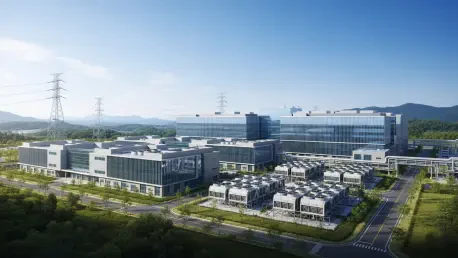

The rapid deployment of hyperscale data centers across the Gyeonggi province has created an unprecedented strain on the national power grid that necessitates immediate structural intervention. As the global race for artificial intelligence supremacy intensifies, South Korea finds itself at a critical juncture where industrial ambition is constrained by an inflexible electricity supply chain. The sheer volume of energy consumed by AI training clusters is staggering, often requiring hundreds of megawatts for a single facility, which dwarfs the needs of traditional manufacturing plants. This massive increase in demand coincides with a growing public sensitivity toward the construction of high-voltage transmission lines, leading to significant delays in critical infrastructure projects. If the current trajectory continues without a fundamental redesign of the energy ecosystem, the risk of localized brownouts could drive domestic tech giants to seek more stable environments abroad. Ensuring a reliable power supply is now a cornerstone of national security and economic competitiveness.
Addressing Grid Inflexibility and Regulatory Constraints
The primary challenge facing the South Korean energy sector is the physical distance between power generation sites and the high-demand hubs concentrated in the Seoul metropolitan area. Most of the country’s nuclear and coal-fired plants are located along the eastern and southern coasts, creating a logistical nightmare for transporting electricity across mountainous terrain. Resistance from local communities toward the installation of transmission towers has slowed down the completion of essential grid expansions, leaving the northern industrial zones starved for reliable capacity. This bottleneck has forced some data center operators to reconsider their site selections, as the grid simply cannot support the projected load of upcoming AI projects. To mitigate this, the government initiated a transition toward more localized energy production models, encouraging the development of on-site power solutions. By diversifying the geographic footprint of generation, the state aimed to reduce the burden on the long-distance network while enhancing the overall resilience of the domestic power system.
A significant hurdle to sustainable AI growth in South Korea is the lack of price signals within a market dominated by the state-run Korea Electric Power Corporation. For years, the artificial suppression of electricity prices to protect industrial interests has led to a massive financial deficit for the utility provider, limiting its ability to invest in necessary grid upgrades. This rigid pricing mechanism prevents the market from reflecting the true cost of power generation and distribution, especially during periods of extreme demand from the tech sector. Introducing a more flexible, market-oriented pricing system would encourage data center operators to adopt more energy-efficient technologies and schedule non-critical tasks during off-peak hours. Without such price transparency, there is little incentive for private enterprises to invest in their own energy-saving innovations or decentralized power sources. Reforming the tariff structure to include time-of-use rates could provide the necessary economic levers to balance the grid more effectively.
Strategic Realignment of National Energy Priorities
The successful navigation of these energy challenges required a comprehensive realignment of national priorities that integrated energy policy directly into the broader industrial strategy. Policymakers shifted their focus from merely increasing total output to enhancing the quality and flexibility of the delivery systems that powered modern innovation. Legislative bodies acted decisively to pass the Distributed Energy Promotion Act, which incentivized the construction of data centers in regions with surplus power capacity. This geographic decentralization was paired with the introduction of specialized energy-intensive industry zones where tax breaks were offered to firms that implemented high-efficiency cooling systems and on-site renewable generation. By treating electricity as a strategic resource rather than a commodity, the government provided a stable foundation for the domestic AI industry to flourish. These measures ensured that the tech sector’s growth was not stymied by the limitations of the physical world during this critical period.
Moving forward, the emphasis was placed on the continuous evolution of grid-interactive technologies and the adoption of next-generation nuclear solutions to maintain long-term stability. Stakeholders recognized that the initial reforms were only the beginning of a larger transition toward a fully digitized and decarbonized energy ecosystem. Investments in small modular reactors were accelerated to provide reliable, carbon-free baseload power specifically for industrial hubs, reducing the reliance on long-range transmission. Furthermore, the establishment of an independent energy regulatory commission helped to depoliticize electricity pricing, ensuring that the market remained responsive to actual supply and demand dynamics. Companies that successfully integrated advanced energy management software saw significant reductions in their operational costs, proving that efficiency was as much a competitive advantage as raw computing power. This holistic approach transformed the energy crisis into a massive opportunity for leadership.