
The sudden and violent dismantling of Iran’s central leadership has effectively shattered the delicate geopolitical equilibrium that held the Middle East together for decades. In late February, a coordinated military offensive by the United States and Israel culminated in a “decapitation strike” against Ayatollah Ali Khamenei, an event that has instantly transformed regional shadow boxing into a full-scale international emergency. This unprecedented maneuver was designed to paralyze the Islamic Republic’s decision-making apparatus, yet it has simultaneously unleashed a tidal wave of uncertainty across every major global sector. As the smoke clears over Tehran, the international community is forced to confront a world where the primary arbiter of Iranian policy is gone, leaving a power vacuum that threatens to drag the global economy into a period of prolonged instability.
The Immediate Impact of a Decapitation Strike on the Global Order
The removal of the Supreme Leader represents more than just a military victory; it is a fundamental disruption of the Westphalian system in the Middle East. By targeting the ultimate source of religious and political authority, the U.S.-Israeli alliance has gambled on a total systemic collapse of the current Iranian regime. This strategy seeks to provide an opening for domestic reform and a permanent end to Iran’s nuclear ambitions. However, the immediate result is a leaderless state with a massive military apparatus that is now reacting with decentralized, unpredictable aggression. The global order, which relied on at least a modicum of state-to-state predictability, is now grappling with the “tail risks” of a nation in freefall.
This vacuum has triggered a domino effect across the Levant and the Persian Gulf, as non-state actors and regional proxies lose their central coordination. The primary objective of the strike—achieving “Peace Through Strength”—is being tested in real-time as the world watches to see if the Iranian citizenry will indeed pivot toward reform or if the country will descend into a multi-factional civil war. For diplomats and international observers, the challenge lies in managing the fallout of a collapse that was intended to be surgical but has proven to be globally resonant. The shift from containment to active neutralization signals that the era of managing the Iranian threat is over, replaced by an era of surviving its disintegration.
Historical Precedents and the Peace Through Strength Doctrine
To fully appreciate the gravity of the current situation, one must view it through the lens of the “shadow war” that defined U.S.-Iran relations for the past several decades. Historically, conflict was restricted to cyberattacks, maritime harassment, and proxy engagements in third-party nations. The February strikes, however, represent a total abandonment of these unspoken rules of engagement. Under the current U.S. administration’s “Peace Through Strength” doctrine, the calculation has shifted away from the cautious incrementalism of the past toward a belief that only a decisive, high-impact blow can reset the regional security architecture.
This evolution in strategy is a direct response to the perceived failure of traditional diplomacy to curb Iranian influence. By choosing to eliminate the top tier of leadership, the alliance has signaled that the threshold for direct intervention has been permanently lowered. This historical pivot is not merely about a single military operation; it is about a fundamental change in how the West intends to interact with adversarial regimes. The move moves the global security conversation away from “red lines” and “sanctions regimes” toward a reality of preemptive neutralization, a change that will dictate the behavior of other global powers for years to come.
Geopolitical Realignment and Market Instability
Regional Escalation and the Targeting of Civil Infrastructure
The response from Iranian forces was swift and bypassed traditional military targets to strike at the heart of the global economy. Within hours of the decapitation strike, a barrage of drones and missiles was launched from Iranian soil, targeting not just U.S. bases, but the critical civilian infrastructure of regional partners. The UAE, Qatar, and Jordan saw their sovereign territory violated, with notable damage occurring at Dubai International Airport. This specific choice of target signals a transition in Iranian tactics: if the regime is to fall, it intends to take the interconnected systems of global trade down with it.
The psychological impact of these strikes on regional stability cannot be overstated. For the first time in modern history, major international transit hubs—gateways between the East and the West—have been turned into active combat zones. This escalation has forced commercial airlines to abandon Middle Eastern airspace entirely, effectively cutting off the most efficient routes for global logistics. The targeting of civilian infrastructure suggests that the remaining Iranian military elements are no longer interested in conventional warfare; they are engaged in a campaign of maximum economic disruption designed to make the international community regret the strikes.
Financial Volatility and the Flight to Safety
Global financial markets have reacted with a predictable but severe “risk-off” reflex, as the lack of a clear Iranian successor creates a vacuum of information. Cryptocurrency markets, which operate 24/7, provided the first signs of this panic, with Bitcoin and other digital assets experiencing wild swings as traders debated whether they represented a hedge against chaos or a risk asset to be sold. As traditional exchanges open, the rush toward safe-haven assets is becoming a stampede. The U.S. dollar is strengthening rapidly against nearly all major currencies, while gold has surged to record highs, reflecting a deep-seated fear that the conflict is only in its opening chapters.
Institutional investors are currently struggling to reprice assets in an environment where geopolitical risk has been underweighted for years. The suddenness of the Iranian leadership’s removal has invalidated many existing market models, leading to a massive correction in global equities. Analysts suggest that the market had grown complacent, assuming that a direct conflict of this scale was a low-probability event. Now, with the reality of a regional war at hand, the financial sector is preparing for a period of extreme volatility, where the strength of the dollar and the price of gold will serve as the only reliable barometers of global fear.
Energy Security and the Strategic Vulnerability of the Strait of Hormuz
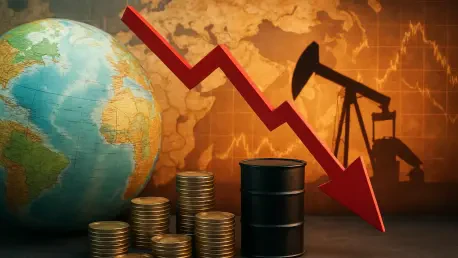
The most immediate threat to the global industrial base remains the potential closure of the Strait of Hormuz. As the world’s most significant energy chokepoint, the Strait facilitates the passage of over 14 million barrels of oil per day. Iran’s proximity to this waterway gives its remaining naval forces the ability to hold the global energy market hostage. Even the mere threat of a blockade has sent Brent crude prices toward the $100-per-barrel mark, a threshold that, if crossed, would trigger a worldwide inflationary spike.
The burden of this energy crisis is set to fall most heavily on the manufacturing hubs of Asia. China, which relies on the Persian Gulf for half of its crude imports, is particularly vulnerable to this disruption. A prolonged energy shortage would not only stall China’s industrial output but would also send shockwaves through the global supply chain for consumer electronics and machinery. This vulnerability highlights the precarious nature of global energy dependence on a single, volatile region. If the Strait is closed, the resulting supply shock would likely dwarf previous energy crises, forcing a radical and painful restructuring of the global energy landscape.
The Future of Global Logistics and Energy Independence
This crisis is serving as a catalyst for a massive acceleration in the diversification of global trade and energy sourcing. The disruption of Middle Eastern airspace and shipping lanes is forcing corporations to look toward more resilient, albeit more expensive, logistics routes. We are witnessing an immediate shift toward land-based transit across Eurasia and an increased reliance on long-range aviation that can bypass the Persian Gulf. Furthermore, the vulnerability of the Strait of Hormuz is providing a final, urgent impetus for nations to move away from oil-dependency toward alternative energy sources and localized power grids.
Technological innovation in automated logistics and maritime security is expected to see a surge in investment as businesses seek to insulate themselves from geopolitical shocks. We are likely to see a permanent shift in how strategic reserves are managed, with nations moving from “just-in-time” delivery models to robust, localized stockpiling. Regulatory environments will also adapt, with a renewed focus on international maritime law and the protection of global commons. This period of turmoil is essentially fast-tracking a decade’s worth of economic and technological evolution into a matter of months.
Navigating a New Era of Geopolitical Risk
For the modern professional and investor, the primary takeaway from the February strikes is that geopolitical risk is no longer a peripheral concern but a core component of strategic planning. The ability to adapt to sudden, high-impact events is now the most valuable asset in any portfolio. Actionable strategies must now include aggressive diversification away from single-point-of-failure regions and a proactive approach to hedging against energy and currency fluctuations. The current environment demands a “just-in-case” mindset, where resilience is prioritized over the thin margins of hyper-efficient globalism.
Consumers and businesses alike must prepare for a sustained period of high costs driven by energy insecurity and logistics rerouting. Understanding the interconnectedness of a missile strike in Tehran and the price of goods in a local supermarket is essential for navigating this new reality. Applying this information means shifting resources toward stability and ensuring that operations are flexible enough to survive a world where the old rules of engagement no longer apply. The era of predictable global trade has been replaced by an era of constant vigilance.
A Decisive Turning Point for the Global Economy
The strikes against the Iranian leadership effectively ended an era of strategic ambiguity and ushered in a period of intense, visible conflict. In the weeks following the operation, the international community witnessed the collapse of a regional power and the subsequent fracturing of the global energy and financial systems. The significance of this moment was found in its capacity to reveal the fragility of modern interdependencies. While the military objectives were achieved with technical precision, the economic fallout proved to be far more difficult to contain.
The global economy moved into a defensive posture as the reality of a transformed Middle East took hold. Investors and policymakers alike were forced to reconcile with the fact that the old frameworks for assessing risk were obsolete. The strength of the U.S. dollar and the volatility of oil prices became the primary metrics by which the world measured its survival in this new geopolitical landscape. Ultimately, the events of early 2026 served as a harsh reminder that the cost of shifting the global order is always paid in the currency of economic stability.